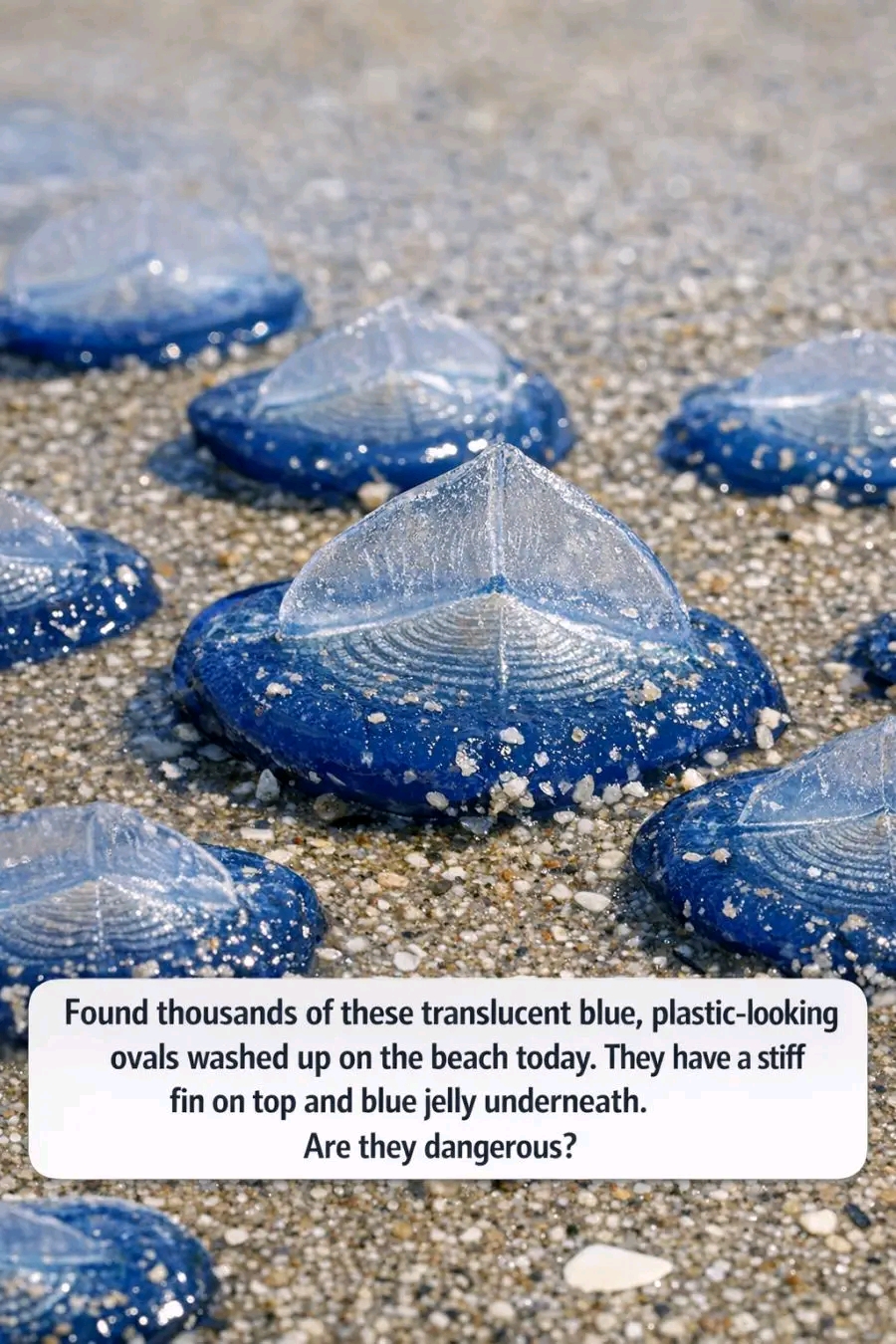
If you’ve strolled along a beach and come across thousands of translucent blue ovals that resemble plastic debris, you may have stumbled upon one of nature’s fascinating phenomena. These creatures, known for their unique appearance, have sparked curiosity and concern among beachgoers, often causing alarm due to their unfamiliar presence.While their vivid blue hue and unusual shape might resemble marine debris, they are, in fact, living organisms. This article delves into what these creatures are, whether they pose any danger to humans or pets, and why they occasionally appear en masse on our shores.
1. What You Found: Meet the By-The-Wind SailorThe creatures you’ve encountered are called Velella velella, commonly known as “By-the-Wind Sailors.” They are a type of hydrozoan, closely related to jellyfish, and are part of the phylum Cnidaria. Velella velella typically measure around 7 cm in length, with a distinctive triangular sail that helps them navigate across the ocean surface. Their vibrant blue coloration makes them stand out against the sand when they wash ashore.These organisms are colonial, meaning they are composed of a group of specialized polyps that function together as a single entity. Each Velella has a stiff, translucent sail that protrudes from the top, allowing them to catch the wind and drift across ocean currents. Underneath this sail lies a gelatinous body that is home to their feeding and reproductive structures.
2. How To Tell Velella Velella From Other JellyfishVelella velella can be distinguished from other jellyfish by several key characteristics. Unlike the typical umbrella-shaped bell of a jellyfish, Velella have a flat, oval body with a rigid, triangular sail on top. This sail is oriented diagonally, which helps them harness the wind for movement.Their blue color is also a notable feature, ranging from bright cobalt to a more subdued navy. Unlike the notorious Portuguese Man o’ War, which Velella are sometimes mistaken for, they lack the long, trailing tentacles that are characteristic of other stinging cnidarians.
3. Are They Dangerous To Touch?Velella velella are generally considered harmless to humans. While they do possess nematocysts, which are small stinging cells used for capturing prey, their sting is not potent enough to penetrate human skin. Most people can handle them without experiencing any adverse effects.However, it is always advisable to exercise caution when handling marine life. Some individuals with sensitive skin may experience mild irritation, so it’s best to gently observe them without direct contact, especially for those with known allergies.
