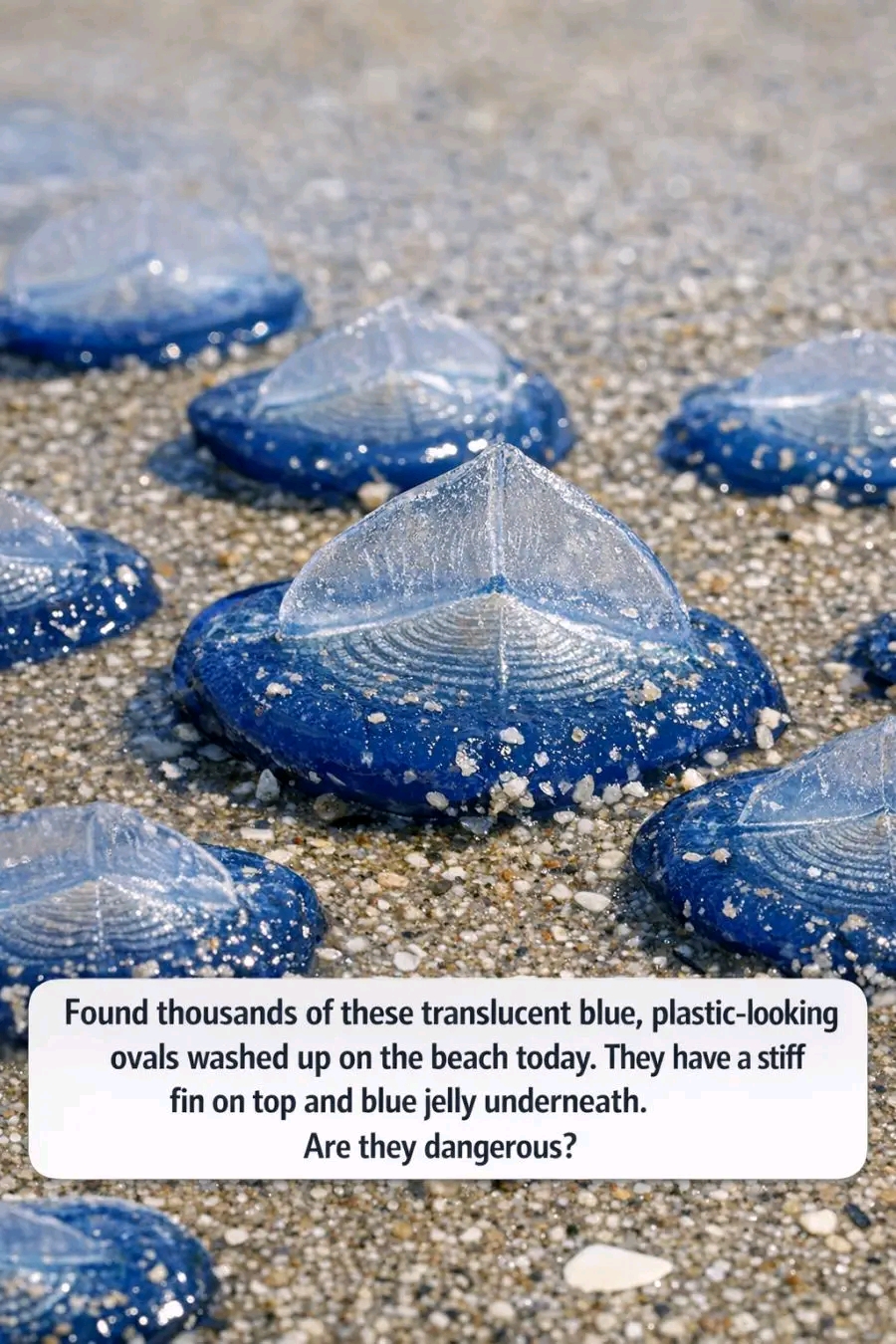
7. What To Do (And Not Do) If You See ThemIf you encounter Velella velella on the beach, it’s best to observe them from a distance. While they are not dangerous, handling them is unnecessary and might disturb local wildlife that feeds on them.Avoid attempting to return them to the ocean, as they are likely already dead, and this could disrupt the natural process. Instead, take the opportunity to learn more about these fascinating creatures and educate others about their unique role in the marine ecosystem.
8. Are They Bad For The Environment Or The Ocean?Velella velella are a natural and important part of the ocean ecosystem. They serve as both predator and prey within their food web. By-the-Wind Sailors feed on plankton, and in turn, are consumed by various marine species, including fish and seabirds.Their strandings, while extensive, do not negatively impact the environment. In fact, they provide a temporary food source for scavengers on the beach. It’s a cycle that contributes to the biodiversity and health of marine ecosystems.
9. The Strange Life Cycle Of These Drifting ColoniesVelella velella have a unique lifecycle that involves both asexual and sexual reproduction. The colonies we see on the ocean surface are the result of asexual budding from a single polyp that eventually gives rise to a full colony.These colonies then release their medusae, which are small jellyfish-like forms, into the water. The medusae are responsible for sexual reproduction, releasing gametes into the ocean to create the next generation of Velella. This dual method of reproduction ensures their survival and adaptability across vast oceanic expanses.
10. When To Worry: Look-Alike Species With Stronger StingsWhile Velella velella are relatively harmless, there are similar species that can pose a danger. The Portuguese Man o’ War, for instance, is often mistaken for Velella due to its blue color and floating nature. However, the Man o’ War has long, venomous tentacles that can deliver painful and sometimes dangerous stings.It’s important to be able to distinguish between these species. The Man o’ War is larger, with a more prominent, bladder-like float and long tentacles. When in doubt, maintain a safe distance from unknown marine organisms.
11. How Climate And Currents Are Changing These Mass StrandingsClimate change may be influencing the frequency and location of Velella velella strandings. Changes in sea temperature, wind patterns, and ocean currents can alter their movements and the likelihood of mass beachings.As the climate continues to change, scientists are studying these patterns to understand the broader impacts on marine ecosystems. Monitoring such events helps researchers gather valuable data on how climate change is affecting oceanic life and can inform conservation strategies aimed at protecting marine biodiversity.
