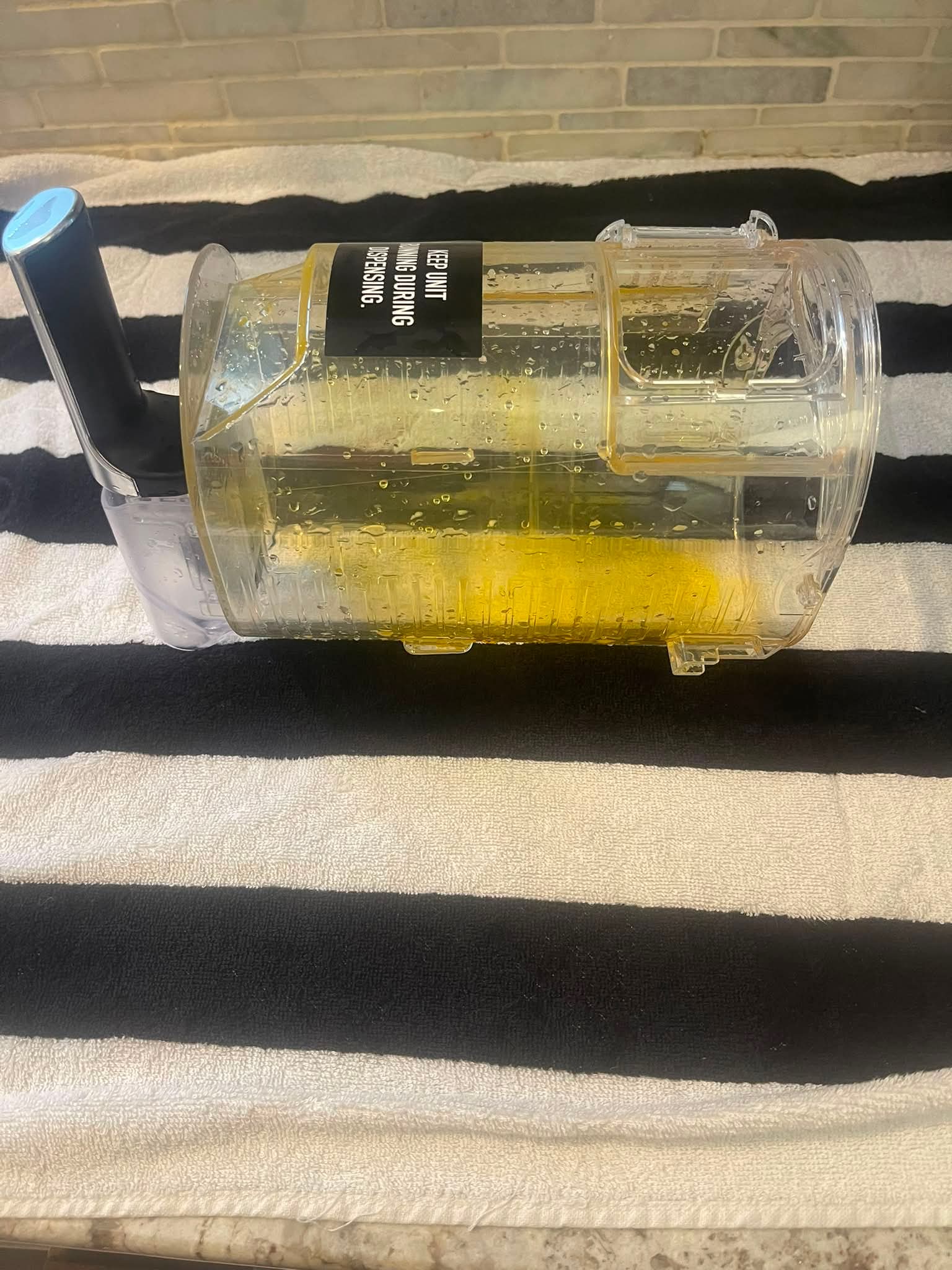
😱
You buy a brand-new Ninja SLUSHi, make a delicious frozen drink, and everything is going perfectly…
Until you realize you’ve left a brightly colored V8 Splash sitting in that beautiful clear vessel for far too long.
You wash it.
You scrub it.
You soak it with baking soda.
And somehow that yellow-orange color is still staring back at you.
Don’t panic—and don’t throw the machine away! 🥤🥦
What you’re seeing is very likely food-color staining of the plastic, not dirt that simply needs more aggressive scrubbing. Ninja itself acknowledges in its SLUSHi instructions that brightly colored ingredients can leave slight staining on the vessel and recommends cleaning the machine immediately after use to minimize it. (ninjakitchen.co.uk)
The good news? There are a few things you can try before giving up.
🧃 Why Did V8 Splash Stain My Ninja SLUSHi?
Brightly colored fruit and vegetable drinks contain pigments that can cling to or migrate into plastic surfaces.
Tomato-based foods are particularly notorious for this because pigments such as lycopene are strongly associated with stubborn staining, especially when oils and pigments remain against plastic for an extended period. (Martha Stewart)
And that’s exactly why time matters.
A quick rinse immediately after making your drink is very different from allowing a colorful drink to sit against the plastic for hours.
The longer the contact time, the more difficult the discoloration can become.
🧼 First: Don’t Scrub It Harder!
This is important.
When a stain refuses to disappear, our first instinct is usually:
“I’ll just scrub harder.”
Don’t.
Avoid steel wool, abrasive scouring pads, rough brushes and aggressive scraping.
You don’t want to turn a stain into scratches.
A scratched plastic surface can actually become harder to keep clean in the future because residue can collect in surface imperfections.
Ninja’s own cleaning guidance calls for warm, soapy water and careful cleaning rather than abrasive treatment. (Ninja Kitchen)
⭐ Method #1: Give It a Proper Dish-Soap Cleaning
Before trying anything stronger, start here.
You’ll need:
- Warm water
- A good grease-cutting dish soap
- Soft sponge or microfiber cloth
- Soft bottle brush for hard-to-reach areas
Wash the removable parts thoroughly with warm, soapy water.
Pay special attention to:
- Around the vessel
- The dispensing area
- Seals and grooves
- The auger
- Any areas where the drink may have pooled
Ninja recommends disassembling the removable components after the rinse cycle and washing them with warm, soapy water or using the dishwasher according to the instructions for your specific model. (Ninja Kitchen)
🚿 Method #2: Use the SLUSHi Rinse Cycle
If you haven’t already done this, use the machine’s Rinse cycle before taking everything apart.
Ninja specifically recommends this because it helps rinse frozen drink residue from the evaporator and makes the rest of the cleaning process easier. (Ninja Kitchen)
The basic process:
- Dispense the remaining drink.
- Stop the current program.
- Select RINSE.
- Add warm water to the appropriate maximum fill line for your model.
- Slowly dispense the water.
- Repeat if necessary.
- Turn the machine off.
- Disassemble the removable parts.
- Wash them thoroughly.
- Allow everything to dry completely.
Don’t immerse the motor base in water. Ninja instructs users to wipe the motor base and evaporator with a sanitized or warm, damp cloth instead. (Ninja Kitchen)
☀️ Method #3: Let the Sun Work on the Stain
This is the trick I’d try after you’ve thoroughly washed the vessel.
Sunlight can help fade certain food-pigment stains in plastic because UV exposure can break down colored compounds.
It’s commonly used on tomato-stained food containers, and several cleaning sources recommend leaving clean plastic in direct sunlight for several hours to help fade discoloration. (Martha Stewart)
Here’s how:
1. Wash the vessel first.
Make sure there is no food residue or soap left behind.
2. Rinse extremely well.
You don’t want cleaning product residue sitting in the vessel.
3. Dry it.
4. Place the removable stained plastic in direct sunlight.
A sunny windowsill or safe outdoor location can work.
5. Rotate it periodically.
This helps expose the stained areas evenly.
6. Check it after a few hours.
Don’t expect the stain to disappear instantly.
You may see gradual fading.
☀️ One important caution
Don’t leave the plastic baking in intense sunlight for days at a time.
You’re trying to fade a stain—not age the plastic.
And because Ninja specifically says to check your model’s cleaning instructions, follow the manufacturer’s guidance for the particular SLUSHi you own. (Ninja Kitchen)
🧽 What About More Baking Soda?
Since you’ve already tried baking soda, I wouldn’t keep scrubbing with it over and over.
Baking soda can be useful for surface stains, and a paste of baking soda, a little water and dish soap is a commonly recommended treatment for tomato-stained plastic. (Martha Stewart)
But if you’ve already done that and the discoloration hasn’t changed, more aggressive scrubbing isn’t necessarily going to solve the problem.
At that point, time and sunlight may be more useful than more elbow grease.
🫧 What About an Oxygen-Based Cleaner?
This is where I’d be more cautious.
You may see people recommending products such as oxygen bleach or other stain-removing powders for stained plastic.
They can be effective on some household plastics, but your SLUSHi isn’t an ordinary food-storage container. It has specialized components, seals, grooves and a cooling system.
Ninja’s official instructions specifically recommend warm, soapy water or the dishwasher where permitted for removable parts. (Ninja Kitchen)
So I would not dump an aggressive cleaning chemical into the machine just because someone online says it worked on a plastic Tupperware container.
If you want to try a stronger product, check the cleaning instructions for your exact SLUSHi model first.
❌ What I Would NOT Try
Because this is a food-contact appliance, I’d skip the kitchen-cleaning experiments that can potentially damage the plastic or leave residue.
🚫 Don’t use steel wool
It can scratch the plastic.
🚫 Don’t use a harsh scouring powder
You don’t want to roughen the surface.
🚫 Don’t scrape the stain with a knife
Obviously tempting…
Absolutely not. 😂
🚫 Don’t pour boiling water into the vessel
Follow Ninja’s temperature and cleaning instructions rather than trying to “cook” the stain out.
🚫 Don’t immerse the motor base
Ninja specifically says the motor base should be wiped rather than submerged. (sharkninja.com)
🚫 Don’t use random household chemicals
Especially not combinations of cleaners.
Never mix bleach with vinegar, ammonia, acids or other cleaning products.
🧪 Could Hydrogen Peroxide Work?
You’ll see 3% hydrogen peroxide recommended online for stubborn tomato and food stains.
It can help lighten some discoloration, but because this is a brand-new appliance with food-contact components, I would consider it a last-resort option rather than my first recommendation.
If the Ninja manual for your exact model doesn’t specifically approve it, I’d stick with the manufacturer’s cleaning method, gentle dish soap and sunlight rather than experimenting with chemicals.
And if you ever use a cleaner that isn’t specifically approved for the appliance, the component needs to be thoroughly washed and rinsed afterward before food contact.
🍹 The Stain May Be Cosmetic
Here’s the part I think will make you feel better.
A stained vessel isn’t automatically a ruined vessel.
Ninja’s own SLUSHi instructions actually note that brightly colored ingredients may leave slight staining on the vessel and state that this does not affect the machine’s performance. (ninjakitchen.co.uk)
So if the plastic is:
- Smooth
- Not cracked
- Not cloudy from damage
- Not scratched deeply
- Not sticky or deteriorating
- Free of food residue and odors
then discoloration alone doesn’t necessarily mean the machine is damaged.
It may simply have a permanent souvenir from your V8 Splash. 😂
🧃 The Real Lesson: Clean It Immediately!
This is probably the biggest takeaway.
Don’t let brightly colored drinks sit in your SLUSHi.
Ninja recommends cleaning the machine after every use and says cleaning immediately helps minimize staining from brightly colored ingredients. (ninjakitchen.co.uk)
The routine doesn’t have to be complicated.
After every batch:
Empty → Rinse → Disassemble → Wash → Rinse → Dry.
That’s it.
The longer colorful drinks sit in contact with the plastic, the more likely you are to end up with a stubborn stain.
🥤 What About Future V8 Splash Drinks?
If you love V8 Splash slushies, don’t stop making them!
Just make cleaning part of the recipe.
Your new routine:
🥤 Make the slushie
⬇️
🍹 Serve it
⬇️
🚿 Empty the machine
⬇️
💧 Run the Rinse cycle
⬇️
🧼 Wash the removable parts
⬇️
💦 Rinse thoroughly
⬇️
🌬️ Let everything dry completely
⬇️
✨ Put it away clean
Ninja also recommends allowing the parts to dry thoroughly before reassembling or storing the machine. (Ninja Kitchen)
❤️ And Honestly… Don’t Beat Yourself Up!
You bought a brand-new machine.
You were excited.
You made a colorful drink.
You forgot about it.
It happens! 😂
The photograph may look horrifying when you’re expecting that crystal-clear new-machine appearance, but staining doesn’t automatically mean you’ve ruined the appliance.
I’d start with:
🥇 Warm soapy water + thorough cleaning
🥈 Rinse cycle
🥉 Gentle cleaning of all removable parts
☀️ Thoroughly cleaned vessel + several hours of sunlight
🛑 Stop before resorting to harsh chemicals or abrasive scrubbing
And remember: Ninja itself acknowledges that brightly colored ingredients can stain the vessel. (ninjakitchen.co.uk)
So if your new SLUSHi is now sporting a lovely V8-colored tint…
Congratulations. You didn’t destroy it. You just gave it its first battle scar. 😂🥤
Have you ever accidentally stained a brand-new kitchen appliance with the very first thing you made in it? Because I KNOW this has happened to more than one person! 😅
