🫐 : A Cozy Traditional Recipe with an Important Safety Step
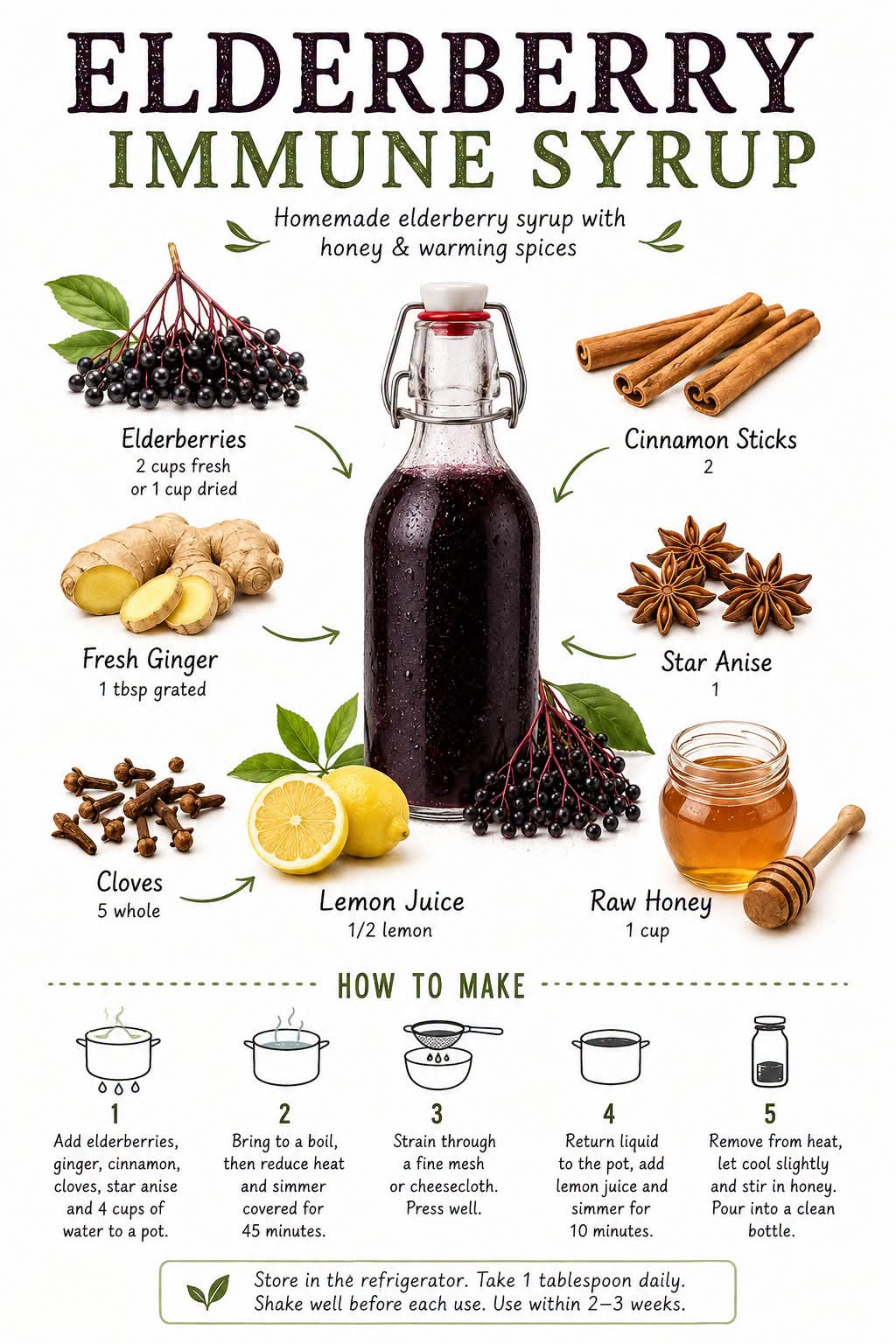
There’s something wonderfully old-fashioned about making a batch of homemade elderberry syrup. Dark, ripe elderberries simmer gently with warming spices, creating a deep purple-red liquid with a rich, fruity flavor. Add a little lemon for brightness and honey for sweetness, and you have a comforting seasonal syrup that can be enjoyed by the spoonful or stirred into warm drinks.
But elderberries are one ingredient where proper preparation really matters.
Raw or unripe elderberries, along with the leaves and stems of the elder plant, contain compounds that can release cyanide and may cause nausea, vomiting, and diarrhea. Cooking properly reduces this concern. (NCCIH)
So this is one homemade recipe where the safety instructions aren’t optional.
🫐 What Is Elderberry Syrup?
Elderberry syrup is a traditional preparation made by simmering ripe elderberries with water and often adding ingredients such as cinnamon, ginger, cloves, lemon, and honey.
The berries are cooked first, the mixture is strained, and the resulting liquid is sweetened after it has cooled somewhat.
Elderberries have a long history of traditional use, particularly during cold and flu season. Some small studies suggest elderberry may help relieve symptoms of colds or flu, but the evidence remains limited and high-quality clinical evidence is still lacking. (NCCIH)
That makes elderberry syrup best viewed as a traditional food preparation, not a guaranteed treatment or cure.
🍯 Homemade Elderberry Syrup
Ingredients
- 2 cups fresh or frozen fully ripe elderberries, or 1 cup dried elderberries
- 4 cups water
- 1 cinnamon stick
- 1–2 teaspoons fresh grated ginger
- ¼ teaspoon ground cloves
- 1–2 tablespoons fresh lemon juice
- ½–1 cup honey, to taste
Important:
If using fresh elderberries, carefully remove all leaves, stems, and unripe berries before cooking. Don’t use raw elderberries in the finished preparation. (Extension de l’Université du Minnesota)
👩🍳 How to Make It
1. Prepare the berries
Sort through the elderberries carefully.
Remove any:
- Leaves
- Stems
- Unripe or green berries
- Damaged material
Rinse the ripe berries well.
This step may take a little patience, but it’s worth doing carefully.
2. Add the berries and spices
Place the prepared elderberries in a saucepan.
Add the water, cinnamon, ginger, and cloves.
Bring the mixture to a boil, then reduce the heat and allow it to simmer.
3. Cook thoroughly
Continue cooking according to a tested elderberry recipe’s heating directions. Proper cooking is important because raw or improperly prepared elderberries can contain toxic cyanogenic compounds. Heat reduces these compounds. (NCCIH)
Don’t taste the berries or liquid before they have been properly cooked.
4. Strain everything
Remove the saucepan from the heat and carefully strain the mixture through a fine-mesh strainer.
Press the cooked berries gently to extract the liquid, but make sure all solid material is removed.
You should be left with a dark, richly colored liquid.
5. Add the lemon
Stir in the fresh lemon juice.
The lemon adds a bright, slightly tart flavor that balances the sweetness of the finished syrup.
6. Let it cool slightly
This is important if you’re using honey.
Allow the strained liquid to cool somewhat before stirring in the honey. Add honey to taste and stir until completely dissolved.
7. Bottle and refrigerate
Pour the finished syrup into a clean, sealed bottle or jar.
Keep it refrigerated and use a clean utensil whenever serving.
For homemade syrup, follow a reliable tested preservation/storage recipe rather than assuming that refrigeration makes it shelf-stable. The University of Maine Extension specifically recommends sterilized containers and refrigeration for homemade preparations unless an appropriate preservation method is followed. (Cooperative Extension)
🍋 Why Add Lemon?
Elderberries have a naturally tart, earthy flavor.
Lemon juice gives the syrup a fresh brightness that keeps it from tasting overly heavy.
It also pairs beautifully with the warming flavors of:
Elderberry + lemon + ginger + cinnamon + clove + honey
That’s a combination that tastes like autumn in a bottle. 🍂🫐
🍯 Why Honey?
Honey provides natural sweetness and helps balance the tartness of elderberries and lemon.
It also gives the syrup a smooth, rich texture.
One important reminder: honey should never be given to children under 1 year of age because of the risk of infant botulism. (NCCIH)
🫐 How Can You Use Elderberry Syrup?
Once properly prepared and refrigerated, elderberry syrup can be enjoyed in several ways.
Try it:
- By the spoonful
- Stirred into warm tea
- Mixed into sparkling water
- Drizzled over plain yogurt
- Added to oatmeal
- Mixed into a smoothie
- Used as a topping for pancakes
- Stirred into a warm seasonal drink
It’s especially lovely when served chilled or mixed into something warm on a cool evening.
⚠️ The Most Important Elderberry Safety Rules
This is the part that should never be skipped.
❌ Don’t eat raw elderberries.
Raw elderberries can contain cyanogenic compounds that may cause gastrointestinal symptoms and, in large amounts, potentially serious poisoning. (NCCIH)
❌ Don’t use unripe berries.
Green or unripe berries should be discarded.
❌ Don’t include leaves or stems.
Remove them before cooking. Elderberry leaves and stems contain potentially toxic compounds and shouldn’t be included in homemade syrup. (NCCIH)
❌ Don’t assume every homemade recipe is safe.
Different recipes online use different amounts, cooking methods, and storage instructions. Follow a reliable recipe with clear cooking and storage directions rather than simply mixing raw elderberries with honey.
❌ Don’t treat elderberry syrup as medicine.
Although elderberry has been studied for respiratory illnesses, the evidence is still limited. It has not been established as a cure or replacement for medical treatment, and it should not be relied upon to prevent or treat serious infections. (NCCIH)
🌿 What Does the Research Say?
Elderberry has attracted plenty of attention because of its traditional use for colds and flu.
Some preliminary studies suggest it could reduce the duration or severity of certain respiratory symptoms, but researchers emphasize that the available evidence isn’t strong enough to draw firm conclusions. (NCCIH)
The National Center for Complementary and Integrative Health notes that there isn’t enough evidence to establish elderberry as helpful for many of the health claims made about it. (NCCIH)
In other words, there’s nothing wrong with enjoying a properly prepared elderberry syrup as a traditional seasonal food—but it’s important not to turn a traditional recipe into a medical promise.
🫙 A Simple Seasonal Tradition
Making elderberry syrup can be a lovely kitchen ritual.
The berries simmer with cinnamon, ginger, and cloves. The kitchen fills with a warm, spicy aroma. The dark liquid is strained, brightened with lemon, and sweetened with honey.
Then it goes into a bottle in the refrigerator, ready for a spoonful whenever you want something fruity, tart, sweet, and warming.
The key is remembering that elderberries aren’t like ordinary berries.
Take the time to remove the stems, leaves, and unripe fruit, cook the berries properly, strain the mixture carefully, and store the finished syrup appropriately.
A little extra care turns this traditional preparation into something you can enjoy with confidence. 🫐🍯
❤️ Final Reminder
Fully ripe berries + proper cooking + careful straining = essential.
And always remember: elderberry syrup is a traditional food preparation, not a proven cure or substitute for medical care. (NCCIH)
