🧂🍟
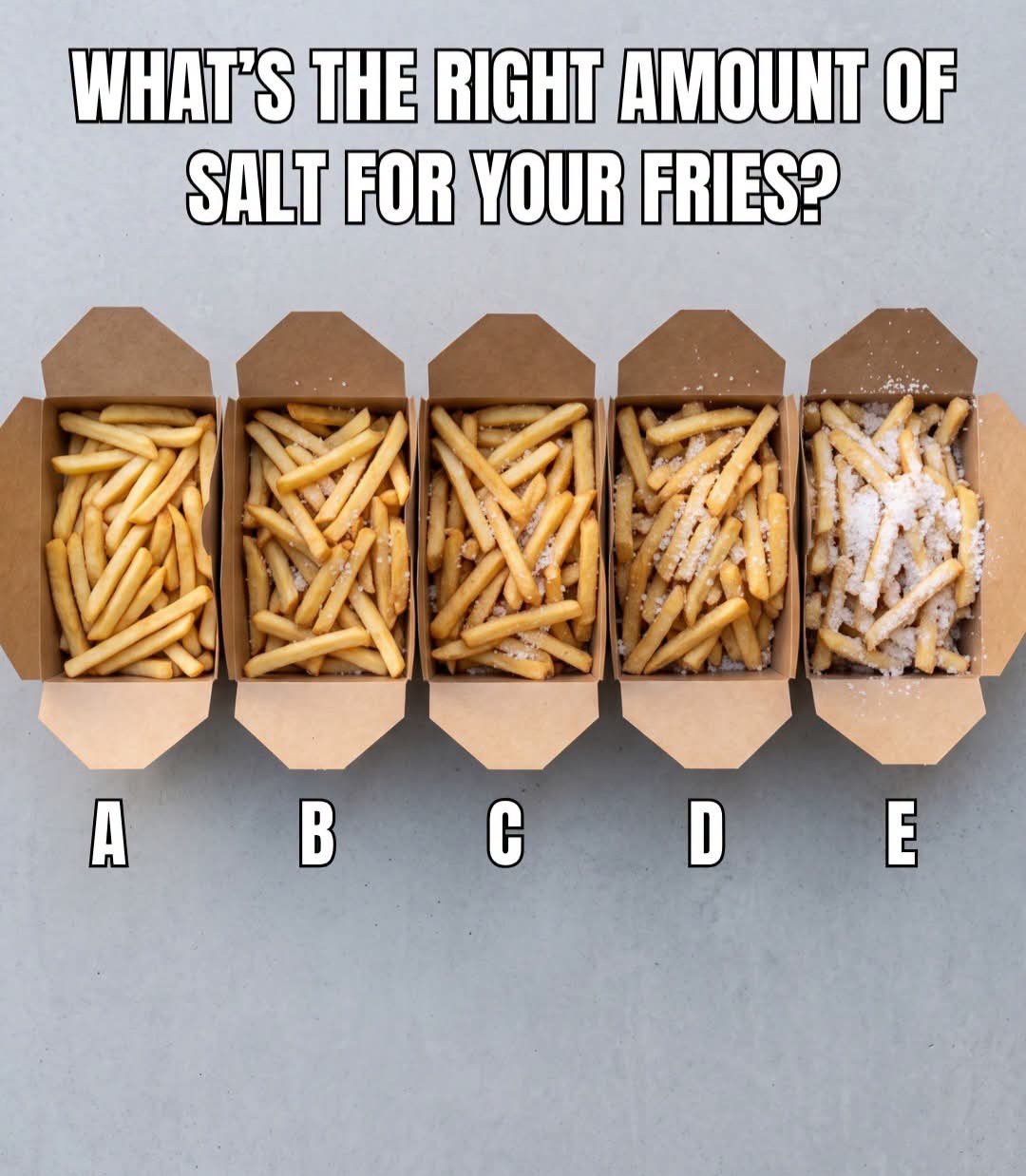
And Which Box of Fries Would You Pick?
Look at the five boxes of fries in the picture. One has barely any salt. Another has a light sprinkling. Then there’s one with a generous coating—and finally, the last box looks like someone accidentally dumped the entire salt shaker on it! 😂
So here’s the question:
How salty is actually too salty?
The answer isn’t simply “when it tastes too salty.” The bigger issue is how much sodium you’re getting throughout the entire day.
🧂 Salt vs. Sodium: What’s the Difference?
We often use the words salt and sodium interchangeably, but they aren’t exactly the same thing.
Salt is sodium chloride, made from sodium and chloride. Sodium is the mineral that nutrition labels list in milligrams.
That’s why when you’re checking how much salt you’re eating, you should look for “Sodium” on the Nutrition Facts label, rather than trying to estimate how much salt is present.
And sodium isn’t found only in the salt shaker. It can also come from ingredients such as sodium-containing preservatives, flavorings and other additives. (www.heart.org)
🍟 So Which Fries Are “Right”?
If we’re judging strictly by taste, that’s completely personal.
Some people want just a tiny sprinkle of salt. Others want enough that every bite delivers that salty crunch.
But nutritionally, more salt isn’t necessarily better.
The amount of sodium in fries can vary considerably depending on the portion size, how they’re prepared and how much salt is added. That’s why there’s no universal number of shakes that makes fries “too salty.”
Instead, think about the fries as one part of your entire day’s sodium intake.
You might have lightly salted fries but then eat a sandwich, cheese, processed meat, soup, sauce and other foods that are also high in sodium.
That’s where the total can really add up.
🚨 How Much Sodium Is Too Much?
For adults, the American Heart Association recommends no more than 2,300 mg of sodium per day, with an ideal goal of no more than 1,500 mg per day for most adults, particularly those who need to manage blood pressure. (www.heart.org)
The FDA’s Daily Value for sodium is also less than 2,300 mg per day based on a 2,000-calorie diet. (U.S. Food and Drug Administration)
That doesn’t mean you need to panic if you eat something salty.
It means that a very salty food can use up a surprisingly large portion of your daily “sodium budget.”
Think of it this way:
2,300 mg = your general daily upper limit
If one meal contains 1,000 mg of sodium, you’ve already used almost half of that amount before considering everything else you eat that day.
And if you’re aiming for 1,500 mg, that same meal represents an even larger share.
🧂 What About the Salt on the Fries?
Here’s something many people don’t realize:
The salt shaker isn’t necessarily the biggest source of sodium.
The American Heart Association notes that much of the sodium people consume comes from packaged, prepared and restaurant foods rather than salt added at the table. (www.heart.org)
Think about a typical meal:
🍟 French fries
🍔 Burger
🧀 Cheese
🥫 Ketchup or sauce
🥓 Bacon
🥤 Other prepared foods throughout the day
The sodium can come from many places at once.
That’s why someone can say, “I hardly ever add salt to my food!” and still consume a lot of sodium.
👀 The Sneaky Part: Serving Size
Here’s another reason it’s easy to underestimate sodium.
Nutrition labels give you the sodium amount per serving.
If the package contains two servings and you eat the entire package, you need to multiply the sodium by two.
The FDA specifically recommends checking both the serving size and the sodium amount when reading Nutrition Facts labels. (U.S. Food and Drug Administration)
So don’t just glance at the big number.
Ask:
“How much am I actually eating?”
❤️ Why Does Too Much Sodium Matter?
Your body needs sodium. It plays important roles in fluid balance, nerves and muscles.
The problem is that most people don’t need huge amounts.
Too much sodium can contribute to higher blood pressure. Over time, high blood pressure can increase the risk of cardiovascular problems, including heart disease and stroke. Excess sodium can also be an issue for kidney health. (www.heart.org)
That’s why reducing sodium intake can be particularly important for people who have high blood pressure or have been advised by their healthcare professional to follow a lower-sodium diet.
🍟 Do You Have to Give Up French Fries?
Absolutely not!
You don’t have to look at a plate of fries and immediately feel guilty.
The goal isn’t necessarily to eliminate every salty food.
Instead, consider the whole meal and your overall eating pattern.
You can:
- Choose a smaller serving of fries.
- Ask for less salt when ordering.
- Taste the fries before adding more salt.
- Compare sodium amounts when choosing packaged foods.
- Use herbs, spices, garlic, lemon or vinegar to add flavor without relying entirely on salt.
- Balance salty foods with less-processed foods that aren’t heavily salted.
- Pay attention to sauces and condiments, which can contribute additional sodium.
Even relatively small reductions can make a difference over time. The American Heart Association notes that reducing sodium by about 1,000 mg per day can improve blood pressure and heart health. (www.heart.org)
🧂 What Does “Low Sodium” Mean?
When you’re shopping, some useful label terms can help.
According to the American Heart Association:
Sodium-free: less than 5 mg per serving
Very low sodium: 35 mg or less per serving
Low sodium: 140 mg or less per serving
“Reduced sodium” means the product has at least 25% less sodium than its regular version—it doesn’t necessarily mean the food is low in sodium. (www.heart.org)
That’s an important distinction.
A package saying “reduced sodium” can still contain a significant amount.
🤔 What About Sea Salt, Kosher Salt and Fancy Salts?
Switching from ordinary table salt to sea salt or another type of salt doesn’t magically eliminate the sodium issue.
Different salts can have different crystal sizes, meaning the amount of sodium by spoonful can vary somewhat, but they’re still sources of sodium. (www.heart.org)
So don’t assume that a food is automatically healthier simply because the package says sea salt or kosher salt.
🌿 How to Make Food Flavorful Without Drowning It in Salt
If you’re trying to cut back, you don’t have to settle for bland food.
Try reaching for:
🍋 Lemon or lime juice
🌿 Fresh herbs
🧄 Garlic
🧅 Onion
🌶️ Chili peppers
🌶️ Paprika
🌿 Black pepper
🥄 Vinegar
🌱 Fresh ginger
🌿 Sumac
🍊 Citrus zest
Acid and spices can make food taste much more vibrant without simply adding more salt.
🧠 The Best Trick: Taste Before You Salt
This may sound obvious, but it’s surprisingly useful.
Taste your food first.
Sometimes we automatically reach for the salt shaker before we’ve even taken a bite.
You may discover that the food already tastes perfectly seasoned.
And with fries, remember that sauces, cheese, burgers and other foods you’re eating alongside them can contribute additional sodium.
🏆 So Which Box Wins?
Looking at the picture:
A — probably too little salt for serious salt lovers. 😂
B — lightly salted and reasonable for many people.
C — a nice middle ground.
D — getting quite generous.
E — that’s less “seasoning” and more “fries buried in a salt avalanche.” 🧂😂
But there isn’t a medically defined “correct” box.
Your personal sodium needs depend on your overall diet and health circumstances.
The bigger lesson is this:
Don’t judge your sodium intake by one food. Look at the whole day.
A few grains of salt on your homemade fries aren’t the same thing as regularly eating large amounts of highly processed and restaurant foods.
And you don’t need to be afraid of salt—you just need to be aware of how quickly sodium can add up.
🧂 The Bottom Line
Salt makes fries taste amazing. There’s a reason we crave that salty, crispy combination!
But more isn’t always better.
For most adults, keeping total sodium below 2,300 mg per day is the general recommendation, while the American Heart Association encourages an ideal goal of 1,500 mg per day for most adults. (www.heart.org)
So the next time you’re handed a box of fries, don’t worry about whether you picked A, B, C, D or E.
Instead, ask yourself:
“How much sodium have I already had today—and how much is in the rest of this meal?”
Because sometimes the biggest salt problem isn’t the fries sitting in front of you…
It’s everything else you don’t realize is salty. 🧂🍟❤️
What would you pick? A, B, C, D, or E?
Be honest! 😂👇
