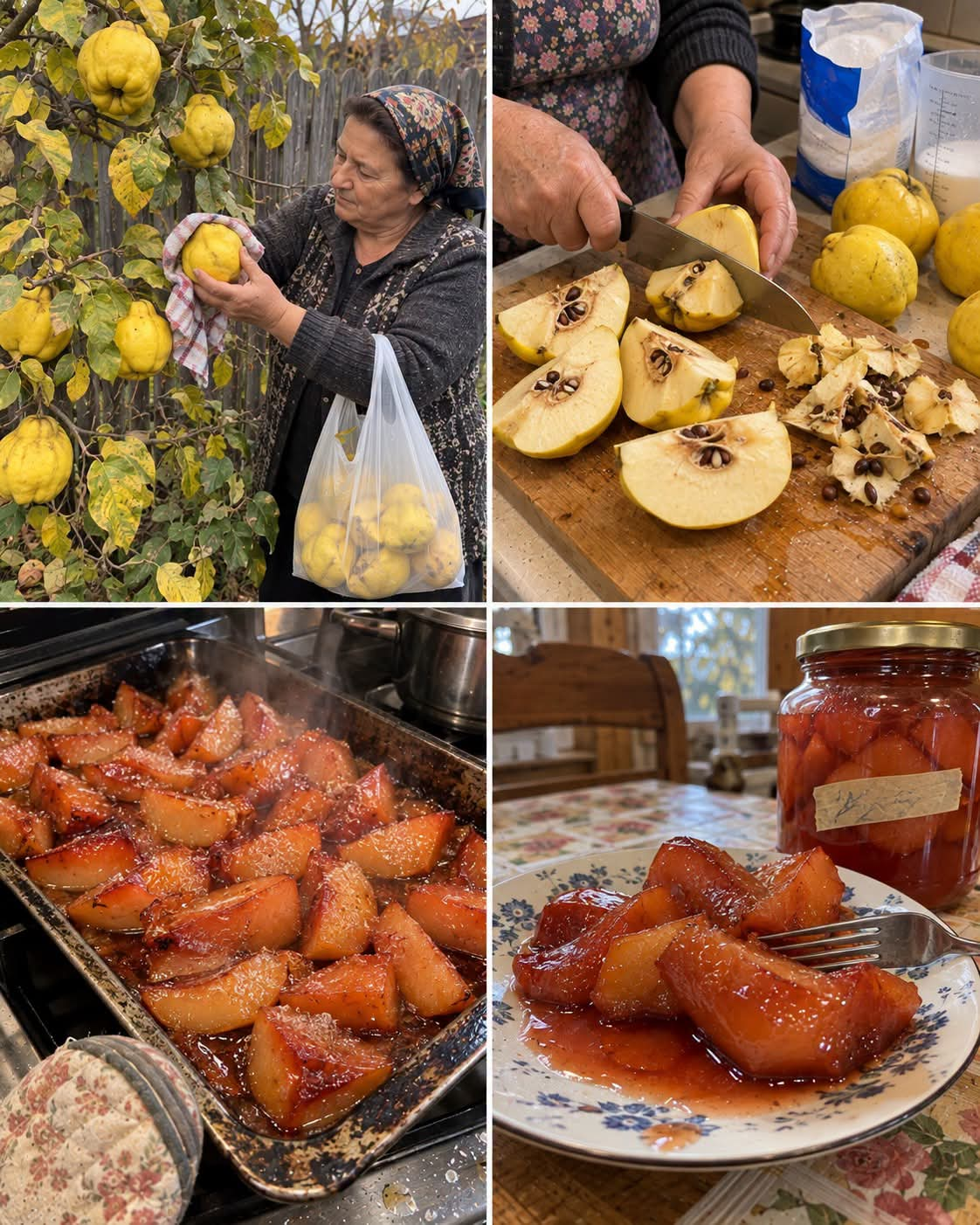
Quince is one of those fruits people walk past for years. It sits on the tree looking like a lumpy yellow pear, smells amazing in the kitchen, and then turns out to be hard as a rock when you bite into it. That is why many people give up on it after one try.
The trick is that quince was never meant to be eaten raw. It needs heat and time. Once it spends an hour in the oven with a little sugar, the pale, gritty flesh turns soft, deep red and deeply sweet, with a flavor somewhere between apple, pear and honey. This is the simplest way to cook it, and it works whether you have a few fruits or a whole bucket.
How to choose and prepare the fruit
Pick quinces that are fully yellow, firm and fragrant. If they are still green, leave them in a warm room for a few days until the skin turns yellow and the smell gets stronger. A ripe quince has a strong perfume you can notice from across the room.
The skin is covered with a light gray fuzz, especially on fruit straight from the tree. Rub each one with a clean cloth before you do anything else. This removes most of the fuzz and any dirt.
Small brown spots are normal. Soft, wet or moldy patches are not, so cut those away or skip that fruit.
Ingredients
- 1 kg quince (about 3 to 4 large fruits)
- 150 to 200 g sugar, depending on how sweet you like it
- 200 ml water
- Juice of half a lemon (optional, keeps the color bright)
- 1 cinnamon stick or a few cloves (optional)
Step 1: Harvest or buy the right fruit

If you are picking from a tree, twist the fruit gently and place it in a bag or basket without throwing it in. Quince bruises easily, and bruises turn brown and bitter after cooking.
Wipe each fruit with a cloth right away, since the fuzz comes off much easier when the fruit is fresh. Store them in a cool place until you are ready to cook. Whole quinces keep for a couple of weeks if they are dry and not touching each other.
Step 2: Cut and core the quince
Quince is very hard, so use a sharp, heavy knife and a stable cutting board. Cut each fruit in half, then into quarters, and finally into chunky wedges.

Cut out the core and the seeds from every piece. The core is tough and woody even after cooking, and the seeds should not be eaten. Peeling is optional. The peel softens during baking and adds color, but if you want a smoother result, peel it first.
If you are cutting a lot of fruit, drop the pieces into water with a squeeze of lemon while you work. Quince darkens quickly once it is exposed to air.
Step 3: Arrange in the tray with sugar and water
Spread the wedges in a single layer in a deep baking tray. Sprinkle the sugar evenly over the top, add the water and the lemon juice, and tuck in the cinnamon stick if you are using it.
Do not crowd the tray. If the pieces pile up, they steam instead of caramelize. Use two trays if you have to.
Cover the tray tightly with aluminum foil or a second tray. This first stage is about softening the fruit, and it needs steam.
Step 4: Bake until soft and caramelized
Bake at 180°C (350°F) for about 45 minutes with the foil on. Then take the foil off, stir the pieces gently so they get coated in the syrup, and bake for another 30 to 40 minutes.

During this second stage the liquid thickens, the edges darken and the fruit turns a rich amber to deep red. The color varies from one fruit to another, and darker is not burned. Check it every 15 minutes at the end, and spoon the syrup over the top if it looks dry in places.
The quince is done when a fork goes through the thickest piece without any resistance, and the syrup is glossy and thick enough to coat a spoon.
Let the tray rest for 10 minutes before you touch anything. The sugar syrup is extremely hot, and the pieces are delicate when they first come out.
Step 5: Serve and store

Serve the quince warm, with a spoonful of the syrup from the tray. It goes well with plain yogurt, vanilla ice cream, soft cheese, pancakes, or just a fork and a cup of coffee.
For storage, pack the cooled fruit and syrup into clean jars and keep them in the fridge. They stay good for about two weeks. If you want to keep them longer, you can freeze portions in airtight containers. For shelf stable jars, follow a tested canning method with sterilized jars and proper processing, because skipping that step is how preserves spoil.
Tips for better results
Use enough liquid. Too little water at the start and the sugar burns before the fruit softens.
Cut evenly. Wedges of the same size cook at the same speed.
Be patient. Quince cannot be rushed. Higher heat does not make it soft faster, it only burns the outside.
Taste the syrup near the end. If it is too sweet, a little lemon juice balances it. If it is too sharp, add a spoon of sugar and return it to the oven for a few minutes.
Do not throw away the cores. Many people simmer them in water with sugar to make a fragrant syrup for drinks and desserts.
Quince has a short season and a reputation for being difficult, but this recipe is about as easy as cooking fruit gets. Once you have made it a single time, you will probably start looking at that tree in a different way. A small batch is enough to try it, and a full tray makes the whole house smell like autumn.
