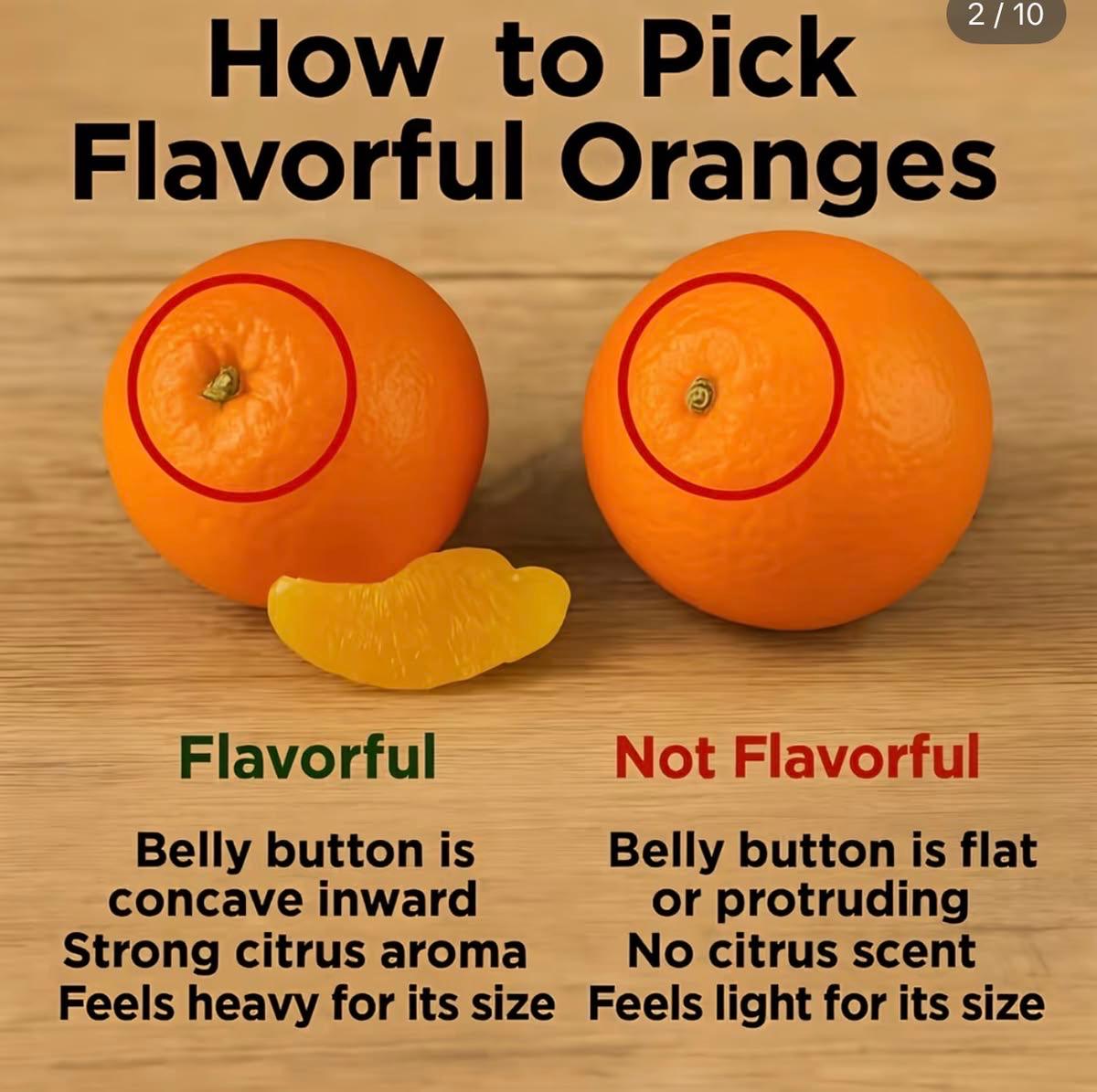
How to Pick Flavorful Oranges: Simple Tips for Sweeter, Juicier Fruit
There’s nothing more disappointing than peeling a beautiful orange only to discover it’s dry, bland, or lacking sweetness. While no method guarantees a perfect orange every time, learning what to look for can greatly improve your chances of bringing home fruit that’s juicy and full of flavor.
Here’s how to choose flavorful oranges—and a few signs that an orange may not be at its best.
1. Pick Oranges That Feel Heavy
One of the easiest ways to judge an orange is by its weight.
Pick up a few oranges that are about the same size. The one that feels heavier is often the juicier choice because it contains more moisture.
2. Look for Smooth, Firm Skin
A good orange should have skin that feels firm and relatively smooth.
Small natural bumps are perfectly normal, but avoid fruit with large soft spots, shriveled skin, or areas that feel mushy, as these can be signs of age or damage.
3. Choose Bright, Healthy Color
Most ripe oranges have a vibrant orange color, although some varieties may naturally have green patches even when fully ripe, especially in warm climates.
Rather than judging color alone, consider it along with the fruit’s weight and firmness.
4. Give It a Gentle Squeeze
A ripe orange should feel firm but have just a slight amount of give when gently pressed.
If it’s rock hard, it may not be fully mature. If it’s overly soft, it may be past its prime.
5. Smell the Orange
Fresh oranges often have a pleasant citrus aroma, especially near the stem.
A fragrant orange is more likely to have developed good flavor, while fruit with little or no scent may be less aromatic. Keep in mind that not every ripe orange has a strong smell.
6. Know the Variety
Different orange varieties have different flavor profiles.
- Navel oranges are sweet, easy to peel, and excellent for snacking.
- Valencia oranges are very juicy and ideal for fresh juice.
- Cara Cara oranges have pink flesh with a naturally sweet flavor and subtle berry-like notes.
- Blood oranges offer a sweet-tart taste with hints of raspberry.
Choosing the right variety can make a big difference depending on how you plan to enjoy them.
Signs an Orange May Not Be Very Flavorful
While it’s impossible to know exactly what’s inside without cutting it open, these signs may indicate an orange won’t be at its best:
- Feels unusually light for its size.
- Skin is badly shriveled or wrinkled.
- Soft, mushy, or damaged spots.
- Mold around the stem or blossom end.
- Very dry-looking rind with little firmness.
These signs don’t always mean the fruit will taste bad, but they can indicate it has lost moisture or freshness.
How to Store Oranges
If you’ll eat them within a few days, store oranges at room temperature in a cool, dry place.
For longer storage, keep them in the refrigerator, where they can stay fresh for several weeks. Before eating, let refrigerated oranges sit at room temperature for a short time if you prefer a warmer, juicier bite.
Can Color Tell You Everything?
Not necessarily.
An orange can be bright orange on the outside yet still be less sweet than expected. Likewise, some oranges with green patches are perfectly ripe and delicious. Flavor is influenced by the variety, growing conditions, weather, and harvest timing—not just appearance.
Final Thoughts
Choosing flavorful oranges is about looking at several clues rather than relying on a single feature. A heavy feel, firm texture, healthy skin, and the right variety can all improve your chances of finding sweet, juicy fruit.
Although no tip can guarantee perfection every time, using these simple guidelines can help you select oranges with better flavor more often, whether you’re enjoying them fresh, adding them to salads, or squeezing them into a refreshing glass of juice.
