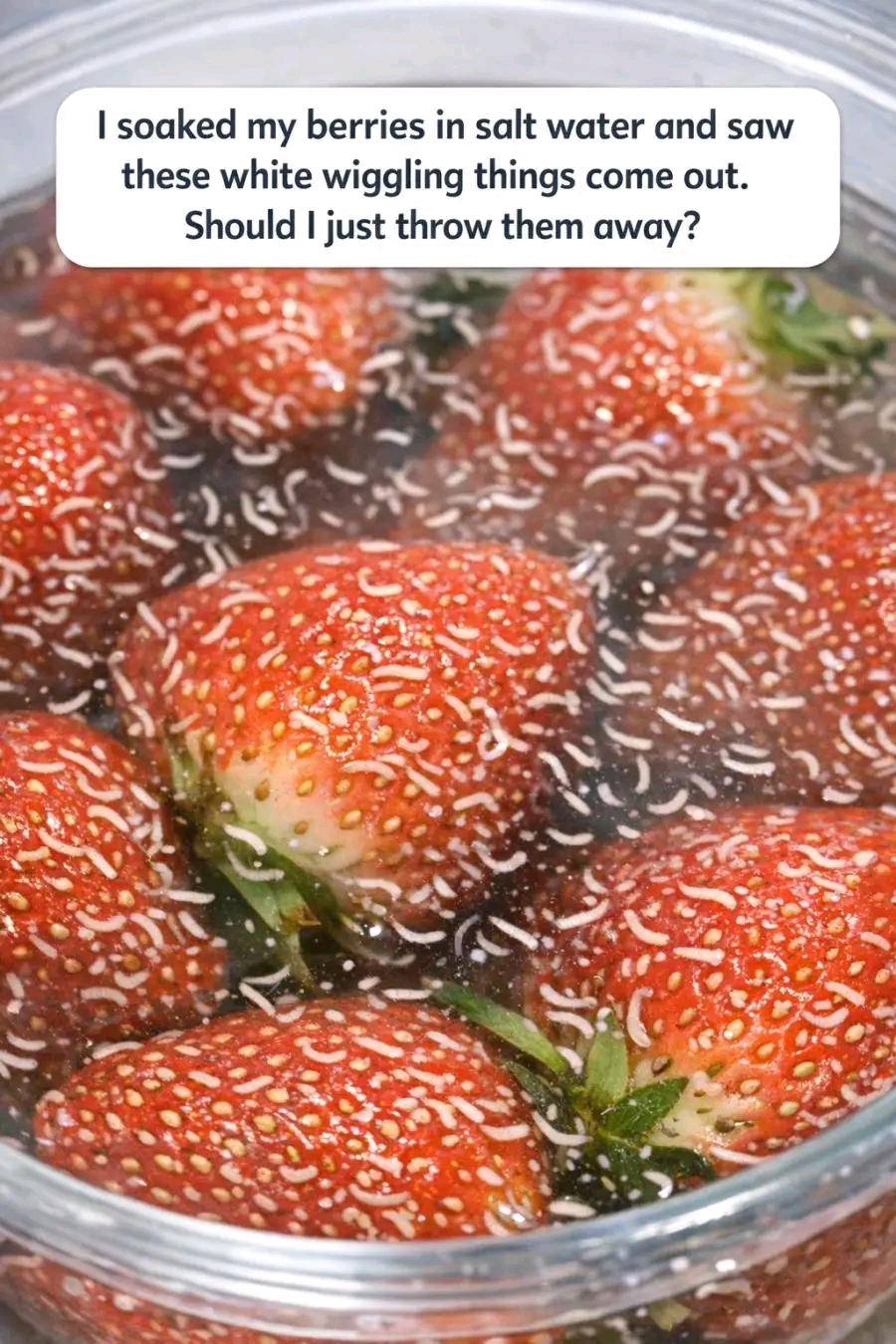
Berries are a beloved fruit, cherished for their sweet, juicy flavor and nutritional benefits. However, a recent viral trend has left many berry enthusiasts feeling uneasy. The trend involves soaking berries in salt water, which often reveals tiny, white, wiggling creatures emerging from the fruit. This unsettling discovery has prompted people to question the safety of their fruit and whether they should discard it altogether.While the sight of these tiny creatures can be alarming, it’s essential to understand what they are and whether they pose any risk. This article delves into the mystery of these white wiggling things, explaining what they are, why they appear, and whether it’s safe to eat berries after discovering them. We’ll also cover expert advice on food safety, tips for cleaning your berries, and whether you should continue using this viral salt water test.
1. What Are Those White Wiggling Things in My Berries?The white wiggling things that emerge from berries when soaked in salt water are typically larvae, specifically those of the Spotted Wing Drosophila (SWD), a type of fruit fly. These larvae are small, usually measuring around 1 to 5 millimeters in length. They are difficult to spot with the naked eye when nestled inside the fruit, which is why they often go unnoticed until the salt water soak.These larvae are common in various types of berries, including strawberries, blueberries, and raspberries. They are not exclusive to conventional or organic produce and can be found in both. The presence of larvae is a natural part of the ecosystem, as fruit flies lay their eggs on ripening fruit, and the larvae develop inside.
2. Why Salt Water Soaks Make Hidden Bugs Suddenly AppearSalt water soaks are effective at drawing out larvae from berries due to a process called osmosis. When berries are submerged in a salt water solution, the difference in salt concentration inside and outside the larvae’s body causes water to move out of their cells, effectively dehydrating and forcing them to wriggle out of the fruit.The typical ratio for a salt water soak is about 1 tablespoon of salt per cup of water. This concentration is enough to prompt larvae to emerge without damaging the fruit. The soak usually lasts for about 15-30 minutes, during which time any larvae present will likely surface.
3. Meet the Culprit: Strawberry Fruit Fly Larvae ExplainedThe Spotted Wing Drosophila (SWD) is a small fruit fly that targets soft-skinned fruit such as berries. Unlike other fruit flies that lay eggs on overripe or damaged fruit, SWD can lay their eggs in healthy, ripening fruit, which makes them particularly troublesome for berry producers.The lifecycle of the SWD involves laying eggs on the fruit, where the larvae hatch and begin feeding on the fruit’s flesh. This can occur very quickly, with a full lifecycle completing in as little as 8-12 days. The presence of larvae is usually not visible until they are fully developed, making detection challenging for consumers and producers alike.
