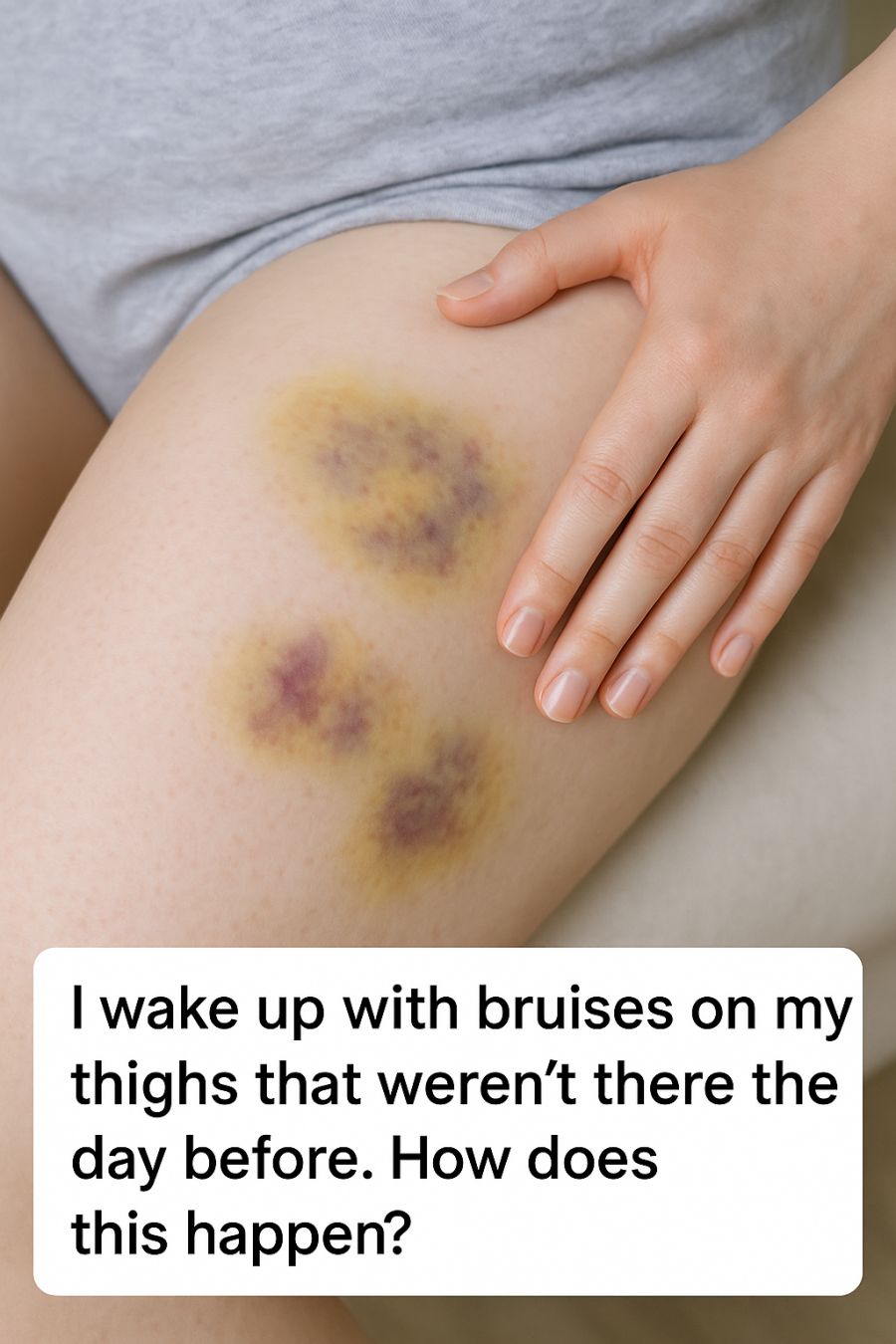
Waking up to find new bruises on your thighs can be both puzzling and concerning, especially when you have no recollection of any injury. Bruises, medically known as contusions, occur when small blood vessels near the skin’s surface break, allowing blood to leak into the surrounding tissue. This results in the characteristic blue or purple mark. However, when bruises seem to appear overnight, it can lead to questions about what might have happened while you were unaware.
Understanding the many factors that can contribute to unexplained bruising is key to addressing the issue. From benign causes like minor nighttime impacts to more serious medical conditions, the reasons for sudden bruising can vary widely. In this article, we will explore the potential causes of these mysterious marks and offer insights into how you can identify and possibly prevent them.
1. Why Thigh Bruises Seem to Appear Overnight
Bruises can appear overnight due to the body’s natural response to minor injuries that might have occurred during the day or while sleeping. The skin on the thighs is particularly vulnerable because it is often exposed to unintentional impacts. The hematoma, or the collection of blood under the skin, may not become visible immediately. It can take several hours for the full extent of a bruise to appear, which is why you might notice it only the morning after.
In some cases, the bruising could be due to less noticeable impacts, such as brushing against furniture or minor falls that didn’t cause immediate pain. These small impacts can still break capillaries, leading to the familiar discoloration of a bruise.
2. How Blood Vessels and Capillaries Actually Break
Capillaries are tiny blood vessels located near the surface of the skin, and they are prone to breaking due to their delicate structure. Even a small amount of pressure or a minor impact can cause these vessels to rupture. When they do, blood leaks out into the surrounding tissues, leading to the formation of a bruise.
The process of capillary rupture is influenced by a variety of factors, including age, skin thickness, and overall health. For example, as people age, their skin becomes thinner and the protective layer of fat diminishes, making blood vessels more susceptible to breaking.
3. Nighttime Movements: Kicking, Bumping, and Sleep-Related Injuries
During sleep, people often shift positions and may unknowingly kick or bump into objects around the bed. Sleep-related movements can be quite vigorous, and if you happen to kick the bed frame or a nearby piece of furniture, it can lead to bruising.
Additionally, certain sleep disorders such as restless leg syndrome or sleepwalking can increase the likelihood of injuring oneself while asleep. These conditions can cause excessive movements that might not be remembered upon waking, but the resulting bruises are visible evidence of nighttime activity.
4. Hidden Household Culprits: Bed Frames, Desks, and Car Doors
Our homes are filled with potential hazards that can lead to bruises. Bed frames, for instance, are a common culprit. It’s easy to bump into the corner of a bed frame while getting in or out of bed, especially in low light conditions. Similarly, desks and chairs can cause bruising if you accidentally knock your thighs against them.
Car doors are another frequent offender. Getting in and out of a car can sometimes result in banging your legs against the vehicle’s interior. These incidents often happen quickly and might not be painful enough to remember, but they can certainly leave a mark.
5. Easy Bruising With Aging: What Changes in Your Skin and Vessels
As people age, their skin becomes thinner and loses some of its protective fatty layer, making blood vessels more vulnerable to damage. This increased fragility means that even minor bumps can lead to significant bruising.
Collagen, the protein that provides structure to the skin, decreases with age, further contributing to easy bruising. Additionally, certain age-related health conditions and medications can exacerbate the propensity for bruising, making it a common concern among older adults.
6. Medications and Supplements That Make You Bruise More Easily
Certain medications and supplements can increase the likelihood of bruising. Blood thinners, for instance, reduce the blood’s ability to clot, meaning that even small amounts of bleeding under the skin can lead to noticeable bruises. Common blood thinners include aspirin, warfarin, and clopidogrel.
Supplements such as fish oil and ginkgo biloba, which have blood-thinning properties, can also contribute to more frequent bruising. It’s important to discuss with your healthcare provider any concerns about medications or supplements you are taking, especially if you notice an increase in unexplained bruises.
7. When Exercise, Stretching, or Weightlifting Leaves Mysterious Marks
Physical activities, especially those involving weightlifting or intense stretching, can lead to bruising. When muscles are put under strain, tiny blood vessels can break, releasing blood into the surrounding tissue. This is particularly common in weightlifting, where the pressure exerted on muscles is significant.
Even without direct impact, the stress from exercise can be enough to cause bruising. High-intensity workouts can lead to micro-tears in muscles and surrounding tissues, which can also result in bruising that appears after the activity.
8. Hormones, Menstruation, and Other Biological Factors Behind Bruising
Hormonal fluctuations, particularly those related to menstruation, can affect the blood vessels and skin, making bruising more likely. Women may notice they bruise more easily at certain times in their menstrual cycle due to changes in hormone levels.
Estrogen, a hormone that can influence blood vessel stability, may play a role in this increased bruising tendency. Additionally, conditions that affect hormone levels, such as thyroid disorders, can also contribute to easier bruising.
9. Nutrient Deficiencies That Can Turn Small Knocks Into Big Bruises
Deficiencies in certain nutrients can make bruising more likely. Vitamin C, for instance, is essential for collagen production, which strengthens blood vessels. A lack of vitamin C can lead to weakened capillaries and increased bruising.
Similarly, vitamin K is crucial for blood clotting. A deficiency in vitamin K can result in prolonged bleeding and more noticeable bruises. Ensuring a balanced diet rich in these vitamins can help reduce the likelihood of unexplained bruising.
10. When Unexplained Bruises Signal an Underlying Medical Condition
In some cases, frequent or severe bruising can be a sign of an underlying medical condition. Disorders such as thrombocytopenia, where the body has a low platelet count, can result in easy bruising because platelets are essential for blood clotting.
Other conditions, like hemophilia or von Willebrand disease, which affect the blood’s ability to clot, can also lead to excessive bruising. If you notice bruising that is accompanied by other symptoms, such as fatigue or prolonged bleeding, it is important to seek medical evaluation.
11. How to Track, Photograph, and Document Bruises Like a Pro
Keeping a record of your bruises can help you and your healthcare provider identify patterns and potential causes. Photographing bruises with a date and time stamp provides a visual log that can be useful for tracking changes over time.
Note the size, color, and location of each bruise, as well as any activities or incidents that might have contributed. This documentation can be helpful in diagnosing any underlying issues or tracking the effectiveness of treatments or lifestyle changes.
12. Viral Bruise-Reducing Hacks: What’s Hype and What Actually Helps
Many online remedies claim to reduce bruising quickly, but it’s important to distinguish between effective treatments and mere hype. Applying ice immediately after an injury can reduce swelling and minimize bruising. Elevating the bruised area can also help reduce blood flow and swelling.
Arnica, a natural remedy, has been shown in some studies to help reduce bruising, although evidence is mixed. Be cautious of remedies that lack scientific backing, and always consult with a healthcare professional before trying new treatments.
13. When to Call a Doctor About Bruises on Your Thighs
While most bruises are harmless and resolve on their own, there are times when medical advice is necessary. If you notice bruises that are unusually large, appear frequently without explanation, or are accompanied by other symptoms such as unexplained bleeding or severe pain, it’s important to seek medical attention.
Consulting a doctor can help rule out serious conditions and ensure that any necessary treatments are started promptly. It’s always better to err on the side of caution when it comes to unexplained changes in your health.
