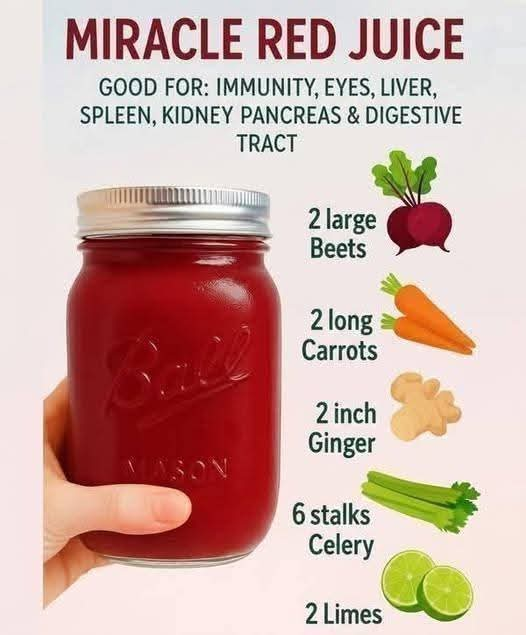
- 2 large beets, washed, peeled if desired, and trimmed
- 2 long carrots, washed and trimmed
- 2 inches fresh ginger root, peeled
- 6 celery stalks, washed and trimmed
- 2 limes, juiced
- ½–1 cup cold water, optional for blending
Optional: A few ice cubes for serving.
Ingredient Notes
Beets: Provide the juice with its deep red color and naturally earthy flavor.
Carrots: Add sweetness and beta-carotene, which the body can convert into vitamin A.
Ginger: Adds a warm, spicy flavor.
Celery: Contributes freshness and moisture.
Limes: Balance the earthy vegetables with bright citrus acidity.
You can adjust the amount of ginger or lime to suit your taste.
Instructions: Method 1 — Using a Juicer
Step 1: Prepare the Vegetables
Wash the beets, carrots, and celery thoroughly under running water.
Trim off the ends and remove any damaged areas. Peel the ginger.
You can peel the beets and carrots if you prefer, but peeling is not essential when the vegetables are thoroughly cleaned and their skins are in good condition.
Cut the beets and carrots into pieces small enough to fit safely into your juicer.
Step 2: Juice the Beets and Carrots
Feed the beetroot pieces and carrots through your juicer according to the manufacturer’s instructions.
Work slowly, especially with hard vegetables such as raw beets and carrots.
Collect the juice in a clean container.
Step 3: Add the Celery and Ginger
Juice the celery stalks and fresh ginger.
Ginger has a strong flavor, so you can begin with a smaller amount and add more if desired.
Stir the vegetable juices together until evenly combined.
Step 4: Add Fresh Lime Juice
Cut the limes in half and squeeze out the juice, removing any seeds.
Add the lime juice to the red vegetable juice and stir well.
Taste the mixture. If it is too earthy, add a little more lime juice. If it is too strong, dilute it with a small amount of cold water.
Step 5: Serve
Pour the finished juice into clean glasses.
Serve immediately, over ice if desired.
Enjoy the fresh, earthy flavor balanced by the sweetness of carrots and the tang of lime.
Instructions: Method 2 — Using a Blender
Don’t have a juicer? You can still make this colorful drink using an ordinary blender.
Step 1: Wash and Chop
Wash and prepare all the vegetables as described above.
Cut the raw beets and carrots into small pieces. Because these vegetables are hard, make sure your blender is suitable for blending them raw.
Step 2: Blend the Ingredients
Place the beets, carrots, celery, ginger, lime juice, and approximately ½–1 cup of cold water in the blender.
Blend until the mixture is as smooth as possible.
Add a little more water if needed to help the ingredients blend.
Step 3: Strain if Desired
For a smoother, juice-like drink, pour the mixture through a fine-mesh strainer or clean nut-milk bag into a container.
Press gently to extract the liquid.
For a thicker drink with more fiber, skip the straining step.
Remember: Blending and straining are not nutritionally identical. Straining removes much of the insoluble fiber, while keeping the pulp retains more of it.
Step 4: Add the Final Touch
Stir the mixture thoroughly and taste it.
Add more lime juice if you prefer a tangier flavor, or dilute it with cold water if it is too concentrated.
Pour into glasses and serve immediately.
Potential Nutritional Benefits
This homemade juice contains several nutritious ingredients. Here is what they can contribute to your diet.
1. Beets Provide Natural Plant Compounds
Beets contain betalains, pigments responsible for their red color, as well as folate and other nutrients.
They also contain naturally occurring nitrates, which the body can convert into nitric oxide. Nitric oxide helps blood vessels relax, and research on beetroot products suggests they may help lower blood pressure in some people.
However, the effects vary, and drinking this juice is not a substitute for prescribed blood pressure medication or medical care.
2. Carrots Supply Beta-Carotene
Carrots are rich in beta-carotene, which the body can convert into vitamin A.
Vitamin A is important for normal vision, immune function, and maintaining healthy skin and other tissues.
Carrots also contain other plant compounds that contribute to their nutritional value.
3. Ginger Adds Flavor
Fresh ginger gives the juice a warm, spicy taste.
Ginger has been studied for several potential health effects, including helping with certain types of nausea. However, the amount used in this recipe should not be considered a treatment for a medical condition.
Some people may experience heartburn or stomach discomfort when consuming ginger.
4. Celery Contributes Water and Nutrients
Celery contains water, small amounts of vitamins and minerals, and plant compounds.
It contributes a fresh flavor that balances the sweetness of the carrots and the earthiness of the beets.
Celery juice is not a special detoxifying treatment, but celery can be a nutritious part of a varied diet.
5. Limes Provide Vitamin C
Limes provide vitamin C, a nutrient that supports normal immune function, collagen formation, and iron absorption.
The amount of vitamin C in the finished juice depends on the size of the limes, how much juice you extract, and how the drink is stored.
Is Miracle Red Juice Good for Every Organ?
You may see claims that this drink is specifically beneficial for the eyes, liver, spleen, kidneys, pancreas, and digestive tract.
It is important to separate general nutrition from medical claims.
- Eyes: Carrots supply beta-carotene, which the body can convert into vitamin A. Adequate vitamin A is necessary for normal vision, but this juice does not cure eye diseases.
- Liver: A balanced diet supports overall health, but there is no good evidence that this particular juice cleanses or repairs the liver.
- Kidneys: The kidneys regulate fluid and mineral balance. This juice does not detoxify them, and people with certain kidney conditions may need to limit ingredients containing potassium.
- Pancreas: No reliable evidence shows that this drink repairs the pancreas or prevents pancreatic disease.
- Spleen: There is no established evidence that this recipe specifically improves spleen function.
- Digestive system: The ingredients can contribute nutrients, but juicing removes much of the fiber found in whole vegetables. Blending without straining retains more fiber.
The best approach is to enjoy this drink as one part of a balanced diet rather than relying on it to treat or prevent disease.
How Much Should You Drink?
There is no medically established serving size for “Miracle Red Juice.”
If you enjoy it, consider starting with a small glass, such as ½–1 cup (120–240 ml), and see how you tolerate it.
Because the juice contains several vegetables, the flavor can be intense. You can dilute it with water or serve a smaller portion alongside a meal.
Keep in mind that juicing concentrates the liquid from multiple vegetables into one drink. It can therefore be easy to consume more than you would normally eat in whole vegetables.
For everyday nutrition, whole vegetables and fruits remain important because they generally provide more fiber and require more chewing.
Important Precautions
Although this juice can fit into many diets, a few precautions are worth remembering.
If you have kidney disease: Beets, carrots, and celery contain potassium. If you have been advised to restrict potassium or follow a special kidney diet, ask your healthcare professional whether this drink is appropriate for you.
If you have a history of calcium oxalate kidney stones: Beets contain oxalates. Ask your healthcare professional whether you need to limit beetroot intake.
If you have low blood pressure or take blood pressure medication: Beetroot products may lower blood pressure in some people. Discuss regular, concentrated intake with your healthcare professional if you are concerned about interactions or dizziness.
If you take blood-thinning medication: Ginger may interact with some medications, particularly when consumed in large or concentrated amounts. Ask your pharmacist or clinician if you regularly use ginger supplements or large quantities of ginger.
If you have a sensitive stomach: Ginger and lime may trigger heartburn or irritation in some people. Start with a small amount or leave out the ingredients that cause discomfort.
If you have diabetes: Juice can be consumed more quickly than whole vegetables, and straining removes fiber. Consider portion size and follow your individual dietary advice.
This recipe is a food, not a treatment. Do not stop medication or replace medical care with homemade juice.
Storage Instructions
Fresh juice is best enjoyed immediately after preparation.
If you need to store it:
- Transfer the juice to a clean, airtight container.
- Refrigerate promptly at 4°C (40°F) or below.
- Ideally, consume it within 24 hours for freshness and quality.
- Discard it if it has been left at room temperature for more than two hours, or if you notice unusual odor, appearance, or other signs of spoilage.
Fresh homemade juice is not pasteurized, so refrigeration does not eliminate harmful microorganisms. For people at higher risk of foodborne illness, commercially pasteurized juice may be a safer choice.
Do not store this recipe at room temperature or treat it as a shelf-stable canned drink.
Frequently Asked Questions
Can I drink this juice every day?
Some people may enjoy a small serving regularly, but daily consumption is not necessary for good health. Variety is important, and whole vegetables provide fiber that strained juice lacks.
Can I make it without ginger?
Yes! Simply omit the ginger if you prefer a milder taste. The juice will still contain the beetroot, carrot, celery, and lime.
Can I use lemons instead of limes?
Yes. Lemon juice makes a suitable substitute and provides a similar citrus flavor.
Why does the juice look so dark red?
Beets contain natural pigments called betalains, which give the drink its deep red color. These pigments can also temporarily color urine or stools reddish after eating beets.
Can this juice detox my body?
No special detox effect has been established for this recipe. Your liver and kidneys already perform essential waste-processing functions. A nutritious diet, appropriate hydration, and medical care when needed are more useful than relying on detox drinks.
Can I add apples?
Yes. One small apple can add sweetness. Wash it thoroughly, remove the seeds and core, and juice or blend it with the other ingredients. Remember that adding fruit increases the drink’s natural sugar content.
Final Thoughts
Miracle Red Juice is a colorful homemade drink made with beets, carrots, ginger, celery, and fresh lime juice.
Its ingredients provide vitamins, minerals, and beneficial plant compounds, making it a refreshing option for people who enjoy vegetable-based drinks.
For the best nutritional balance, consider blending rather than straining to retain more fiber, keep portions moderate, and continue eating a variety of whole vegetables and fruits.
Make it fresh, enjoy its vibrant flavor, and remember that no single juice can replace a balanced diet or professional medical advice
