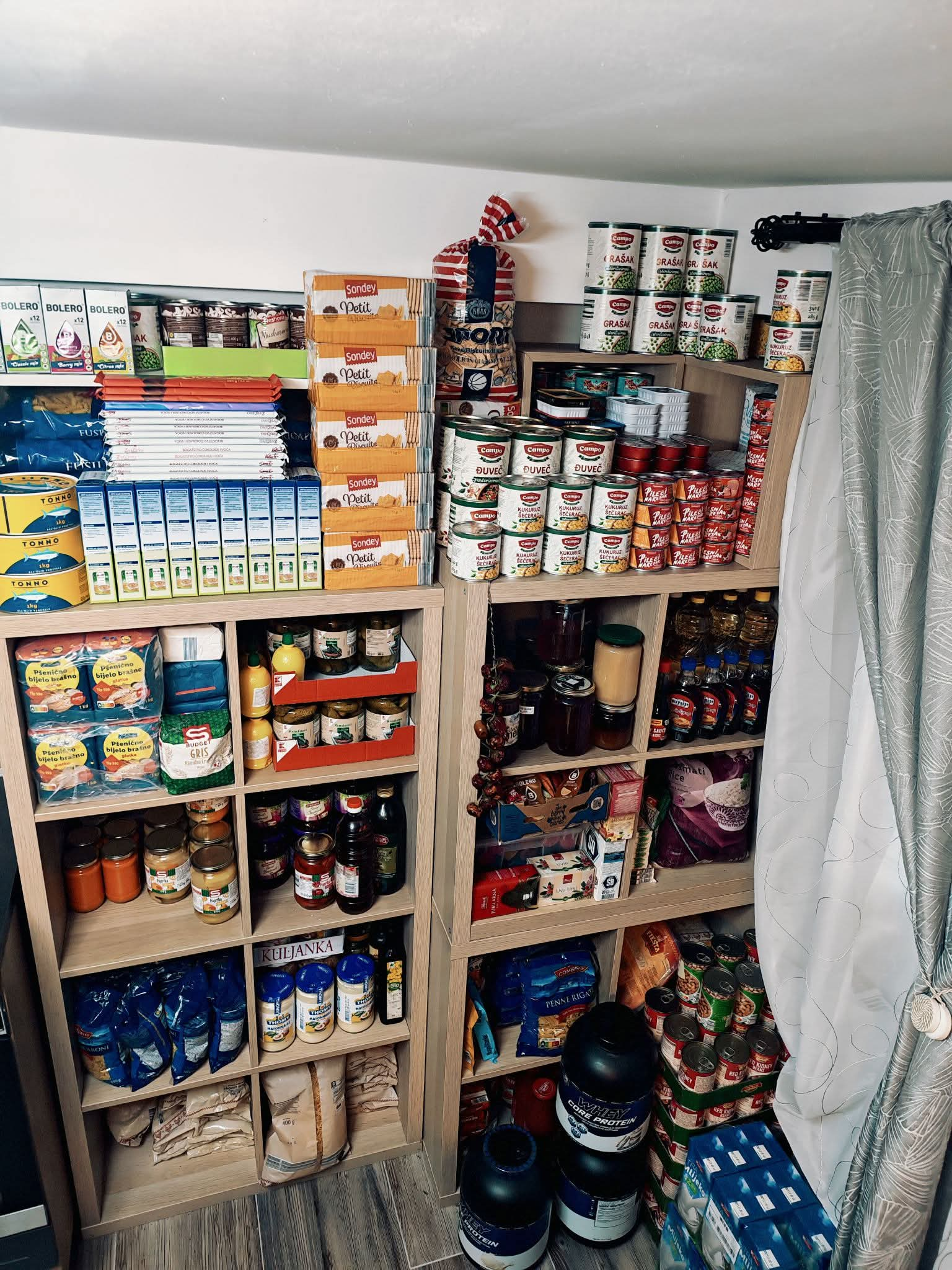
This is one of the most important parts of emergency food preparation.
A pantry may look completely full, but the real question is whether it contains enough food to meet everyone’s needs.
For five people over 90 days, you’re planning for approximately 450 person-days of food.
That means calculating meals, portions, calories, protein, and nutritional variety rather than simply counting cans and packages.
A useful starting point is to organize your food supply into categories.
| Food Category | What to Stock |
|---|---|
| Grains | Rice, pasta, oats, flour |
| Vegetables | Canned and dried vegetables |
| Fruits | Canned and dried fruits |
| Protein | Tuna, beans, lentils, chicken |
| Dairy alternatives | Shelf-stable milk and suitable alternatives |
| Cooking essentials | Oil, salt, sugar, vinegar |
| Flavorings | Spices, sauces, seasonings |
| Snacks | Crackers, nuts, dried fruit |
The quantities should be based on your family’s actual consumption, dietary requirements, and available storage space.
Don’t forget drinking water and water for cooking.
4. How to Build a 90-Day Food Supply Without Spending a Fortune
You don’t need to buy everything in one shopping trip.
In fact, gradually building your pantry is often easier on the household budget.
Here’s a simple approach:
Month 1: Build the Foundation
Start with foods your family already eats regularly.
Purchase rice, pasta, flour, oats, canned vegetables, beans, and other essential ingredients.
Focus on creating a reliable foundation.
Month 2: Add Variety
Once the basic supplies are covered, add canned proteins, fruits, sauces, cooking ingredients, and other foods that make meals more enjoyable.
Think about breakfast, lunch, dinner, and snacks.
Month 3: Fill the Gaps
Review everything you already have.
Identify missing ingredients, check expiration dates, and purchase additional supplies based on your family’s actual needs.
This gradual approach makes preparation more manageable.
5. Organization Makes All the Difference
One thing I particularly like about this pantry is how the supplies are arranged on shelves.
Keeping food organized makes it easier to see what you have and what needs replacing.
Here are a few useful organization tips:
Group similar foods together.
Keep canned vegetables in one area, pasta and rice together, and sauces and condiments in another.
Label everything.
If you transfer dry foods into storage containers, clearly label each container with the contents and storage date.
Use the FIFO method.
FIFO means First In, First Out.
Place older products toward the front and newer purchases behind them. This helps prevent food from being forgotten.
Keep an inventory.
A simple notebook or spreadsheet can help track quantities, expiration dates, and items that need replacing.
Make everything accessible.
Store frequently used ingredients at comfortable heights and heavier items on lower shelves.
6. Don’t Forget Food Storage Safety
A 90-day food supply is only useful if the food remains safe to eat.
Keep these basic principles in mind:
- Store dry foods in airtight, food-safe containers.
- Keep canned goods in a cool, dry location.
- Avoid storing food directly on the floor.
- Protect food from insects and rodents.
- Check cans for swelling, leaking, severe dents, or rust.
- Follow storage instructions on product labels.
- Rotate supplies regularly.
- Keep an eye on expiration and best-before dates.
For homemade preserved foods, always follow tested food-preservation guidelines.
Proper storage is just as important as purchasing the food itself.
7. What About Foods That Need Refrigeration?
A pantry is only one part of emergency preparation.
Fresh meat, dairy products, frozen vegetables, and many other foods require refrigeration or freezing.
If the electricity goes out, these foods may not remain safe.
That’s why it’s helpful to have shelf-stable alternatives available.
Examples include:
- Shelf-stable milk.
- Canned fish.
- Canned chicken.
- Dried legumes.
- Shelf-stable juice.
- Commercially packaged ready-to-eat foods.
It’s also important to have a plan for drinking water, cooking, and preparing meals if normal utilities become unavailable.
8. The Most Important Rule: Store What Your Family Actually Eats
This is something every household should remember.
Don’t spend money filling your pantry with foods nobody likes.
If your family doesn’t normally eat a particular vegetable, grain, or canned product, there’s little reason to purchase large quantities simply because it’s on sale.
Build your emergency pantry around familiar meals.
For example, if your family enjoys pasta, keep enough pasta, tomato sauce, seasonings, and suitable protein sources to prepare several meals.
If rice is a regular part of your cooking, make it one of your main pantry staples.
The best emergency food supply is one that you can actually use.
Final Thoughts: Preparing Today Brings Peace of Mind Tomorrow
A 90-day food supply for a family of five takes planning, organization, and commitment.
It doesn’t happen overnight.
But every bag of rice, every can of vegetables, every package of pasta, and every jar of preserved food represents another small step toward becoming more self-sufficient.
You don’t need a huge house or a dedicated storage room to get started.
Even a few organized shelves can make a meaningful difference.
Start with what you have, purchase what you can afford, rotate your supplies, and gradually build a food reserve that works for your household.
Because being prepared isn’t about living in fear.
It’s about taking care of the people you love.
A well-stocked pantry isn’t just food on shelves. It’s preparation, planning, and peace of mind. ❤️
Let’s Talk!
How long could your family manage using only the food currently stored in your pantry?
😇 A. One week.
🥫 B. One month.
🏡 C. Three months.
💪 D. Six months or longer!
And if you were preparing a 90-day pantry for a family of five, what would be the first five foods you’d stock?
Share your ideas in the comments. Someone else’s suggestion might help another family get started
