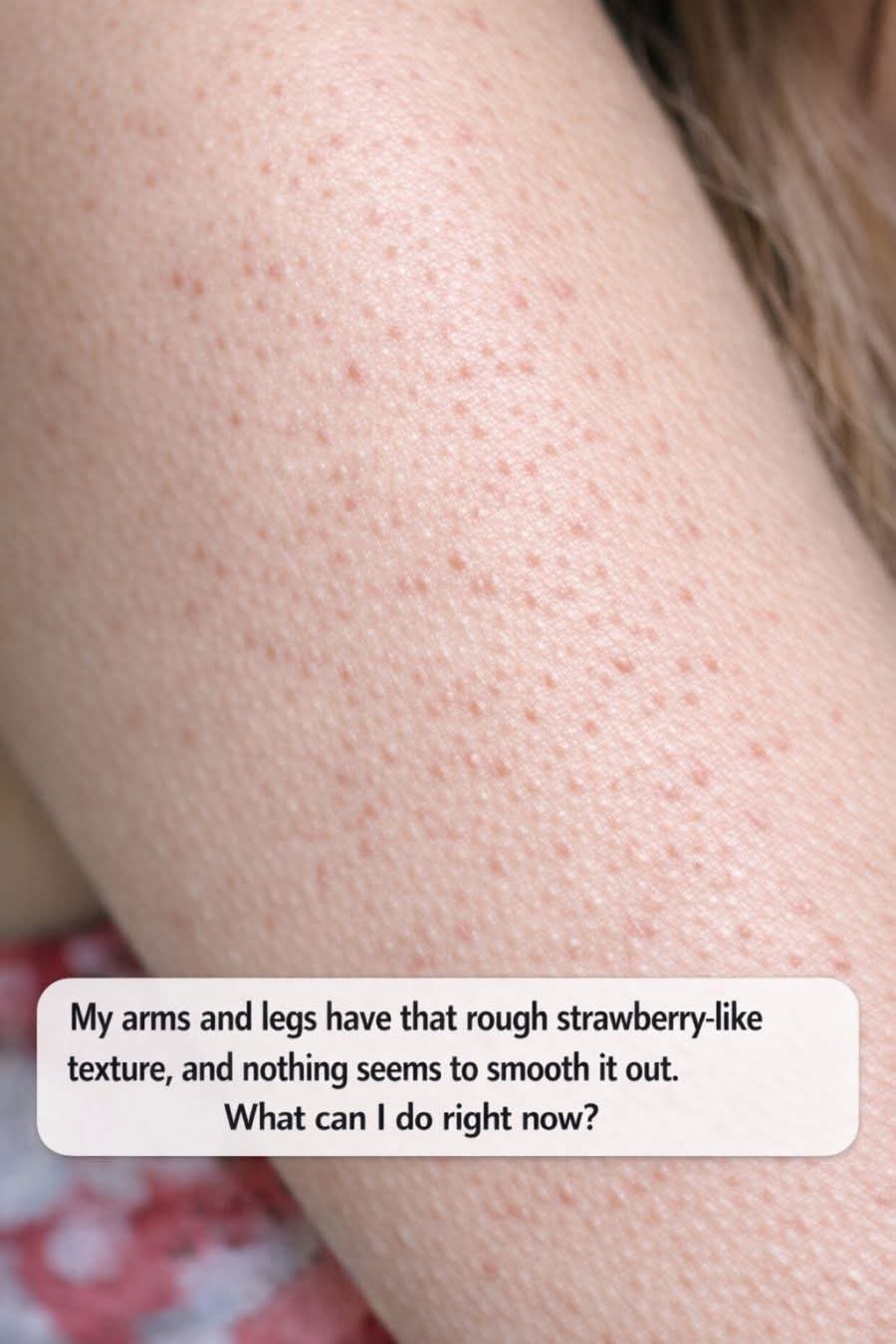
Having skin that feels rough and bumpy, often described as ‘strawberry skin,’ can be a source of frustration for many. The texture resembles the bumpy surface of a strawberry, with small, rough dots that can appear on the arms, legs, or other parts of the body. Despite numerous attempts to smooth out the skin, such as exfoliating and moisturizing, the problem persists for many people.
Understanding the underlying causes and addressing them with effective strategies is key to managing this skin condition. While it may require some trial and error, there are several steps you can take today to improve the texture of your skin. This article explores these steps, from identifying the issue to making lifestyle changes and knowing when to seek professional help.
1. First, Know What You’re Dealing With: Is It Keratosis Pilaris?
Before embarking on a treatment plan, it’s crucial to identify if the rough texture is indeed keratosis pilaris (KP), a common skin condition characterized by small, goosebump-like bumps. KP occurs when keratin, a protein that protects the skin, builds up and blocks hair follicles, causing the rough texture. It often appears on the upper arms, thighs, cheeks, or buttocks and can be more prominent during dry seasons or in dry climates.To differentiate KP from other skin conditions, consider the distribution and appearance of the bumps. They tend to be skin-colored or slightly reddish and are not typically itchy or painful. While it’s a harmless condition, understanding that it is a genetic and sometimes chronic issue can help set realistic expectations for treatment and management.
2. Quick Test You Can Do At Home To Tell If It’s ‘Strawberry Skin’
A simple test to identify if you have keratosis pilaris is to gently run your fingers over the affected area. If it feels rough or has tiny bumps that resemble gooseflesh and appear in patches, it might be KP. Another indicator is whether the bumps become more prominent or noticeable during colder months or after a shower when the skin is dry.If you’re still uncertain, using a magnifying mirror can help you see if the bumps have a small plug, which is characteristic of KP. This at-home test can give you a better understanding of what you’re dealing with, so you can choose the appropriate treatment methods.
3. The One Thing To Stop Doing Today That’s Making The Bumps WorseOne common mistake people with KP make is over-exfoliating. Aggressive scrubbing or using harsh exfoliants can irritate the skin further and exacerbate the condition. Instead, switch to gentle exfoliation methods and reduce the frequency to a few times a week.
Additionally, avoid hot showers, as the heat can strip the skin of its natural oils and worsen the dryness and roughness. Opt for lukewarm water and limit your shower time to help maintain the skin’s moisture balance.
4. Gentle Cleansing Swaps You Can Make In Your Next ShowerSwap out your regular soap for a gentle, hydrating cleanser that contains ingredients like glycerin or ceramides. These ingredients help retain moisture and protect the skin barrier. Avoid cleansers with sulfates or artificial fragrances, which can be drying or irritating.Using a soft washcloth or your hands instead of a loofah can also reduce irritation and help keep the bumps from becoming inflamed. Remember, the goal is to cleanse without stripping the skin of its natural oils.
5. The Exfoliating Ingredients That Actually Work (And How To Use Them Tonight)
Look for exfoliating products that contain alpha hydroxy acids (AHAs) like glycolic acid or lactic acid. These ingredients help dissolve the keratin build-up and promote smoother skin. Apply a leave-on exfoliant after cleansing to allow the ingredients to penetrate and work overnight.For those with sensitive skin, start with a lower concentration and gradually increase as your skin builds tolerance. Always follow up with a moisturizer to lock in hydration and protect the newly exposed skin.
6. Moisturizing Like A Derm: Lotions And Creams That Smooth, Not ClogChoose a moisturizer that contains urea, lactic acid, or ammonium lactate, as these ingredients help soften and smooth the skin. Apply the lotion or cream immediately after showering when the skin is still damp to maximize absorption.
Avoid heavy creams or those with mineral oil or petroleum, as they can clog pores and worsen the bumps. Opt for non-comedogenic formulations that provide hydration without adding an additional barrier to the skin.
7. Shaving And Hair-Removal Tweaks To Avoid Red Dots And IngrownsWhen shaving, use a sharp razor and a hydrating shaving cream to reduce friction and prevent irritation. Shave in the direction of hair growth to minimize the risk of ingrown hairs and red bumps.If possible, consider alternative hair removal methods like laser treatments, which can reduce the appearance of KP over time. Always follow up with a soothing moisturizer to calm the skin post-shaving or hair removal.
8. Simple Lifestyle Changes That Calm Inflammation From The Inside OutHydration plays a crucial role in maintaining healthy skin. Ensure you are drinking enough water daily—aim for at least 8 cups (64 ounces) to keep your skin hydrated from the inside out. Additionally, incorporate foods rich in omega-3 fatty acids, such as salmon, walnuts, or flaxseeds, into your diet to help reduce inflammation.
Regular exercise can improve circulation and promote healthy skin cell turnover, while stress-reducing activities like yoga or meditation can help prevent flare-ups associated with stress.9. At-Home Tools And Devices That Can Help—And When To Skip Them
While at-home devices like microdermabrasion tools can be tempting, they may not be suitable for everyone with KP. These devices can sometimes irritate sensitive skin or exacerbate the condition if used improperly. If you decide to try them, limit usage to once a week and follow up with a soothing moisturizer.Instead, consider using a humidifier in your home to maintain moisture levels in the air, especially during dry seasons. This simple tool can help keep your skin hydrated and reduce the appearance of rough patches.
10. When It’s Time To See A Dermatologist For Prescription Options
If you’ve tried over-the-counter treatments and lifestyle changes without seeing improvement, it may be time to consult a dermatologist. They can prescribe topical medications like retinoids or stronger exfoliants that may be more effective.A dermatologist can also rule out other skin conditions and provide a tailored treatment plan based on your specific needs. Don’t hesitate to seek professional advice if you’re feeling self-conscious or if the condition is affecting your quality of life.
