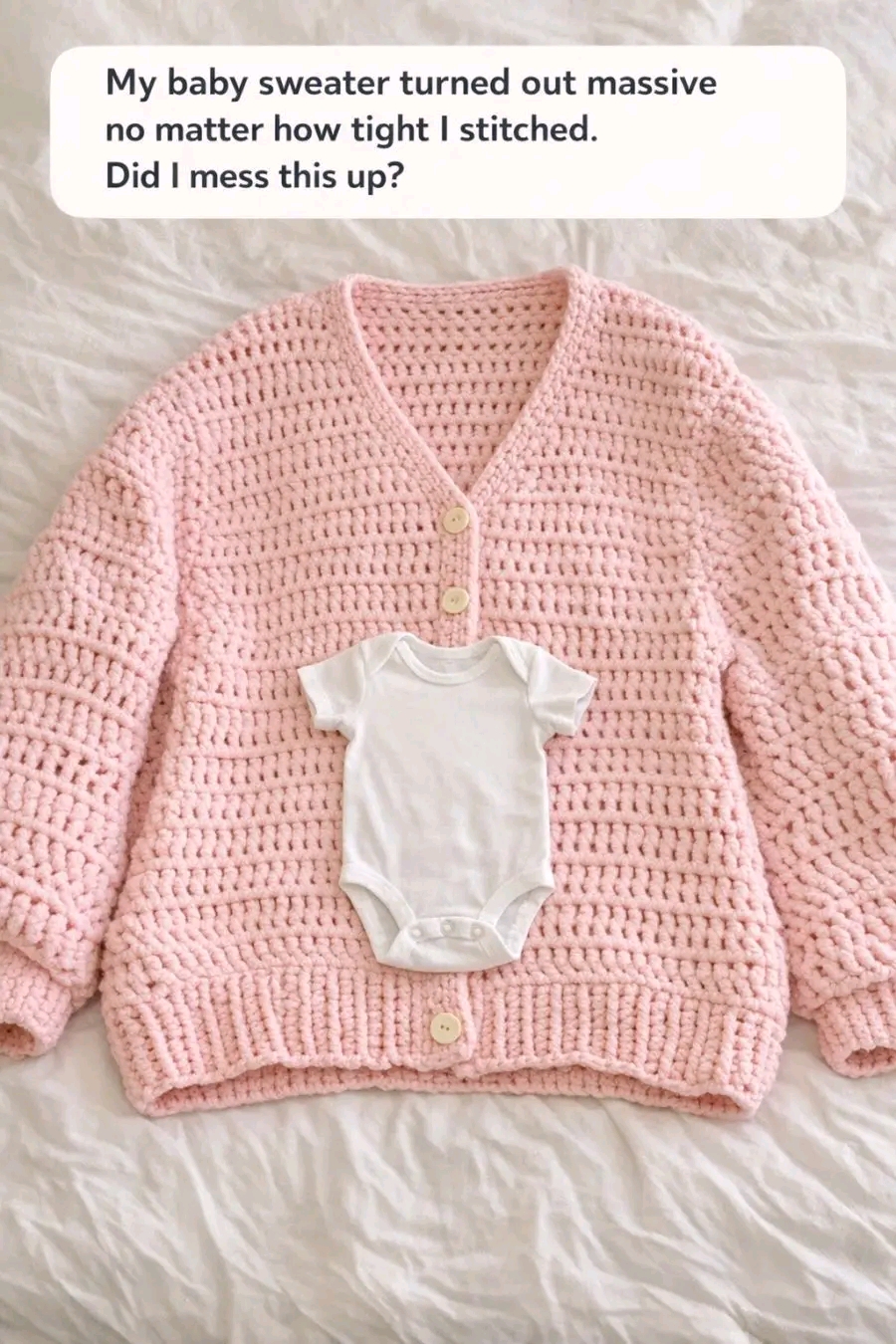
4. Pattern Gauge vs. Your Gauge: Why Those Tiny Numbers MatterPattern gauge is set by the designer as the standard for how the finished garment should measure. Your personal gauge may vary due to differences in tension, yarn, or needle size. Even a small difference of half a stitch per inch can add multiple inches to the overall garment size.It’s crucial to adjust your knitting to match the pattern gauge. This may involve changing your needle size or altering your knitting tension. By aligning your gauge with the pattern, you can ensure a more accurate fit for the finished sweater.
5. Needle Size Mismatch: When ‘Going Down a Size’ Isn’t EnoughMany knitters assume that simply using a smaller needle size will automatically fix gauge issues. However, this approach doesn’t always work. The relationship between needle size and yarn tension is more complex, and a smaller needle can sometimes lead to tighter, but not necessarily smaller, stitches.It’s important to experiment with different needle sizes to find the one that gives you the correct gauge. Sometimes, changing the needle material (from metal to wood, for instance) can also affect tension and help you achieve the desired results.
6. Yarn Substitution Traps: Same Fiber, Totally Different FabricSubstituting yarn is a common practice in knitting, but it can lead to unexpected results if not done carefully. Even if two yarns are made from the same fiber, they can have different textures, elasticity, and weight, which will affect the final garment’s size and drape.When substituting yarns, consider not just the weight, but also the yarn’s structure and recommended gauge. Swatching is again crucial here to ensure that the new yarn behaves similarly to the one specified in the pattern.
7. Row Gauge: The Overlooked Reason Sleeves and Body Are HugeWhile stitch gauge is often emphasized, row gauge is equally important, especially for garments. If your row gauge is off, the length of the sweater’s body and sleeves can be significantly longer than intended.Row gauge affects how many rows you need to knit to reach a certain length. If your row gauge is larger than the pattern’s, you may end up with sleeves that are too long or a body that extends well past the intended measurements. Monitoring both stitch and row gauge ensures that all dimensions of the sweater meet the pattern’s specifications.
