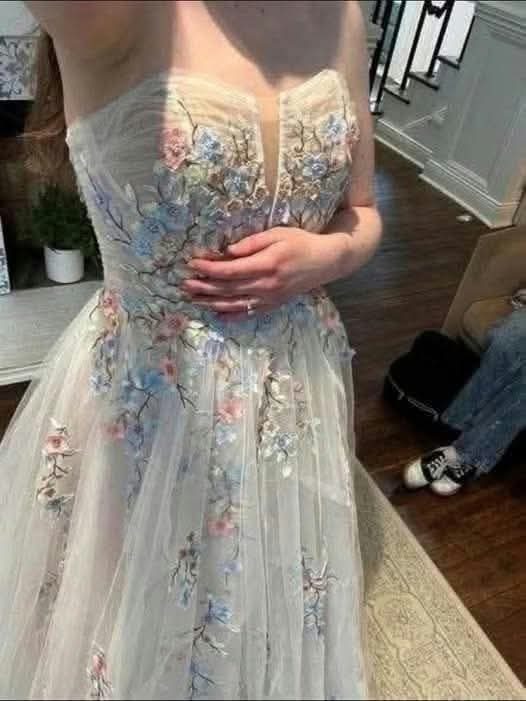
My Bridal Party Wants Me to Wear a Traditional White Wedding Dress, But My Grandmother’s Embroidered Gown Means Everything to Me
A wedding dress is supposed to be one of the most personal choices a bride makes. For some women, that means a classic white gown with lace, a long train, and a beautiful veil. For others, it means wearing something completely different—something that tells a story, honors their family, and represents who they truly are.
But what happens when the dress you love isn’t the dress everyone else expects you to wear?
With only two months left before my wedding, I’m facing a disagreement I never imagined would become such an emotional part of planning our special day.
My bridal party keeps gently suggesting that I choose something more “classic.” My future mother-in-law has even offered to buy me a traditional wedding dress from David’s Bridal.
I know they probably believe they’re helping. But every time I look at the dress I chose, with its beautiful embroidered birds and meaningful details, I feel connected to something much bigger than fashion.
I feel connected to my grandmother.
And I’m beginning to wonder whether keeping everyone else happy means giving up a piece of myself.
The Dress That Made Me Fall in Love
When I first saw the dress, I knew it was different.
It wasn’t the traditional white wedding gown I had always imagined people expected a bride to wear. It didn’t have the familiar silhouette, layers of white tulle, or elaborate bridal train.
Instead, it was filled with beautiful embroidery, delicate patterns, and little birds that seemed to tell a story of their own.
The colors, the details, and the craftsmanship immediately reminded me of my grandmother’s home.
My grandmother came from a village where celebrations were full of music, traditional clothing, family gatherings, and beautiful handmade decorations. She often told me stories about weddings back home, where clothing wasn’t simply something people wore for photographs. It represented family history, community, identity, and tradition.
She carried those memories with her when she immigrated, and even though she built a new life in another country, she never completely left her culture behind.
Growing up, I loved listening to her stories.
She would describe village celebrations, the music, the food, the embroidered fabrics, and the excitement of seeing everyone gathered together.
Sometimes she would point to the birds and flowers embroidered on old textiles and explain what they meant to her family.
When I found this dress, I immediately thought of her.
For the first time during wedding planning, I wasn’t trying to imagine what a bride was supposed to look like.
I was imagining myself.
And I felt beautiful.
2. Why Everyone Suddenly Has an Opinion
At first, I thought choosing my wedding dress would be one of the easiest decisions.
I found something I loved, imagined walking down the aisle wearing it, and felt excited about finally having one part of the wedding completely figured out.
Then I showed it to my bridal party.
The reactions weren’t exactly what I expected.
Nobody said they hated it outright. Instead, the comments came disguised as suggestions.
“Have you considered something more traditional?”
“It’s beautiful, but maybe not for the actual ceremony.”
“Wouldn’t you rather have something that looks more bridal?”
“Maybe you could wear that for the reception and choose a white dress for the ceremony.”
At first, I laughed along. I assumed they simply needed time to get used to the idea.
But the suggestions kept coming.
My future mother-in-law eventually offered to purchase an entirely different dress for me from David’s Bridal.
She called it a “proper wedding dress.”
I thanked her, but something about that phrase stayed with me.
A proper wedding dress?
Who decides what makes a dress proper?
Does a bride become less of a bride because she chooses embroidery instead of white lace? Does a wedding become less meaningful because the bride wears something that reflects her family history?
I don’t think so.
3. My Grandmother’s Culture Is Part of My Story
My grandmother’s stories weren’t just entertaining childhood memories. They helped me understand where my family came from.
She spoke about the celebrations she remembered, the traditions passed between generations, and the people who made those celebrations special.
When she immigrated, she left behind familiar places, customs, and parts of the life she had known.
But she carried her memories with her.
She taught me that heritage doesn’t disappear simply because someone moves to another country. It can live in recipes, music, family stories, celebrations, handmade objects, and the traditions people choose to preserve.
That’s why this dress means so much to me.
It’s not simply an unusual fashion choice.
It’s my way of bringing a piece of my grandmother’s world into one of the biggest moments of my own life.
Clothing can carry family memories and cultural meaning across generations. Historic and contemporary examples of ceremonial garments show how an outfit can become connected to identity, craftsmanship, and family history. exotic-morocco.com
And those embroidered birds?
Every time I look at them, I remember her.
I remember sitting beside her, listening to stories I didn’t fully understand at the time. I remember how her face changed when she talked about home.
I wish she could be here to see me wearing this dress.
I think she would understand immediately.
4. The Fear of Being Judged on My Wedding Day
I would be lying if I said the opinions of other people didn’t bother me.
Of course they do.
I’ve spent months imagining my wedding day. I want beautiful photographs, happy memories, and a celebration where everyone feels welcome.
I don’t want to spend the morning worrying about whispers behind my back.
I don’t want my bridal party looking uncomfortable in the photographs.
And I certainly don’t want a disagreement about my dress to become a permanent source of tension between me and my future mother-in-law.
Part of me wonders whether choosing a traditional white gown would simply make everything easier.
I could put on the dress everyone expects, smile for the photographs, and avoid another conversation about my choices.
But then I imagine looking back at my wedding pictures twenty years from now.
Would I see myself?
Or would I see a bride who wore something she didn’t really want because she was afraid of disappointing everyone else?
That thought hurts more than the possibility of someone whispering about my dress.
5. What My Future Mother-in-Law Might Not Understand
I don’t believe my future mother-in-law necessarily has bad intentions.
Perhaps she has always imagined her son’s bride wearing a traditional white gown.
Perhaps she thinks she’s helping me find something timeless.
Maybe she simply doesn’t understand the emotional connection I have with this particular dress.
I can appreciate that.
But I also wish she understood that her offer to buy me a different gown doesn’t solve the problem.
The problem isn’t the price of the dress.
It isn’t whether the gown is fashionable.
And it certainly isn’t whether the dress comes from a familiar bridal store.
The problem is that the dress I love is being treated as though it isn’t good enough.
I would love to have a conversation with her where I could explain what the embroidered birds mean to me without feeling like I have to defend my entire family history.
I don’t need everyone to choose the same dress I would choose.
I just want them to respect why I chose it.
6. Must a Wedding Dress Be White?
One thing I keep thinking about is how strongly people associate weddings with white gowns.
For many brides, a white dress is exactly what they dream about, and there’s absolutely nothing wrong with that.
But bridal clothing has never been identical across every culture or community.
Wedding attire around the world includes different colors, silhouettes, fabrics, embroidery, and ceremonial traditions. Some brides choose traditional garments, while others combine cultural details with contemporary bridal fashion. Historic Costume & Textiles Collection
A wedding dress doesn’t have to follow one universal formula to be meaningful.
For one bride, the perfect gown might be simple and elegant.
For another, it might be covered in lace and pearls.
For someone else, it might be a colorful embroidered garment that connects her to generations of women who came before her.
The important thing is that the bride feels comfortable, beautiful, and represented by what she wears.
And I don’t think that’s an unreasonable thing to want.
7. Could There Be a Compromise?
I’ve started wondering whether there’s a way to keep the peace without giving up the dress.
Maybe I could incorporate a few traditional bridal details while keeping the embroidered gown as the centerpiece.
Perhaps I could wear a veil, choose special jewelry, or add an accessory that connects the outfit to my wedding celebration.
I could also consider a second outfit for the reception if I genuinely wanted one.
But there’s a difference between making a compromise because it makes me happy and making one because other people are pressuring me.
I don’t want to hide the dress I love.
I don’t want to treat it like something embarrassing that needs to be changed before guests arrive.
And I don’t want my grandmother’s memory to become a small detail that I squeeze into the day just to satisfy everyone else.
If I make any changes, I want them to feel like additions to my story, not replacements for it.
8. What I Really Want on My Wedding Day
When I imagine walking down the aisle, I don’t picture everyone admiring the price of my dress or discussing whether it looks traditional enough.
I picture looking at my fiancé and feeling completely happy.
I picture the people who love us celebrating together.
I picture my grandmother’s influence being present, even though she isn’t physically there.
I want to feel like the woman I am, not like someone playing a role written by other people.
And when I look at those embroidered birds, I feel something I can’t quite explain.
They remind me that my wedding isn’t just the beginning of a marriage.
It’s also a moment where my past, my family, and my future come together.
I want to honor the people who came before me while creating traditions of my own.
Isn’t that what making a family is all about?
9. The Conversation I Need to Have
I think it’s time to have an honest conversation with my bridal party and my future mother-in-law.
I want to thank them for caring about my wedding and acknowledge that they may have imagined something different.
But I also want to explain that I’ve already found the dress that makes me feel like myself.
I don’t expect everyone to understand every detail.
I don’t need them to love the embroidery as much as I do.
I simply need them to understand that this choice is deeply personal.
I could tell my future mother-in-law:
“I appreciate your offer, and I know you want me to feel beautiful on my wedding day. But this dress means something to me that goes beyond fashion. It reminds me of my grandmother, her culture, and the stories she shared with me. When I wear it, I feel connected to her. I would love your support, even if it’s not the dress you imagined.”
I hope that will be enough.
And if it isn’t, I may have to accept that not everyone will agree with my decision.
That’s okay.
I can love my family, appreciate their opinions, and still make my own choice.
Final Thoughts: Should I Choose the Dress That Makes My Heart Sing?
With two months remaining before the wedding, I still have some decisions to make.
I know there may be people who don’t understand my choice. I know someone might whisper that I should have worn white.
But every time I look at those embroidered birds, I remember why I fell in love with the dress in the first place.
I remember my grandmother.
I remember the stories she told me about the village celebrations she left behind.
I remember how proud she was of her roots, even after building a completely different life somewhere new.
And I think about how much I wish she could stand beside me on my wedding day.
Maybe this dress is my way of bringing her with me.
I don’t want to spend my wedding day worrying about whether everyone approves of my appearance. I want to look back at those photographs and remember feeling beautiful, confident, and completely myself.
Because a wedding is not a fashion competition.
It’s a celebration of love, family, and the beginning of a new chapter.
And if my dress tells the story of where I came from while I walk toward the person I’m choosing to spend my life with, then perhaps it’s exactly the right dress.
But I’m still torn, and I’d genuinely love to hear what other people think.
What Would You Do?
❤️ A. Keep the embroidered dress. It’s your wedding, your heritage, and your choice.
🤍 B. Choose a traditional white gown. Sometimes keeping family peace is worth considering.
👗 C. Wear both! Keep the meaningful dress for the ceremony and change later.
🌸 D. Make a few adjustments, but don’t give up the original design.
Would you wear a wedding dress that honors your grandmother’s culture, even if your bridal party didn’t approve?
And for those who have already married: Did you choose the dress everyone expected, or did you follow your own heart?
I’d love to hear your thoughts.
