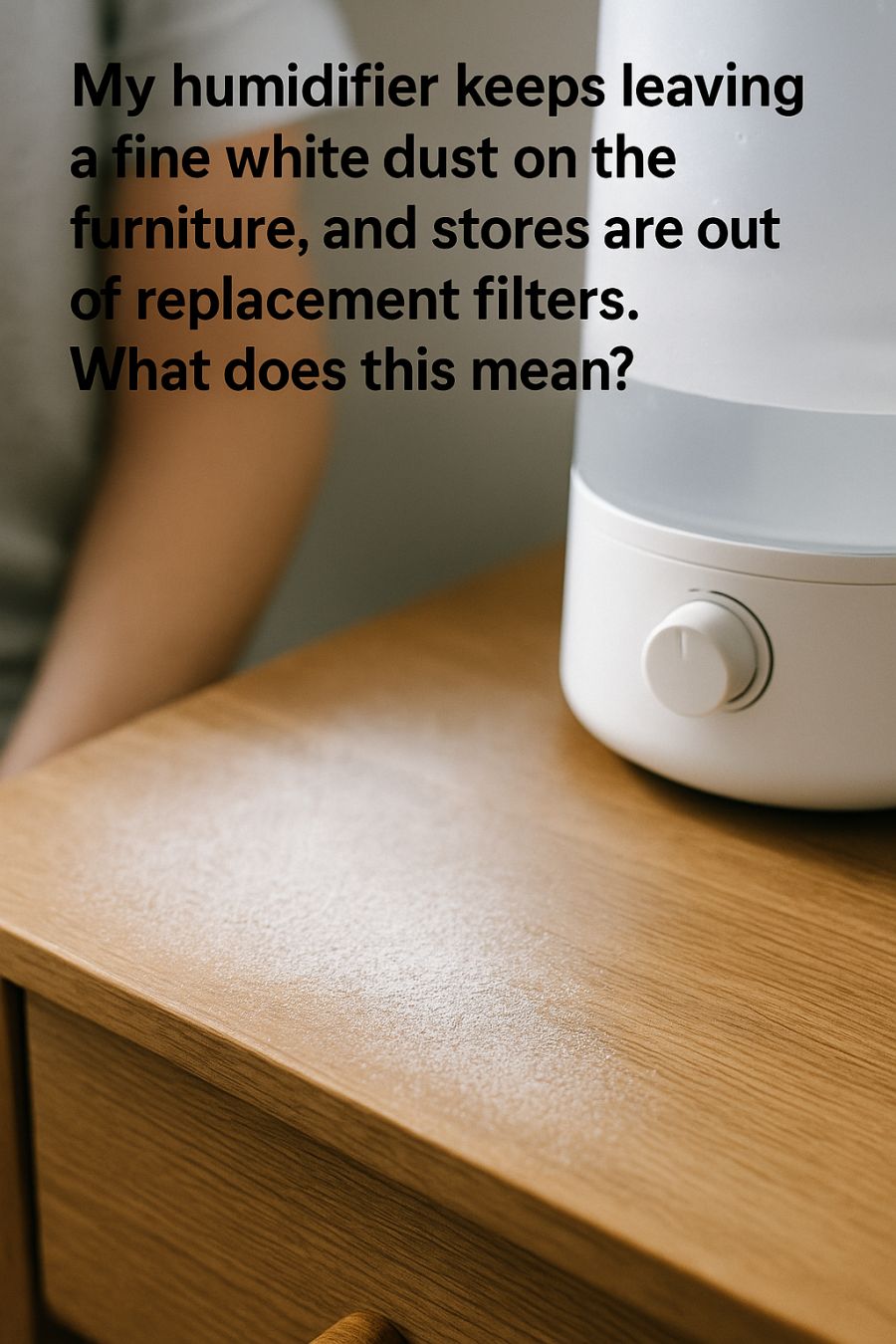
Humidifiers are a staple in many households, particularly during the dry winter months when indoor air can become uncomfortably arid. They provide much-needed moisture to the air, which can help alleviate dry skin, soothe irritated sinuses, and even preserve wooden furniture. However, some users notice an unexpected side effect: a fine white dust settling on their furniture and floors. This phenomenon can be both puzzling and frustrating, especially when replacement filters are nowhere to be found due to supply shortages.
It’s important to understand what causes this white dust and what it means for your home environment. By knowing the reasons behind this common issue and exploring alternative solutions, you can enjoy the benefits of a humidifier without the unwanted residue. This article will guide you through the science behind the white dust, the role of humidifier filters, and practical steps you can take to address the problem.
1. What That Mysterious White Dust Actually Is
The white dust left by some humidifiers is primarily composed of minerals present in tap water. When the water evaporates, these minerals are left behind and settle on surfaces as fine particles. The most common minerals found in tap water are calcium and magnesium, which are responsible for the hardness of the water. These minerals, when dispersed into the air, can land on furniture, floors, and other surfaces, creating a noticeable layer of dust.
In areas with particularly hard water, the concentration of these minerals can be quite high, exacerbating the problem. For example, water with a hardness of more than 180 milligrams per liter (mg/L) of calcium carbonate is considered very hard, and when used in a humidifier, it can result in a significant amount of white dust.
2. Why Ultrasonic Humidifiers Are the Usual Culprit
Ultrasonic humidifiers are a popular choice due to their quiet operation and energy efficiency. They work by using ultrasonic vibrations to create a fine mist of water that is released into the air. However, unlike evaporative humidifiers, ultrasonic models do not have a mechanism to separate the minerals from the water before it is dispersed as mist.
As a result, the minerals in the water are carried along with the mist and eventually settle as white dust. This is a common issue with ultrasonic humidifiers, particularly in regions with hard water. The lack of a filtering mechanism makes ultrasonic humidifiers more prone to producing the white dust phenomenon.
3. How Hard Water Turns Into Airborne Mineral Dust
Hard water contains a higher concentration of dissolved minerals, primarily calcium and magnesium. When this water is used in a humidifier, the ultrasonic or evaporative process does not alter the mineral content of the water. Instead, the water is dispersed into the air in the form of mist or vapor, carrying the dissolved minerals with it.
As the water droplets evaporate, the minerals remain airborne and eventually settle on surfaces as fine dust. This process is similar to what happens when water evaporates from a wet surface, leaving behind mineral deposits, also known as limescale. In the context of a humidifier, these minerals are distributed more widely throughout a room, leading to the accumulation of white dust on furniture and other surfaces.
4. Is The White Dust Dangerous To Breathe Or Touch?
The white dust produced by humidifiers is generally not harmful to most people when inhaled or touched. The minerals, primarily calcium and magnesium, are naturally occurring substances that are not toxic in the amounts typically found in household dust. However, individuals with respiratory issues, such as asthma or allergies, may experience some irritation if exposed to large amounts of airborne particles.
For pets and children, the dust is also considered safe, though it’s always a good idea to keep an eye on the overall cleanliness of your home environment. Regular cleaning can help minimize any potential irritation or discomfort caused by the dust.
5. Why Your Humidifier Filter Matters—And What It Does
Humidifier filters play a crucial role in reducing the amount of mineral dust produced by a humidifier. These filters are designed to trap minerals and other impurities in the water before it is dispersed into the air. By capturing these particles, the filter helps prevent them from becoming airborne and settling as dust.
The effectiveness of a humidifier filter depends on its type and condition. Over time, filters can become clogged with mineral deposits, reducing their ability to capture impurities. Regular replacement of the filter is essential to maintain its efficacy and to ensure the humidifier operates efficiently.
6. Stores Are Out Of Filters: What That Shortage Really Means
The shortage of humidifier filters in stores can be attributed to several factors, including increased demand during the dry winter months and supply chain disruptions. Many households rely on humidifiers for comfort and health reasons, leading to a surge in demand for replacement filters.
Supply chain disruptions, often caused by manufacturing delays or transportation issues, can further exacerbate the shortage. This means consumers may need to seek alternative solutions or be more proactive in maintaining their humidifiers to mitigate the effects of mineral dust.
7. Quick At-Home Tests To Confirm It’s Mineral Residue
To confirm that the white dust is indeed mineral residue, you can perform a simple test at home. Collect some of the dust on a dark surface, such as a piece of black paper or a glass slide. Add a few drops of vinegar to the dust and observe the reaction. If the dust fizzes or dissolves, it is likely composed of calcium carbonate, a common mineral found in hard water.
This reaction occurs because vinegar, an acid, reacts with calcium carbonate to produce carbon dioxide gas, which causes the fizzing. This test can help you determine whether the dust is mineral-based or if it might be another type of household dust.
8. Viral Cleaning Hacks For Dealing With White Dust On Furniture
Several cleaning hacks have gone viral for dealing with the white dust left by humidifiers. One popular method is to use a microfiber cloth to gently wipe down surfaces. Microfiber is effective at trapping dust particles without spreading them around.
Another hack involves using a mixture of water and white vinegar as a cleaning solution. The vinegar helps dissolve any mineral deposits, making it easier to clean surfaces. Simply spray the solution onto the affected area and wipe it clean with a soft cloth.
9. Filter-Free Fixes: Distilled Water, Boiled Water, And DIY Workarounds
Using distilled water in your humidifier is one of the most effective ways to prevent white dust, as it contains no minerals. If distilled water is not readily available, boiling tap water can help reduce its mineral content. Allow the boiled water to cool before using it in your humidifier.
Another DIY workaround involves using a homemade filter. You can create a makeshift filter by placing a clean cloth or coffee filter over the water tank opening to trap some of the minerals before they enter the humidifier.
10. Deep-Cleaning Your Humidifier To Cut Down On Residue
Regular deep cleaning of your humidifier is essential to reduce mineral buildup and improve its efficiency. Start by emptying the water tank and filling it with a solution of equal parts water and white vinegar. Allow the solution to sit for about 30 minutes to dissolve any mineral deposits.
After soaking, use a soft brush or cloth to scrub away any remaining residue. Rinse the tank thoroughly with clean water before refilling it for use. This cleaning routine should be performed at least once a week, particularly in areas with hard water.
11. When To Switch To An Evaporative Or Steam Humidifier
If white dust remains a persistent issue despite your best efforts, consider switching to an evaporative or steam humidifier. Evaporative humidifiers use a wick filter to trap minerals and impurities, preventing them from becoming airborne. Steam humidifiers, on the other hand, boil water to produce steam, leaving minerals behind in the process.
Both types of humidifiers are effective at reducing or eliminating white dust, making them suitable alternatives for those dealing with hard water issues.
12. Long-Term Solutions: Tackling Hard Water At The Source
Addressing hard water at the source can provide a long-term solution to the white dust problem. Installing a water softener in your home can reduce the mineral content of your water supply, decreasing the likelihood of mineral dust from your humidifier.
Water softeners work by exchanging calcium and magnesium ions with sodium or potassium ions, effectively softening the water. While this may represent a significant upfront investment, it can improve not only the performance of your humidifier but also extend the lifespan of other household appliances and plumbing fixtures.
