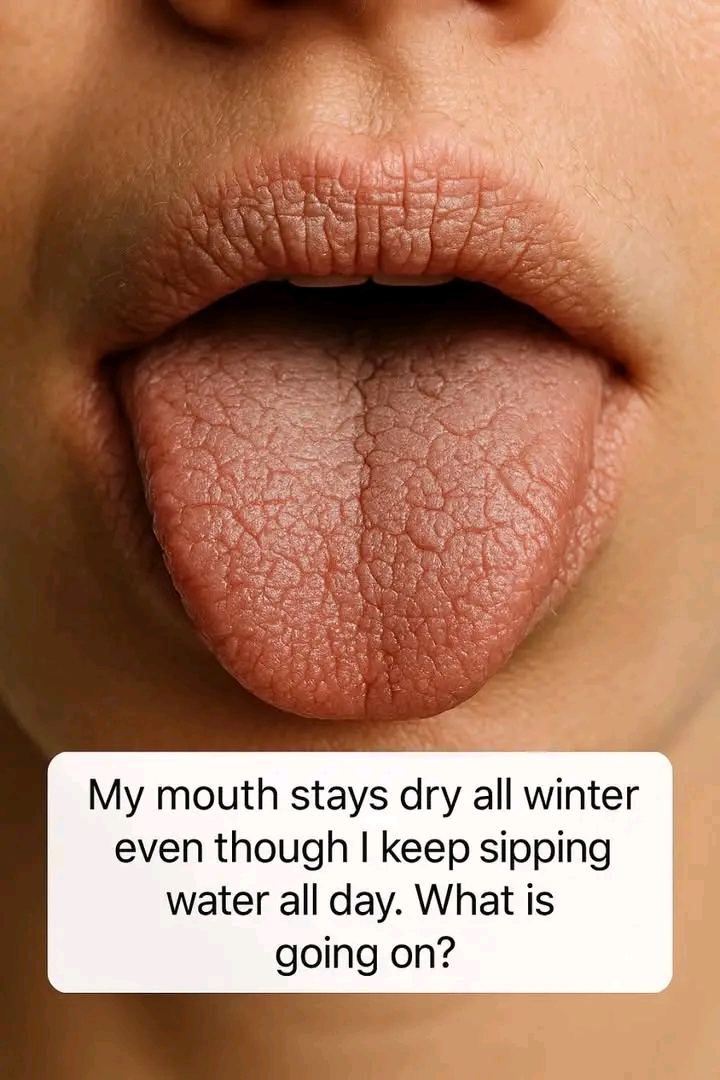
4. Constant Sipping May Backfire: How Overhydrating Can Confuse Your Saliva
While staying hydrated is crucial, overhydrating by constantly sipping water can sometimes backfire. Drinking excessive water can dilute the electrolytes in your body, which are essential for various bodily functions, including the production of saliva.Moreover, constantly sipping water can lead to a condition known as hyponatremia, where sodium levels in the blood become too low. This imbalance can confuse your body’s natural mechanisms, including saliva production, potentially exacerbating the feeling of dry mouth.
5. Mouth Breathing, Stuffy Noses, And Nighttime Dryness
Winter often brings with it the common cold and allergies, leading to stuffy noses and, consequently, mouth breathing. Breathing through your mouth, especially while sleeping, can quickly dry out the oral cavity.Nighttime dryness is particularly problematic because saliva production naturally decreases during sleep. Using nasal strips or a humidifier at night can help keep nasal passages open and maintain moisture levels, reducing the need for mouth breathing.
6. Hidden Medication Side Effects: From Allergy Pills To Antidepressants
Many medications, including antihistamines, decongestants, antidepressants, and blood pressure medications, list dry mouth as a side effect. These medications can interfere with the normal functioning of salivary glands or reduce saliva production.For instance, antihistamines, commonly used to treat allergy symptoms, can significantly decrease saliva flow, leading to dry mouth. If you’re experiencing persistent dry mouth and are on medication, it may be worth discussing with your healthcare provider to explore alternatives or solutions.
