Instead, rinse your mouth with water and wait before brushing.
- Smoking and Tobacco Can Darken Teeth
Tobacco is a well-known cause of tooth discoloration.
Smoking can leave yellow or brown stains on the
teeth, especially with long-term use.
Quitting tobacco is beneficial for your oral health as well as your overall health.
- Your Brushing Technique Matters
Brushing twice a day is important, but more pressure does not mean cleaner teeth.
Aggressive brushing can damage the gums and contribute to enamel wear.
A better approach is:
Use a soft-bristled toothbrush.
Brush gently for about two minutes.
Clean all tooth surfaces.
Avoid scrubbing aggressively.
Replace your toothbrush or brush head regularly.
7. Whitening Toothpaste Has Limits
Whitening toothpastes can help remove some surface stains,
making teeth appear brighter.
However, they generallycannot change the natural color of the dentin underneath the enamel in the same way that professional bleaching treatments can.
If your teeth are sensitive or you are concerned about enamel wear, ask your dentist which toothpaste is appropriate for you.
- Be Careful With DIY Whitening Hacks
Social media is full of homemade whitening tricks involving lemon juice, vinegar, baking soda, or other household ingredients.
These methods are not a good substitute for professionally recommended whitening.
Acidic ingredients can contribute to enamel
erosion, while excessive use of abrasive substances can wear the tooth surface.
A whiter smile is not worth damaging your enamel.
- Some Medications and Dental Conditions Can Affect Tooth Color
Certain medications can cause intrinsic tooth discoloration.
For example, tetracycline-class antibiotics can cause permanent discoloration when exposure occurs during tooth development.
Some dental conditions, including enamel development problems and dental fluorosis, can also affectthe appearance of teeth.
If discoloration appeared suddenly or seems unusual, a dentist can help determine the cause.
- Plaque and Tartar Can Make Teeth
Look Yellow
Plaque is a sticky film that develops on teeth.
If plaque isn’t removed properly, it can harden into tartar, also called dental calculus.
Brushing and flossing help control plaque, but hardened tartar generally requires professional removal.
Regular dental examinations can help identify tartar, cavities, gum disease, and other causes of discoloration.
The appropriate frequency of dental visits depends on your individual oral health rather than automatically being the same for everyone.
- Age and Genetics Also Matter
Teeth can naturally become darker or more yellow-looking with age.
Over
time, enamel can become thinner while the underlying dentin remains visible.
Genetics also influence the natural shade and structure of your teeth.
These factors mean that not everyone can achieve the same shade of white.
- Professional Whitening vs. Home Products
Professional whitening treatments can produce noticeable results, but they are not permanent.
Teeth can gradually become stained again because of diet, tobacco use, age, and other factors.
Whitening products used at home can also work for some people when used correctly, but they may cause temporary tooth sensitivity or
gum irritation.
A dental professional can help determine which option is appropriate for your teeth.
- How White Can Your Teeth Actually Get?
One of the most important things to understand is that healthy teeth don’t have to look perfectly white.
Whitening treatments can make teeth lighter, but there is a natural limit to how much your tooth color can change.
The final result depends on factors such as your original tooth shade, the cause of discoloration, enamel characteristics, and the type of whitening treatment used.
When Should You See
a Dentist?
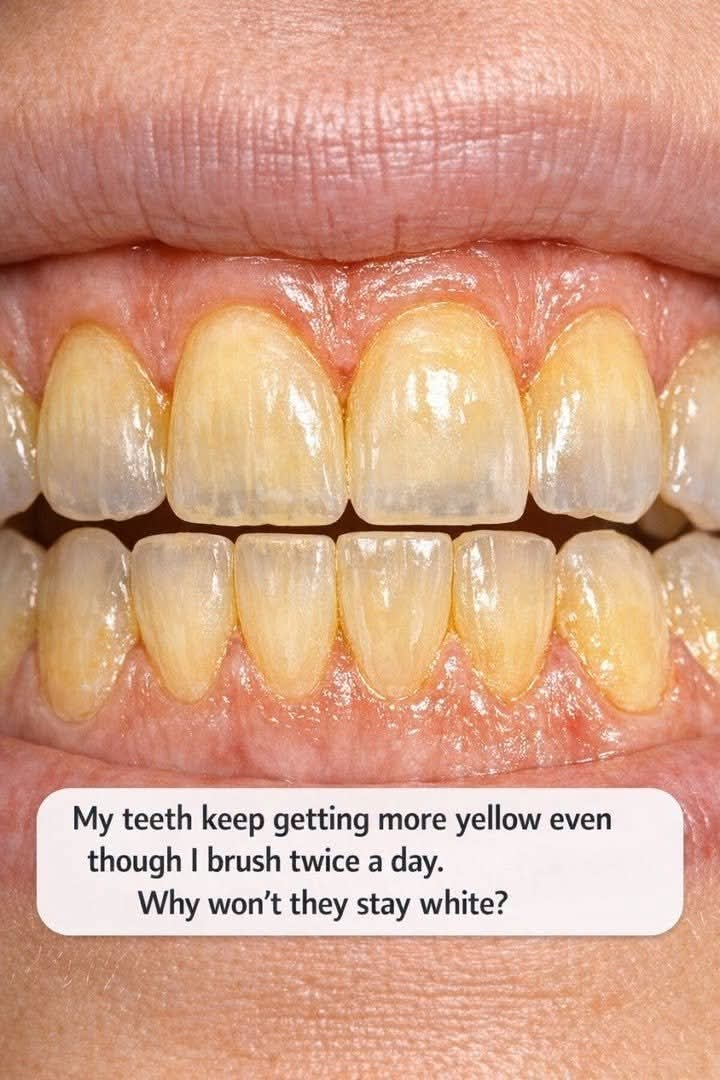
Yellow teeth arenot always a sign of a serious problem.
However, you should consider seeing a dentist if:
The discoloration appeared suddenly.
One tooth becomes noticeably darker than the others.
You have tooth pain or sensitivity.
You notice holes, cracks, or visible damage.
Your gums bleed frequently.
You have significant tartar buildup.
Your teeth continue changing color despite good oral hygiene.
A dentist can determine whether the discoloration is caused by surface stains, tartar, enamel changes, decay, trauma, medication, or another condition.
The Bottom Line
Brushing twice
a day is one of the most important habits for good oral health—but it doesn’t guarantee perfectly white teeth.
Your natural tooth color, age, genetics, diet, tobacco exposure, enamel changes, plaque, tartar, medications, and other factors can all affect how your smile looks.
Instead of trying every viral whitening trick you see online, focus on protecting your enamel and maintaining good oral hygiene.
And remember:Healthy teeth don’t have to be perfectly white.
