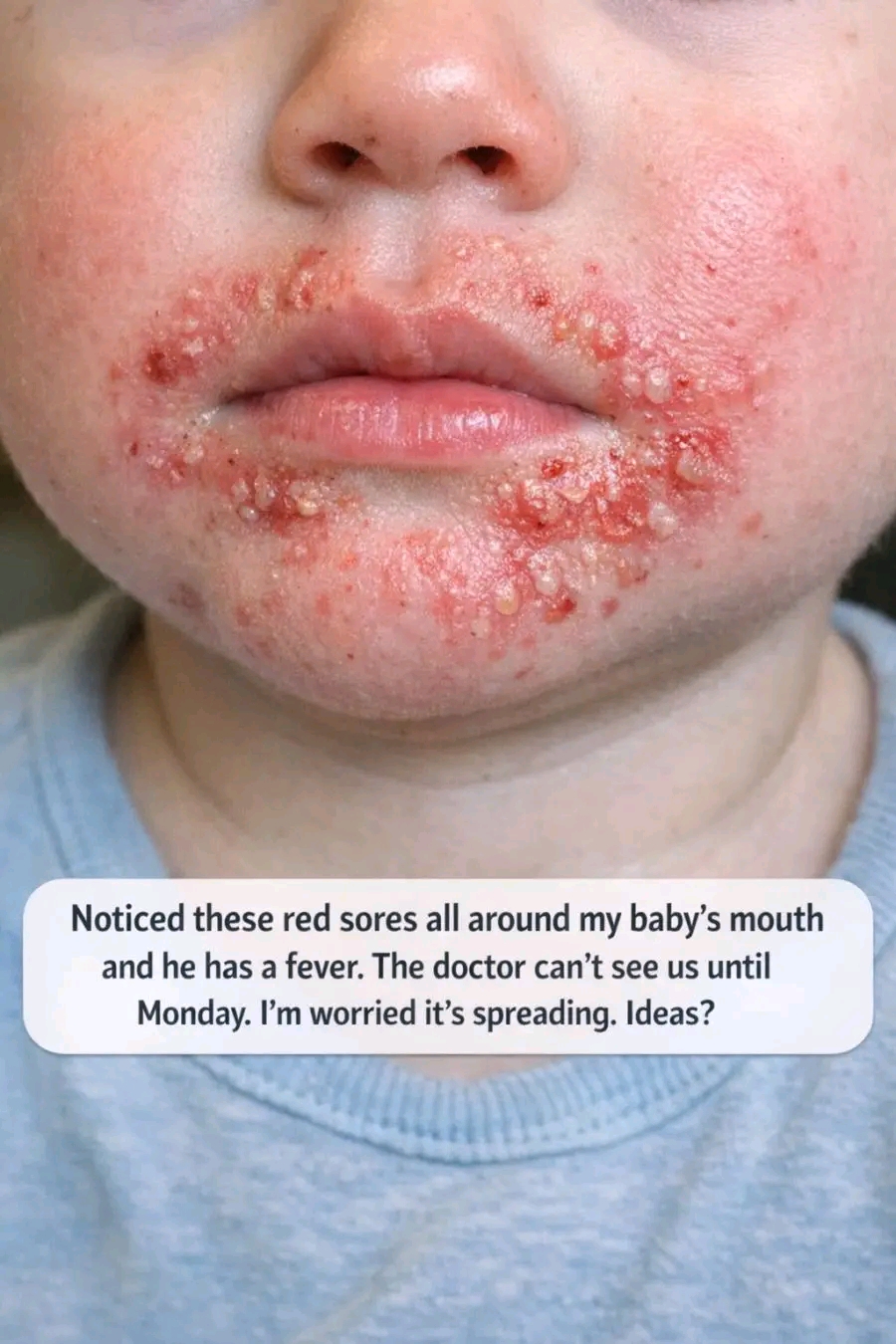
Seeing red sores around your baby’s mouth combined with a fever can be alarming for any parent. It’s natural to feel concerned when your little one is uncomfortable and you cannot immediately access medical care. While waiting for your doctor’s appointment, understanding potential causes and management strategies can help you keep your baby comfortable and prevent the condition from worsening.In this article, we’ll explore possible reasons for these symptoms, such as common viral infections, and offer advice on home care and safety measures. We aim to equip you with information to handle the situation calmly until you can see a healthcare professional.
1. What Those Red Sores Around Your Baby’s Mouth
Might BeRed sores around a baby’s mouth can commonly be attributed to viral infections, such as Hand, Foot, and Mouth Disease (HFMD) or Herpes Simplex Virus (HSV). Both conditions are prevalent in young children and are usually accompanied by fever. HFMD often results in sores not just around the mouth, but also on the hands and feet, whereas HSV tends to localize around the mouth. The sores in HFMD might appear as small, red spots that can become blisters, whereas HSV sores might look like blisters that crust over.Allergic reactions or irritations from foods or substances might also present as red sores, though they are less commonly associated with fever. Observing additional symptoms and monitoring the progression of the sores can provide clues to their cause.
2. Hand, Foot, And Mouth Disease: Classic Symptoms To Look For
HFMD is a viral infection most commonly caused by the Coxsackievirus. Symptoms typically begin with a mild fever, reduced appetite, sore throat, and a general feeling of being unwell. Within one or two days after the fever begins, painful sores can develop in the mouth. These sores usually start as small red spots that blister and may become ulcers.A skin rash with red spots and sometimes blisters might appear on the palms of the hands, soles of the feet, buttocks, and sometimes on the legs and arms. The rash is not itchy but can be uncomfortable. HFMD is most common in children under 5 years old, but it can occur in older children and adults as well.
3. Other Possible Causes Of Mouth Sores And Fever In Babies
Apart from HFMD, Herpes Simplex Virus (HSV) is another potential cause of mouth sores paired with fever in babies. The initial infection, known as primary herpetic gingivostomatitis, can cause painful blisters in the mouth and on the gums, as well as a high fever.Other viral infections, such as chickenpox or measles, can also cause rashes and fever, though they are less localized to the mouth area. Bacterial infections, while less common, could also be a cause and would typically present with additional symptoms such as swelling and more severe illness. Allergic reactions or irritants might cause sores but would rarely be associated with a fever.
