Young seedlings are particularly vulnerable to pests such as slugs, snails, and birds. Mesh produce bags can act as protective barriers to keep these pests at bay. Cut the bags and place them over the seedlings, securing them at the base with garden stakes or stones. This creates a makeshift cloche that shields the plants while allowing light, air, and water to reach them.
For larger seedlings, you can fashion a small hoop house by bending wire into arches and covering the structure with the mesh bag. This setup can easily be removed for weeding or harvesting, and re-secured as needed. Utilizing mesh bags in this way is a cost-effective solution to protect your young plants from common garden pests.
3. Use as Hanging Planters and Support Slings

Mesh produce bags can be repurposed into hanging planters, perfect for small spaces or as decorative garden accents. To create a hanging planter, fill the mesh bag with soil and a plant of your choice, then secure the top with twine or wire, creating a loop for hanging. These planters are especially suited for trailing plants like strawberries or herbs.
Additionally, mesh bags can be used as support slings for melons, pumpkins, or other heavy fruits growing on trellises. Simply wrap the fruit in a mesh bag and tie it to the trellis, distributing the weight and preventing the fruit from breaking off the vine prematurely. The flexibility and strength of the mesh make it an ideal support material.
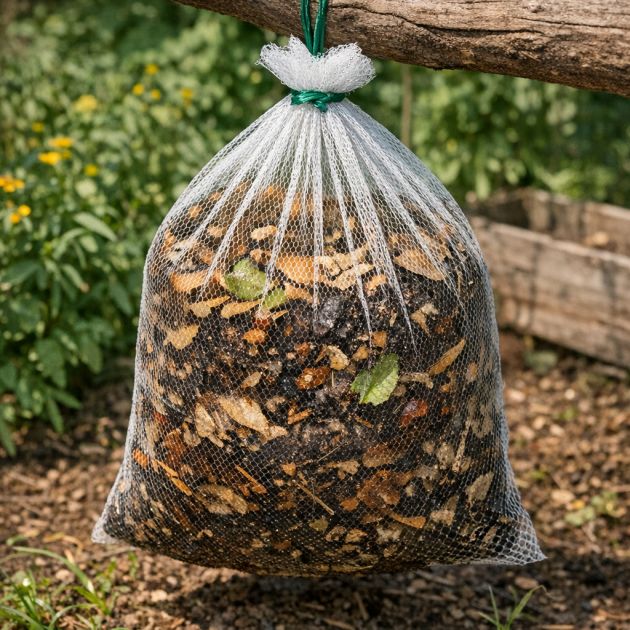
4. Make DIY Compost and Leaf Mold Bags