Have you ever pulled a slice of deli ham from the fridge only to notice a peculiar rainbow-like sheen glistening on the surface? This iridescent quality can be both mesmerizing and concerning, especially if you’re unsure about the freshness of your meat. The appearance of this colorful shine might make you question whether it’s safe to consume.In this article, we’ll delve into the science behind this phenomenon, explaining what causes the iridescent effect on ham and when it is considered normal. We’ll also provide guidance on how to tell if your deli ham is still good to eat and offer expert tips on buying and storing your deli meats to prevent spoilage.1. What That Rainbow Shine on Deli Ham Actually IsThe rainbow-like shine seen on deli ham is known as iridescence. This occurs when the surface structure of the meat reflects light at different angles, creating a spectrum of colors. This effect is similar to the rainbow you see on a soap bubble or the surface of a DVD. The precise arrangement of muscle fibers and fat, along with the angle of light, contributes to this colorful display.It’s important to note that this iridescence is not an indicator of spoilage. Instead, it is a natural occurrence that results from the meat’s structure and how it interacts with light. In fact, this phenomenon is often observed in various other types of sliced meats, such as roast beef and turkey.2. The Science Behind Iridescent Meat SurfacesThe iridescent effect on meat surfaces is primarily due to the diffraction of light. When light hits the surface of the meat, it is scattered by the muscle fibers, which act like tiny prisms. This scattering causes the light to split into its component colors, much like a prism separates white light into a rainbow.Additionally, the cut of the meat plays a significant role in this process. When meat is sliced very thinly, the uniformity and alignment of the muscle fibers enhance the light diffraction, making the iridescent effect more pronounced. This is why thinner slices of deli meats are more likely to exhibit this colorful sheen.3. When a Rainbow Sheen Is Completely NormalThe appearance of a rainbow sheen on deli ham is generally considered normal and safe. This is particularly true if the ham has been properly stored and is within its expiration date. The iridescence is a natural property of the meat and does not affect its taste or nutritional value.As long as the ham does not exhibit any signs of spoilage, such as an off smell or slimy texture, the iridescent surface should not be a cause for concern. Many consumers find this shimmer to be a sign of high-quality meat that has been sliced correctly.4. Visual Red Flags That Signal Ham Has Gone BadWhile the iridescent shine is not a sign of spoilage, there are other visual indicators that can alert you to ham that has gone bad. Discoloration, such as a green, gray, or brownish tint, is a strong signal that the meat is no longer safe to eat. Mold growth, which can appear as fuzzy patches or spots, is another clear indication of spoilage.Additionally, if the surface of the ham appears excessively shiny or slimy, it may be a sign of bacterial growth. In such cases, it is best to err on the side of caution and discard the meat.5. The Smell and Touch Tests You Should Always DoIn addition to visual cues, your senses of smell and touch are valuable tools in determining the freshness of deli ham. Fresh ham should have a mild, slightly sweet aroma. If the ham emits a sour, ammonia-like, or otherwise unpleasant odor, it is likely spoiled.Touch is another reliable test. The surface of the ham should feel dry or slightly moist, but not sticky or slimy. A slimy texture is a classic sign of bacterial growth and indicates that the meat should be discarded.6. How Processing and Slicing Can Create That ShimmerThe processing and slicing methods used in preparing deli ham can enhance the iridescent effect. During processing, the meat is often sliced very thinly to achieve the desired texture and flavor. This thin slicing aligns the muscle fibers in such a way that light diffraction is maximized, resulting in the characteristic rainbow sheen.AdvertisementFurthermore, the use of sharp, precise slicing tools ensures a clean cut, which can also contribute to the appearance of iridescence. The smoother the surface of the slice, the more likely it is to reflect light in a way that creates the shimmering effect.7. Additives, Curing, and Why Some Hams Shine MoreCertain additives and curing processes can influence the degree of iridescence observed in deli ham. For example, phosphates are often added to enhance the ham’s moisture retention and texture. These additives can alter the refractive properties of the meat, making the iridescent effect more pronounced.The curing process itself, which involves the use of salt and nitrates, can also impact the meat’s surface structure, further enhancing light diffraction. Hams that are cured and smoked tend to have a more noticeable iridescent sheen due to the changes in their muscle fiber structure.8. Storage Mistakes That Turn Harmless Shine Into SpoilageAdvertisementProper storage is crucial in preventing harmless iridescence from turning into spoilage. Deli ham should always be stored in the refrigerator at temperatures below 40°F (4°C) to slow bacterial growth. Using airtight containers or wrapping the ham tightly in plastic wrap can help maintain freshness and prevent contamination.It’s also important to pay attention to the expiration date and consume the ham within a few days of opening the package. Leaving the ham exposed to air or storing it at higher temperatures can accelerate spoilage, leading to unpleasant odors and textures.9. When to Toss the Ham and When It’s Safe to EatDetermining when to toss deli ham depends on a combination of visual, olfactory, and tactile assessments. If the ham shows any signs of discoloration, mold, or off-putting odors, it should be discarded immediately. A slimy or sticky texture is another indicator that the ham is no longer safe to eat.AdvertisementConversely, if the ham’s only unusual feature is its iridescent sheen, and it otherwise smells and feels fresh, it is generally safe to consume. Trusting your senses is key, and if you’re ever in doubt, it’s best to err on the side of caution.10. Expert Tips for Buying and Storing Deli Ham SafelyWhen purchasing deli ham, choose a reputable supplier and check that the product is within its expiration date. Opt for ham that is pre-packaged or freshly sliced in-store, and avoid meats that appear discolored or have an off smell.For storage, keep deli ham in the coldest part of your refrigerator, ideally in a sealed container or tightly wrapped to prevent exposure to air. Consuming the ham within three to five days of opening will ensure optimal freshness and safety.11. What to Do If You’re Still Worried About That RainbowIf you’re still concerned about the iridescent shine on your deli ham, remember that it is typically harmless and a natural occurrence. However, if you find it off-putting or are unsure about the ham’s freshness, consider using the ham in cooked dishes where the texture and appearance are less noticeable.For those who remain uneasy, buying thicker cuts of ham or opting for freshly roasted meats that haven’t been processed as extensively might help alleviate concerns. Ultimately, trust your instincts and use your senses to guide you in determining the safety of your food.
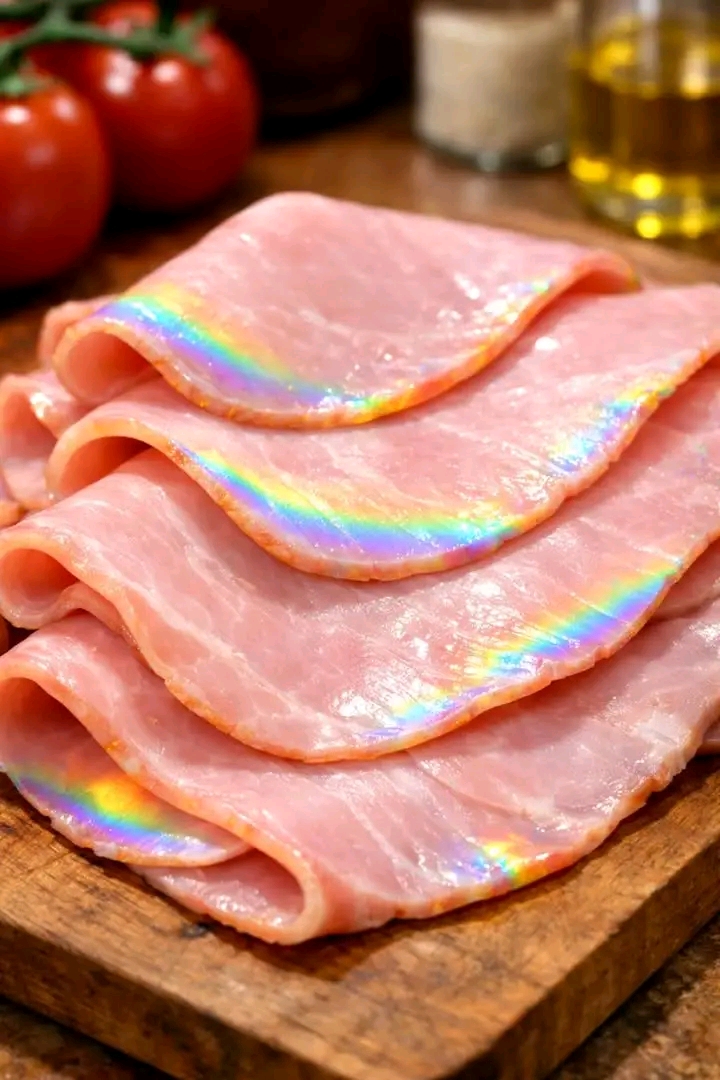
Pulled deli ham from the fridge and noticed a rainbow-like shine on the slices. Is that normal?
ADVERTISEMENT
