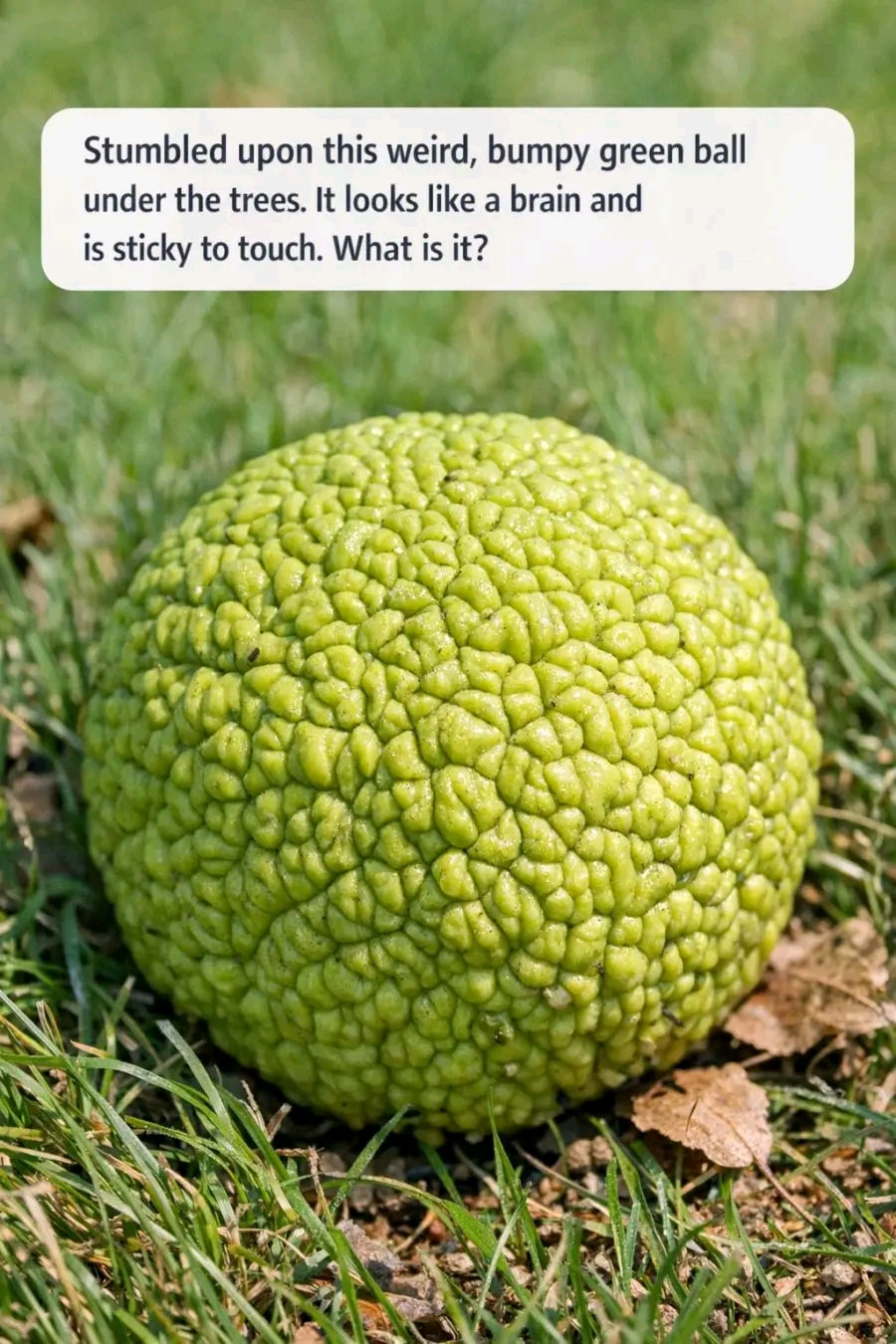
4. Is This Strange Green Ball Safe To Touch or Smell?While the Osage orange may appear intimidating due to its size and unusual texture, it is generally safe to touch and smell. The sticky sap, although messy, is not toxic. Some people even find the fruit’s faint citrus-like scent pleasant.However, it’s advisable to wash your hands after handling the fruit, as the sap can cause mild skin irritation in sensitive individuals. As with any wild plant, it’s best to exercise caution and avoid placing the fruit near your face or eyes.
5. Can You Eat Osage Oranges—or Are They Poisonous?Despite resembling some edible fruits, Osage oranges are not considered palatable for humans. The fruit is extremely hard and fibrous, with a bitter taste that discourages consumption.While not toxic, the fruit’s texture and taste make it unsuitable for eating. Ingesting large quantities of the seeds or sap is not recommended, as they can cause stomach discomfort. Historically, there are no records of Osage oranges being used as a food source for humans.
6. What Wildlife Actually Does With Osage Orange FruitsWhile humans may not find Osage oranges appetizing, certain wildlife species make use of these fruits. Squirrels and other rodents have been known to gnaw through the tough exterior to access the seeds inside, which are a rich source of nutrients.Interestingly, the Osage orange fruit was likely consumed by large megafauna such as mammoths and giant sloths in prehistoric times. These animals would have been capable of breaking open the hard fruits and dispersing the seeds across the landscape, aiding in the tree’s propagation.
