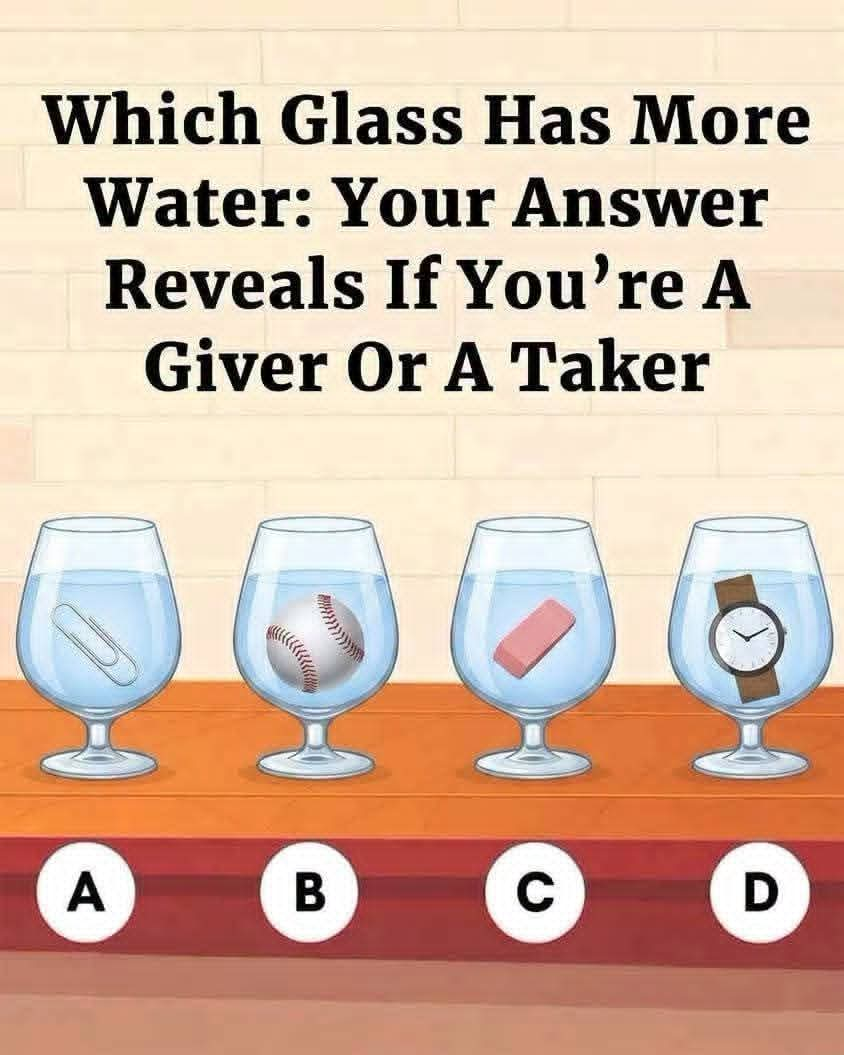
A useful check is to imagine removing each object while keeping the water. The glass that loses the least occupied space would still contain the greatest amount of water. That mental comparison directs attention toward displacement rather than the apparent height of the surface alone. It also explains why the largest object is not the answer, even if it makes its glass look impressively full.
The conclusion depends on the conditions of the illustration. The glasses must be comparable, and the relevant comparison is the part of each object actually submerged. A picture is not a precise measurement, so the intended solution follows the simplified arrangement described rather than an exact experiment involving unknown object sizes or materials.
The title also invites a personality interpretation, but the physical explanation does not establish whether someone is generous or selfish. Choosing a glass is not evidence of a person’s character. The useful part of the exercise is the opportunity to notice which visual feature first caught your attention and then compare that impression with the logic of the puzzle.
With the stated assumptions, Glass A is the answer. The broader lesson is about checking what a picture measures: equal-looking levels do not necessarily mean equal amounts of water when different objects share the space.
Looking again is therefore more useful than rushing to defend a first impression. Once displacement is considered, the apparent contradiction disappears. The glass looks full partly because of its contents, and those contents include more than water alone.
