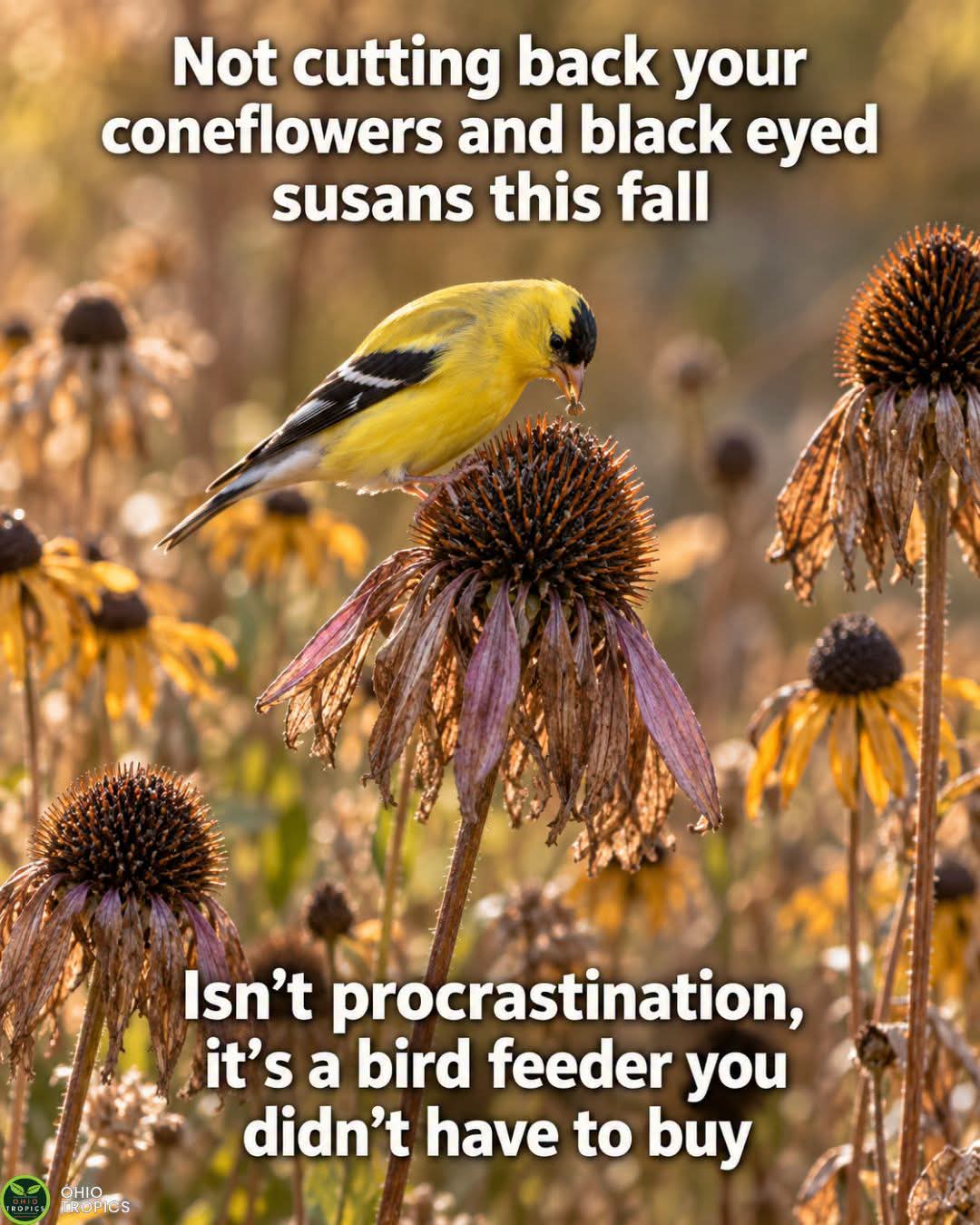
That goldfinch working over a spent coneflower head isn’t settling for scraps. It’s found one of the more reliable food sources standing in your entire yard through the leanest stretch of the year.
Goldfinches have bills shaped almost like small forceps, purpose built for prying seeds out of a tightly packed seed head, which makes coneflower and black-eyed Susan close to ideal targets once the petals have dropped and the center cone dries out. That timing lines up with something else specific to this species. Unlike most songbirds, goldfinches hold onto their duller, non-breeding plumage well into spring rather than molting into bright color early, which means they’re relying on foraging through the coldest months without the seasonal camouflage advantage other birds get. A yard full of standing seed heads becomes a dependable, low effort food source exactly when insects and fresh vegetation have mostly disappeared and options are genuinely limited.
The structure of these particular seed heads is part of what makes them so functional through winter specifically. Coneflower’s stiff, spiky center cone holds together through repeated freezing, thawing, and snow cover without collapsing the way softer plant material would, which is why you’ll often see a finch clinging sideways to a stem in the dead of winter, still working through individual seeds one at a time. Black-eyed Susan’s cone center behaves similarly, staying upright and accessible long after the surrounding petals have gone brown and curled.
There’s a second layer of value happening below what’s visible in this photo. Coneflower and black-eyed Susan both have hollow or pithy stems, and many native bee species use exactly that kind of standing stem to overwinter, tucked inside until temperatures warm enough in spring for them to safely emerge. Cutting everything back in October doesn’t just remove a food source for birds like this goldfinch, it can eliminate the shelter an entire generation of pollinators was counting on to survive the season.
None of this requires letting your whole yard go wild through winter. It just means the impulse to tidy everything up in October is worth resisting for these two plants specifically. Leave them standing until late winter or early spring, once new growth is about to emerge and the birds and insects relying on them have had their season, then cut back for the fresh start ahead. 🐦
