🌶️ The Bell Pepper Debate: Do 4-Bump Peppers Really Taste Sweeter?
If you’ve ever spent time browsing produce tips online, you’ve probably come across an interesting claim:
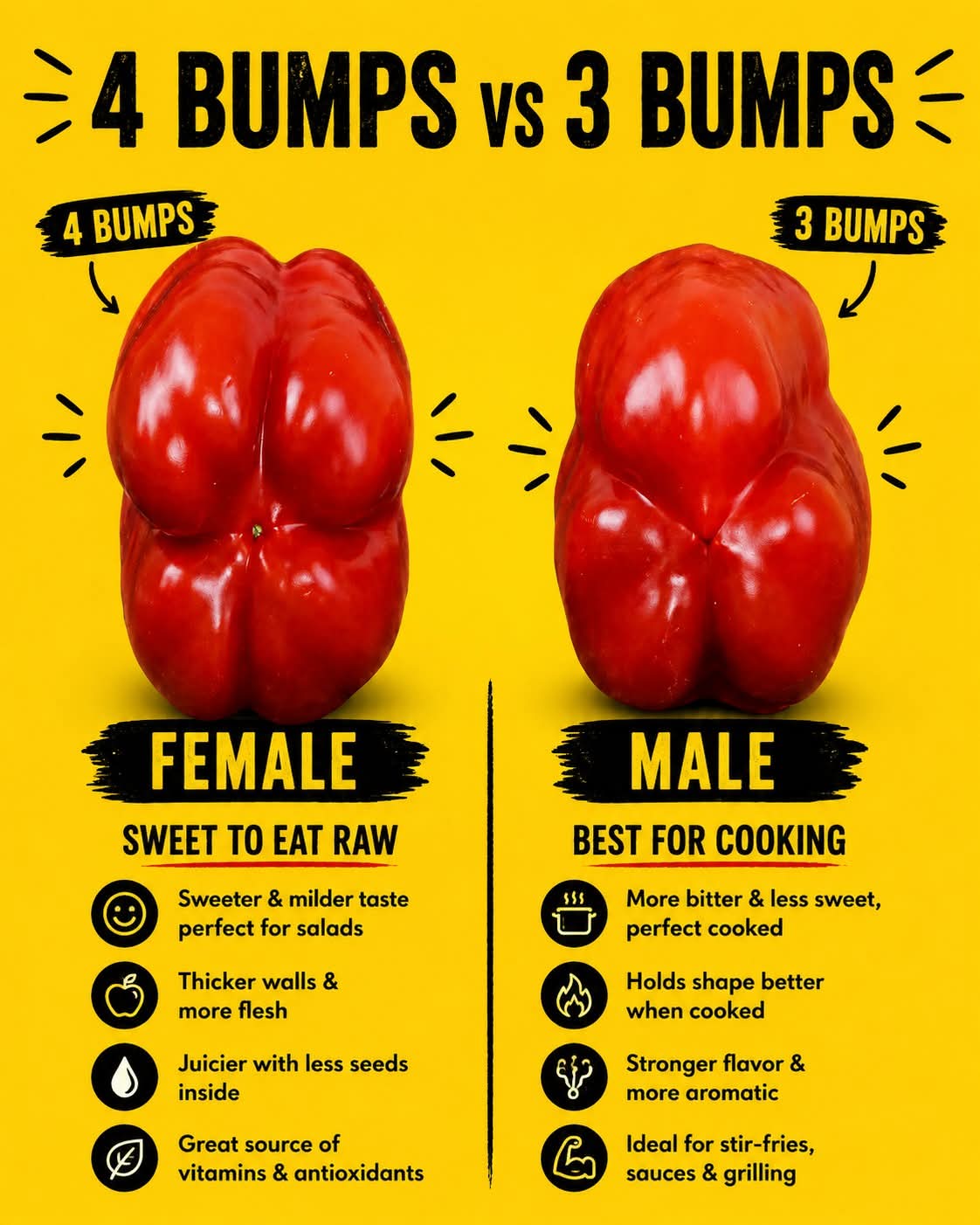
Bell peppers with 4 bumps on the bottom are sweeter and better for eating raw, while peppers with 3 bumps are better for cooking.
It’s one of those kitchen secrets that gets passed around from cook to cook, often sparking lively debates in grocery store aisles and family kitchens alike.
But is there any truth to it?
Let’s take a closer look.
What Are the “Bumps” on a Bell Pepper?
Turn a bell pepper upside down and you’ll notice raised sections, often called lobes or bumps.
Some peppers have three lobes.
Others have four.
Occasionally, you’ll even find peppers with a different number depending on the variety and growing conditions.
According to popular kitchen wisdom, four-lobed peppers tend to be sweeter, juicier, and better for fresh salads and snacking, while three-lobed peppers are believed to be slightly firmer and more suitable for cooking.
Fact or Food Myth?
The reality is a little more complicated.
The sweetness of a bell pepper depends on several factors, including:
- Variety
- Growing conditions
- Sun exposure
- Ripeness at harvest
- Storage conditions
The number of lobes alone doesn’t scientifically determine how sweet a pepper will taste.
However, many home cooks insist they’ve noticed differences over the years, which is why the belief continues to circulate.
Whether it’s proven science or simply generations of kitchen experience, the tip remains a favorite among pepper lovers.
The Biggest Factor: Ripeness
When it comes to sweetness, color often matters more than the number of bumps.
Green bell peppers are harvested earlier and tend to have a more grassy, slightly bitter flavor.
As peppers continue to ripen, they may turn:
- Red
- Yellow
- Orange
- Purple (certain varieties)
These mature peppers generally develop more natural sugars and a sweeter taste.
That’s why red bell peppers are often considered the sweetest of the common varieties.
Packed With Nutrition
No matter how many bumps they have, bell peppers are nutritional powerhouses.
They are rich in:
Vitamin C
Bell peppers contain impressive amounts of vitamin C, which helps support the immune system and overall health.
Antioxidants
Peppers provide antioxidants that help protect cells from damage caused by free radicals.
Fiber
The fiber in bell peppers supports healthy digestion and helps create a feeling of fullness.
Vitamin A
Especially in red peppers, vitamin A contributes to healthy vision and immune function.
Low Calories
Bell peppers add flavor, color, and crunch to meals while remaining naturally low in calories.
Best Ways to Enjoy Bell Peppers
One reason bell peppers are so popular is their versatility.
You can enjoy them:
🥗 Raw in salads
🧀 Stuffed and baked
🔥 Grilled on the barbecue
🍳 Stir-fried with vegetables
🥣 Added to soups and stews
🌮 Mixed into tacos and fajitas
🍕 Used as pizza toppings
No matter how you prepare them, they bring vibrant color and flavor to the table.
Choosing the Perfect Pepper
When shopping, look for peppers that are:
- Firm to the touch
- Brightly colored
- Free from soft spots
- Heavy for their size
- Smooth and shiny
Fresh peppers should feel crisp and solid, regardless of how many lobes they have.
The Final Verdict
The famous “3-bump versus 4-bump” rule may be more kitchen folklore than scientific fact, but it certainly makes grocery shopping more interesting.
What we do know is that bell peppers are one of the healthiest and most versatile vegetables you can buy. Whether you prefer them raw, roasted, grilled, or stuffed, they’re packed with nutrients, color, and flavor.
So the next time you’re choosing peppers at the store, take a look at the bottom.
You might find yourself joining one of the oldest produce debates around.
🌶️ Now we have to ask:
Do you usually buy 3-bump peppers or 4-bump peppers? And have you ever noticed a difference in taste?
