: Delicious Ways to Fuel Your Body 💪🥚🐟
Protein is one of the most important nutrients in our diet. It helps provide the building blocks our bodies need for muscles, tissues, enzymes, hormones, and many other functions.
And you don’t have to rely on protein shakes or expensive supplements to get more protein.
There are plenty of everyday foods that are naturally rich in protein—and many of them are simple, delicious, and easy to add to meals.
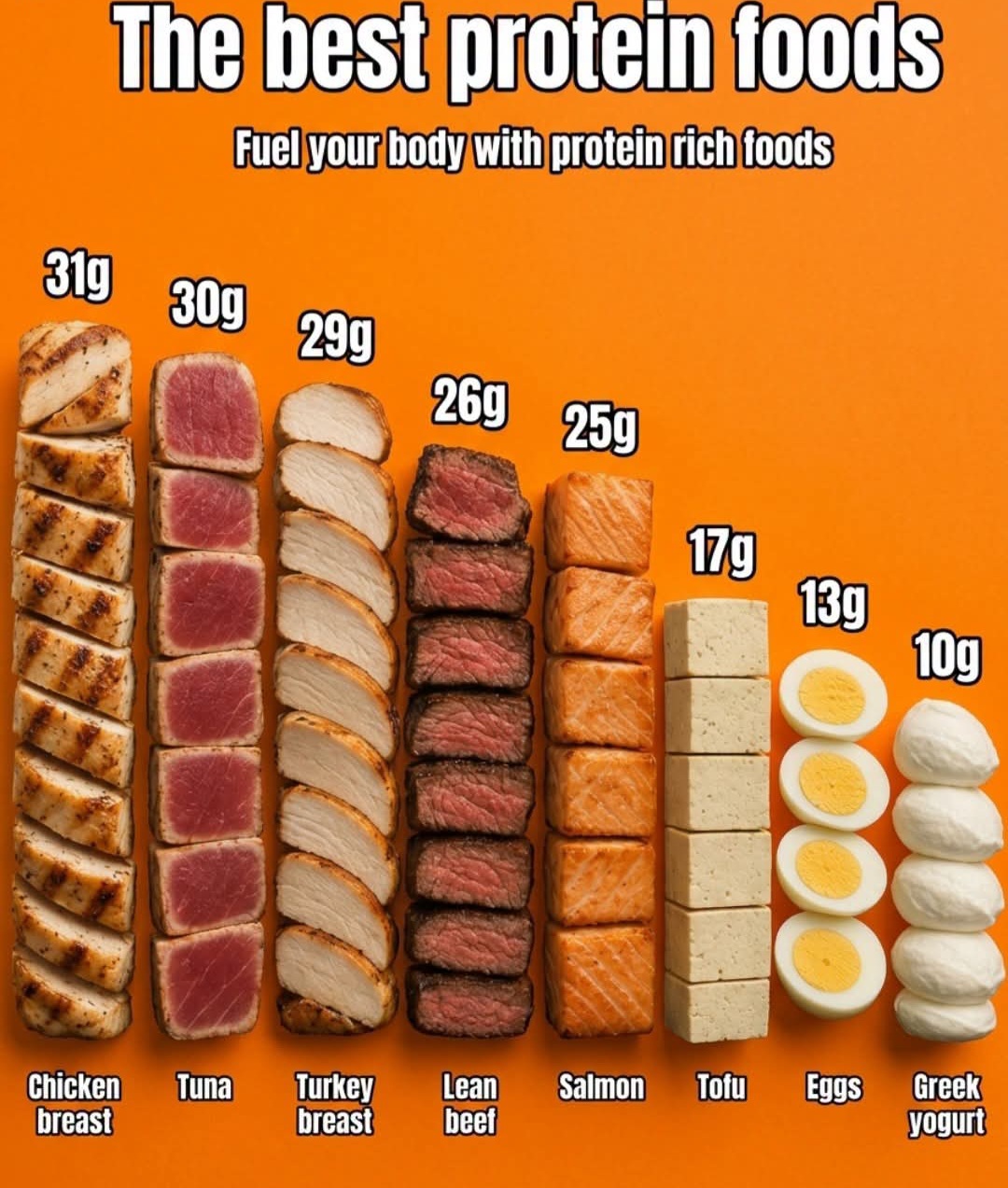
The image highlights several popular protein-rich foods, including chicken breast, tuna, turkey breast, lean beef, salmon, tofu, eggs, and Greek yogurt.
But remember: protein amounts vary depending on the brand, cut, cooking method, and serving size. The numbers shown in the graphic should be treated as approximate, rather than universal values.
🍗 1. Chicken Breast — About 31g Protein
Chicken breast is one of the most popular high-protein foods for a reason.
It’s versatile, relatively lean, and can be prepared in countless ways.
You can:
- Grill it
- Bake it
- Air-fry it
- Slice it into salads
- Add it to wraps
- Use it in sandwiches
- Toss it into pasta
- Add it to rice and vegetables
A simple grilled chicken breast with roasted vegetables makes an easy high-protein meal.
Tip: Don’t overcook chicken breast. Cooking it just until it reaches a safe internal temperature helps keep it juicy instead of dry.
🐟 2. Tuna — About 30g Protein
Tuna is another convenient protein option.
Canned tuna is especially useful because it can be stored in the pantry and turned into a quick meal in minutes.
Try making:
- Tuna salad
- Tuna sandwiches
- Tuna wraps
- Tuna pasta
- Tuna-stuffed potatoes
- Tuna salad bowls
You can mix tuna with Greek yogurt instead of some or all of the mayonnaise for a creamy variation.
If you eat canned tuna regularly, it’s also worth varying the types of seafood you eat and following local or national guidance about fish choices and mercury exposure.
🦃 3. Turkey Breast — About 29g Protein
Turkey breast is another lean source of protein.
It’s especially popular around the holidays, but there’s no reason to save it for Thanksgiving or Christmas.
Sliced turkey can make an easy lunch when added to:
- Whole-grain bread
- Wraps
- Salads
- Grain bowls
- Sandwiches
Leftover roasted turkey is also excellent in soups, casseroles, quesadillas, and sandwiches.
🥩 4. Lean Beef — About 26g Protein
Lean beef provides plenty of protein along with important nutrients such as iron, zinc, and vitamin B12.
Choose leaner cuts when you want to keep saturated fat lower.
Some options include:
- Sirloin
- Tenderloin
- Eye of round
- Top round
- Extra-lean ground beef
A simple steak served with vegetables and potatoes can be a satisfying protein-rich dinner.
And lean ground beef is incredibly versatile.
Use it for:
Tacos → burgers → meatballs → stuffed peppers → chili → pasta sauce
🐟 5. Salmon — About 25g Protein
Salmon provides high-quality protein along with omega-3 fatty acids.
It’s one of those foods that can feel fancy without actually being difficult to prepare.
Season a salmon fillet with:
- Lemon
- Garlic
- Black pepper
- Paprika
- Herbs
- A little olive oil
Then bake, grill, or air-fry it.
Serve it with roasted vegetables, rice, potatoes, or a fresh salad.
❤️ Don’t Forget the Healthy Fats
One reason salmon stands out from many other protein choices is that it’s also a source of beneficial omega-3 fats.
Fish can be part of a balanced eating pattern, and dietary guidelines generally recommend including seafood regularly.
🌱 6. Tofu — About 17g Protein
Protein doesn’t have to come from meat.
Tofu is a plant-based protein made from soybeans and can be used in everything from stir-fries to soups.
You can:
- Pan-fry it
- Bake it
- Air-fry it
- Add it to stir-fries
- Scramble it
- Put it in curries
- Blend silken tofu into sauces or desserts
Extra-firm tofu is especially useful when you want crispy pieces.
Try pressing it first to remove excess moisture, cutting it into cubes, seasoning it, and baking or air-frying until golden.
🥚 7. Eggs — About 13g
Eggs are one of the easiest protein-rich foods to keep in the kitchen.
They’re inexpensive, versatile, and quick to prepare.
You can make:
- Scrambled eggs
- Fried eggs
- Hard-boiled eggs
- Soft-boiled eggs
- Omelets
- Egg sandwiches
- Egg salads
- Frittatas
They’re also excellent for breakfast when paired with vegetables and whole-grain toast.
🥚 A Quick Egg Tip
Keep a few hard-boiled eggs in the refrigerator for an easy addition to salads, sandwiches, or snacks.
Just remember that the protein amount depends on how many eggs you’re eating. A single large egg contains roughly 6 grams of protein, so the graphic’s 13g figure represents more than one egg.
🥣 8. Greek Yogurt — About 10g
Greek yogurt is a convenient protein-rich food that works for breakfast, snacks, smoothies, and desserts.
Top it with:
- Berries
- Banana
- Nuts
- Seeds
- Cinnamon
- Oats
- A little honey
For a quick snack, combine plain Greek yogurt with berries and chopped walnuts.
You can also use Greek yogurt as a creamy base for dips and sauces.
🍓 Choose Your Yogurt Carefully
Protein content varies significantly between Greek yogurt brands and varieties.
Check the nutrition label if you’re specifically trying to increase your protein intake.
Plain Greek yogurt is also often a good choice if you want to control added sugar.
💪 Why Is Protein Important?
Protein isn’t just about building muscle.
Your body uses protein for many important jobs.
It helps maintain and repair tissues and is involved in the production of enzymes, hormones, antibodies, and other important molecules.
Protein also tends to be filling, which is one reason protein-rich foods can be useful as part of satisfying meals.
However, more protein isn’t automatically better. Your ideal intake depends on factors such as age, body size, activity level, and overall health.
🍽️ How Much Protein Do You Need?
There isn’t one perfect amount of protein that applies to everyone.
For healthy adults, the general recommended dietary allowance is approximately 0.8 grams of protein per kilogram of body weight per day, although individual needs can be higher depending on circumstances such as training, pregnancy, age, or recovery.
So rather than focusing on one giant serving of protein, it can be helpful to include a protein source throughout the day.
For example:
Breakfast: Eggs + Greek yogurt
Lunch: Chicken salad
Snack: Greek yogurt + nuts
Dinner: Salmon + vegetables + rice
That’s a much more practical approach than trying to get all your protein in one meal.
🥗 Build a Balanced High-Protein Meal
Protein is only one part of a healthy meal.
Try combining a protein source with vegetables or fruit and a source of carbohydrates and/or healthy fats.
🍗 Chicken Bowl
Chicken + brown rice + roasted vegetables + avocado
🐟 Salmon Plate
Salmon + potatoes + broccoli + lemon
🥩 Beef Dinner
Lean beef + roasted vegetables + baked potato
🌱 Tofu Stir-Fry
Tofu + mixed vegetables + rice + flavorful sauce
🥚 Breakfast Bowl
Eggs + vegetables + whole-grain toast + fruit
🥣 Yogurt Bowl
Greek yogurt + berries + oats + nuts
The goal isn’t simply to eat “more protein.”
It’s to create balanced, satisfying meals.
💡 Easy Ways to Add More Protein
If you feel like your meals are lacking protein, small changes can make a big difference.
Try:
✔️ Add an egg to breakfast.
✔️ Use Greek yogurt as a snack.
✔️ Add chicken or tuna to a salad.
✔️ Choose salmon instead of a less protein-rich main dish.
✔️ Add tofu to stir-fries.
✔️ Keep hard-boiled eggs ready in the refrigerator.
✔️ Add beans or lentils to soups and salads.
✔️ Use Greek yogurt in place of some mayonnaise or sour cream.
✔️ Add nuts and seeds to yogurt or oatmeal.
⚠️ Don’t Judge Protein Foods by the Numbers Alone
A food containing more protein isn’t necessarily automatically healthier.
For example, two foods can contain similar amounts of protein while being very different nutritionally.
Consider the whole food:
- Protein
- Fiber
- Vitamins
- Minerals
- Fat
- Sodium
- Added sugars
- Portion size
- Overall dietary pattern
That’s why variety is so important.
Chicken, fish, eggs, dairy, soy foods, beans, lentils, nuts, and seeds can all have a place in a balanced diet.
🧡 The Bottom Line
You don’t need a complicated diet to include plenty of protein.
Some of the best sources are foods you’ve probably been eating for years:
🍗 Chicken breast — about 31g
🐟 Tuna — about 30g
🦃 Turkey breast — about 29g
🥩 Lean beef — about 26g
🐟 Salmon — about 25g
🌱 Tofu — about 17g
🥚 Eggs — about 13g for the serving shown
🥣 Greek yogurt — about 10g for the serving shown
Exact amounts will vary with serving size and the specific food.
The real secret isn’t choosing just one “best” protein food.
It’s enjoying a variety of protein-rich foods and building balanced meals that you actually enjoy eating.
What’s your favorite way to get protein—chicken, eggs, fish, beef, tofu, or Greek yogurt? 🥚🍗🐟🥩🌱🥣
