The Best Way to Freeze Zucchini So It Doesn’t Turn Into Mush
If you’ve ever frozen fresh zucchini only to end up with a watery, mushy mess after thawing, you’re not alone.
Many people follow the traditional method of slicing or cubing zucchini, blanching it, and freezing it. While blanching helps preserve color and slows down enzyme activity, it doesn’t prevent the biggest problem: zucchini is made up of about 90–95% water. As that water freezes, ice crystals form inside the vegetable and damage its cell structure. When the zucchini thaws, much of that water is released, leaving it much softer than when it was fresh.
The good news? You can freeze zucchini in a way that works much better for the recipes where frozen zucchini shines.
Why Frozen Zucchini Gets Watery
Zucchini has delicate cell walls filled with water.
During freezing:
- Water expands into ice crystals.
- Ice crystals rupture the cells.
- When thawed, the damaged cells release moisture.
- The zucchini becomes soft instead of crisp.
That’s why frozen zucchini isn’t ideal for fresh salads or vegetable platters—but it can still be excellent in cooked dishes.
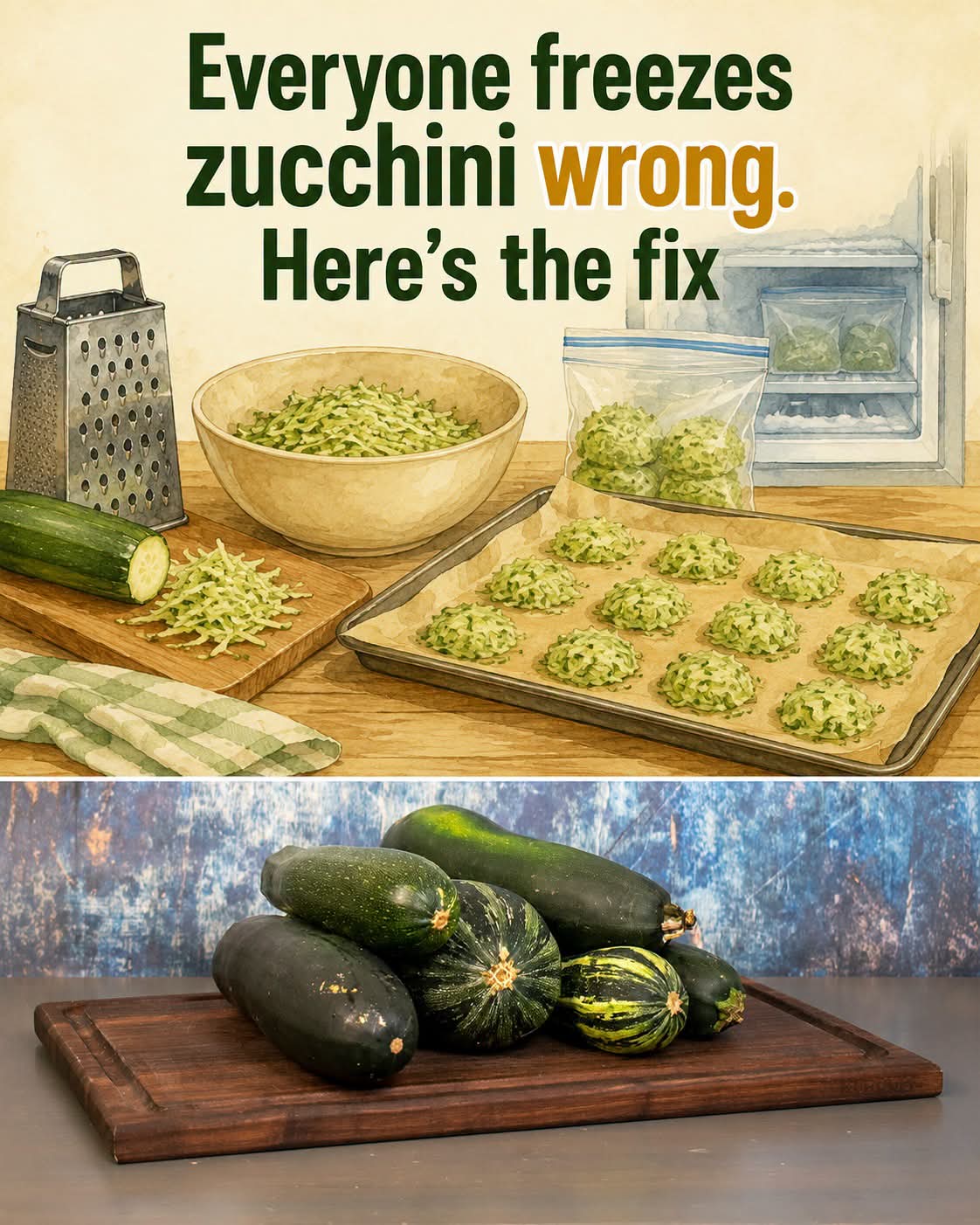
The Better Method: Freeze Shredded Zucchini
Instead of freezing slices or cubes, shred the zucchini first.
Shredded zucchini is perfect for:
- Zucchini bread
- Muffins
- Soups
- Pasta sauces
- Stir-fries
- Fritters
- Casseroles
- Meatballs
- Meatloaf
Since these recipes don’t rely on zucchini staying crisp, the texture works beautifully.
Ingredients
- Fresh zucchini (any amount)
Equipment
- Box grater or food processor
- Clean kitchen towels or cheesecloth
- Measuring cups
- Freezer bags or freezer-safe containers
- Permanent marker for labeling
Step 1: Wash the Zucchini
Wash the zucchini thoroughly under cool running water.
Trim off both ends.
There’s no need to peel it unless you prefer to.
Step 2: Grate
Using the large holes of a box grater or a food processor, grate the zucchini.
Step 3: Remove Excess Moisture
Place the shredded zucchini in a clean kitchen towel or several layers of cheesecloth.
Squeeze gently to remove some of the excess liquid.
You don’t have to remove every drop—just enough so the zucchini isn’t dripping wet.
This helps reduce ice crystals and makes it easier to use later.
Step 4: Portion It
Measure the shredded zucchini into recipe-friendly amounts.
Good portion sizes include:
- 1 cup
- 2 cups
These amounts work well because many baking recipes call for one or two cups of shredded zucchini.
Step 5: Package
Place each measured portion into a freezer bag.
Flatten the bag into a thin layer before sealing.
Removing as much air as possible helps reduce freezer burn and allows the zucchini to freeze quickly.
Label each bag with:
- Amount
- Date
Step 6: Freeze
Lay the bags flat in the freezer until frozen solid.
Once frozen, they can be stacked vertically to save space.
How to Use Frozen Shredded Zucchini
For soups, sauces, stir-fries, and casseroles, you can often add the frozen zucchini directly to the pan without thawing.
For baking, thaw the zucchini in the refrigerator or at room temperature, then drain or gently squeeze out any excess liquid if the recipe calls for it.
How Long Does It Keep?
For the best quality, use frozen zucchini within 8 to 12 months.
Although it remains safe longer if continuously frozen, the flavor and texture are best within this time.
Tips for Success
- Freeze zucchini as fresh as possible.
- Choose firm zucchini without soft spots.
- Portion it according to your favorite recipes.
- Remove excess air from freezer bags.
- Freeze the bags flat for quicker freezing and easier storage.
Can You Freeze Sliced or Cubed Zucchini?
Yes, but expect it to soften considerably after thawing.
Frozen slices work best in cooked dishes like soups, stews, casseroles, and sauces rather than recipes where a firm texture is important.
Final Thoughts
Frozen zucchini will never have exactly the same texture as fresh zucchini because of its naturally high water content. However, freezing it shredded, lightly squeezing out excess moisture, and storing it in recipe-sized portions makes it incredibly convenient for baking and cooking. It’s a simple way to preserve your summer harvest and enjoy zucchini in delicious homemade meals all year long.
