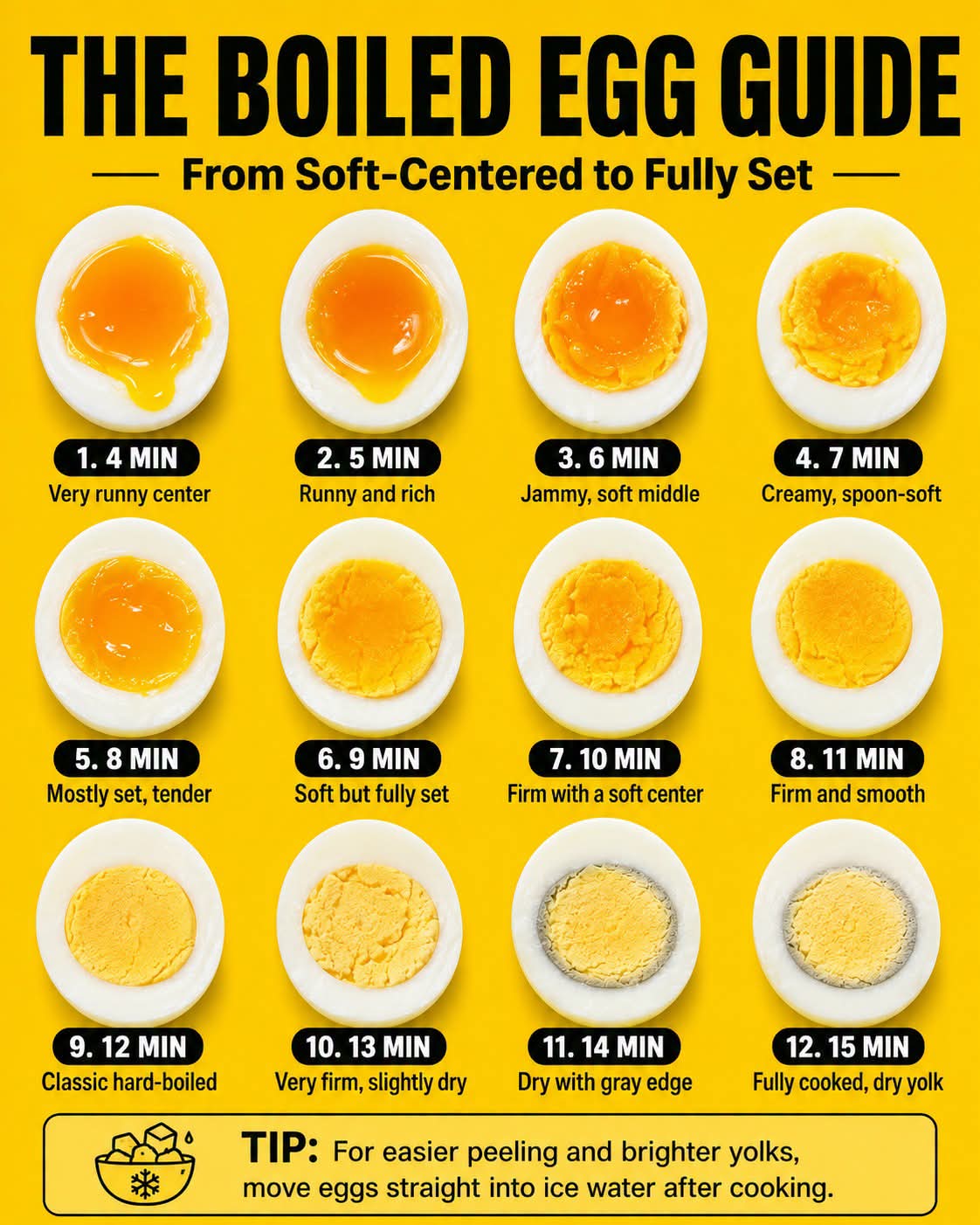
The Boiled Egg Guide: From Soft to Fully Set 🥚
Boiled eggs may be one of the simplest foods to make, but getting them exactly the way you like them takes good timing. Just one or two extra minutes can turn a silky, runny yolk into a firm, crumbly center. Whether you’re making breakfast, preparing egg salad, or meal-prepping for the week, knowing the right cooking time makes all the difference.
Here’s a complete guide to achieving the perfect boiled egg every time.
Why Timing Matters
As an egg cooks, both the white and the yolk gradually become firmer. The longer it stays in hot water, the more the proteins tighten, changing the texture from soft and creamy to fully set.
Everyone has their favorite style:
- Soft and runny for toast or ramen.
- Jammy for salads and grain bowls.
- Fully cooked for snacks, lunchboxes, or deviled eggs.
Boiled Egg Timing Guide
🥚 4–5 Minutes – Soft-Boiled
The egg white is mostly set while the yolk remains warm, rich, and beautifully runny.
Perfect for:
- Toast soldiers
- Ramen
- Breakfast bowls
- Dipping crusty bread
Texture:
- White: Soft but set
- Yolk: Very runny
🥚 6–7 Minutes – Jammy Center
One of the most popular cooking times. The yolk is thick, creamy, and spreadable without being fully liquid.
Perfect for:
- Salads
- Rice bowls
- Avocado toast
- Noodle dishes
Texture:
- White: Fully set
- Yolk: Creamy and jam-like
🥚 8–9 Minutes – Mostly Set
The yolk is almost completely firm but still moist and tender.
Perfect for:
- Sandwiches
- Protein snacks
- Lunchboxes
Texture:
- White: Firm
- Yolk: Mostly set with a soft center
🥚 10–12 Minutes – Hard-Boiled
The classic hard-boiled egg. Both the white and yolk are fully cooked.
Perfect for:
- Egg salad
- Deviled eggs
- Potato salad
- Meal prep
- Picnic lunches
Texture:
- White: Firm
- Yolk: Fully set
🥚 13 Minutes or Longer
Leaving eggs in boiling water too long can cause the yolk to become dry and chalky. You may also notice a greenish-gray ring around the yolk.
The gray ring isn’t harmful—it’s simply the result of sulfur in the egg white reacting with iron in the yolk when the egg is overcooked or cools too slowly. The egg is still safe to eat, but the texture and appearance aren’t as appealing.
How to Make Perfect Boiled Eggs
- Place eggs in a single layer in a saucepan.
- Cover with cold water by about one inch (2.5 cm).
- Bring the water to a gentle boil.
- Once boiling, reduce to a gentle simmer if needed and start your timer.
- Cook according to your preferred doneness.
- Immediately transfer the eggs to a bowl of ice water.
Why Use an Ice Bath?
Placing hot eggs into ice water immediately after cooking offers several benefits:
- Stops the cooking process instantly.
- Helps prevent overcooked yolks.
- Reduces the chance of a gray ring forming.
- Makes peeling much easier.
- Helps keep the yolk bright yellow.
Let the eggs sit in the ice water for at least 5–10 minutes before peeling.
Tips for Easier Peeling
- Use eggs that are a few days to a week old instead of extremely fresh eggs.
- Cool them quickly in ice water.
- Gently crack the shell all over before peeling.
- Peel under running water if needed.
How Long Do Boiled Eggs Last?
Hard-boiled eggs can be stored in the refrigerator for up to one week.
- Keep unpeeled eggs in their shells until ready to eat for the best freshness.
- Peeled eggs should be stored in a covered container and eaten within a few days.
Which Boiled Egg Is Your Favorite?
Everyone has a favorite texture!
🥚 1️⃣ Soft and runny (4–5 min)
🥚 2️⃣ Jammy and creamy (6–7 min)
🥚 3️⃣ Mostly set (8–9 min)
🥚 4️⃣ Fully hard-boiled (10–12 min)
Tell us your number in the comments! 👇
Final Thoughts
Boiling eggs isn’t difficult, but the timer makes all the difference. Whether you love a rich, runny yolk or a perfectly firm center, a few extra minutes can completely change the result. Finish with an ice bath, and you’ll enjoy easier peeling, brighter yolks, and consistently delicious eggs every time.
Save this guide so you’ll always know exactly how long to boil your eggs for the perfect texture! 🥚
