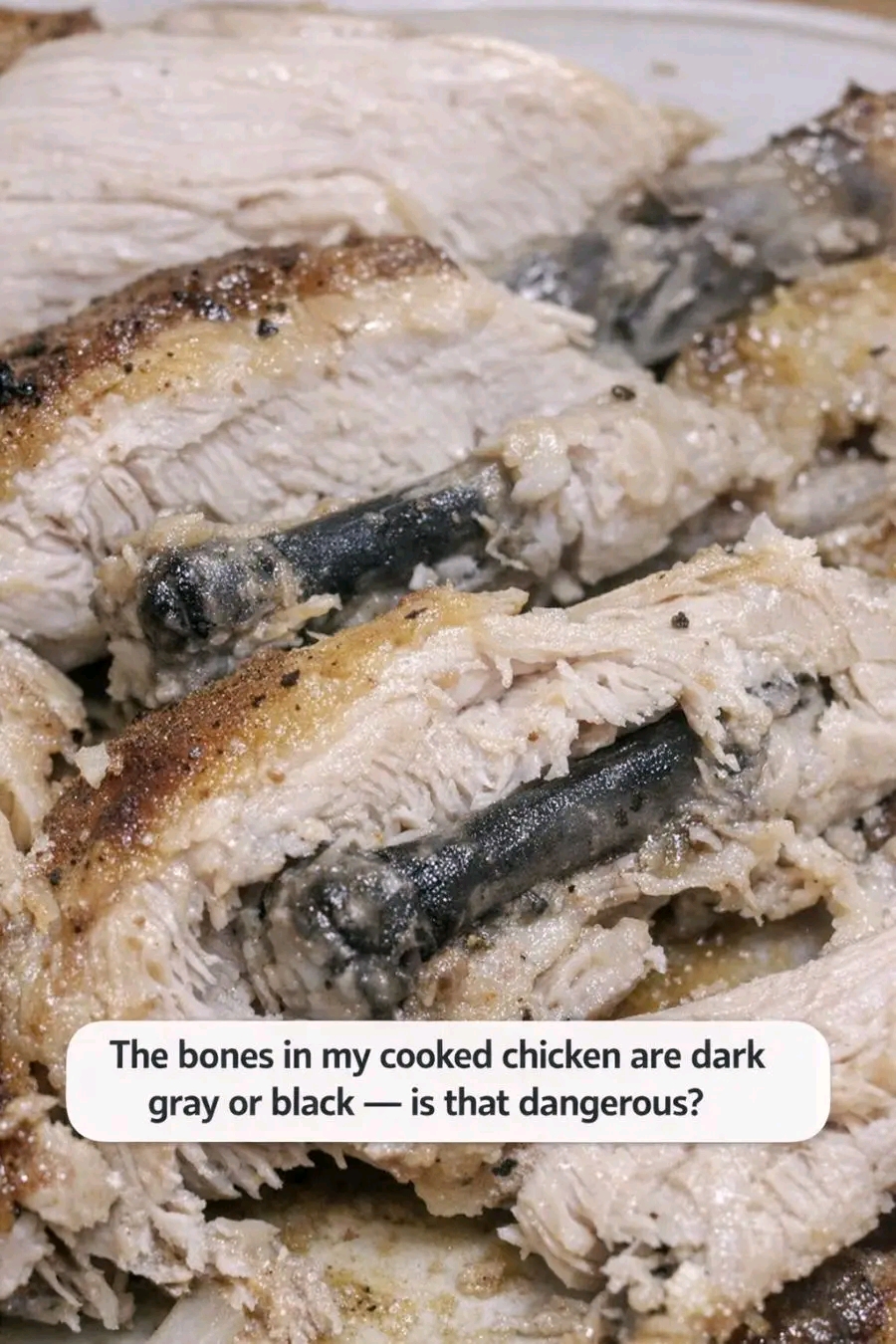
5. The Role of Blood, Hemoglobin, and Oxygen in Turning Bones DarkThe dark color in bones is largely due to the oxidation of hemoglobin, a component of blood. When chicken is cooked, the heat causes hemoglobin in the bone marrow to oxidize, turning it a dark color. This is a similar process to how meat browns when cooked.Oxygen plays a crucial role in this process. When blood is exposed to oxygen, it begins to oxidize, and cooking accelerates this reaction. This is why the bones of cooked chicken can sometimes appear dark gray or black, especially near the ends where the bone is more porous.
6. Signs Your Chicken Is Actually Undercooked or UnsafeWhile dark bones are usually safe, there are other signs to watch for to ensure your chicken is properly cooked. Chicken that is pink or has a rubbery texture can indicate it is undercooked. Always use a meat thermometer to check that the internal temperature has reached 165°F (74°C).If the chicken has an off smell, slimy texture, or shows signs of mold, these are indicators of spoilage, and the chicken should be discarded. Proper storage and handling are crucial to prevent contamination and ensure food safety.
7. Visual, Smell, and Texture Checks to Tell Safe Chicken from SpoiledVisual checks involve looking for any unusual colors in the meat itself, such as green or iridescent hues, which can indicate spoilage. The smell is another critical factor; fresh chicken should have a mild, neutral scent. Any sour or sulfur-like odors suggest the chicken is no longer fresh.Texture is also important. Fresh chicken should be firm to the touch and not sticky or slimy. If any of these signs are present, it is best to err on the side of caution and not consume the chicken.
