🚰✨
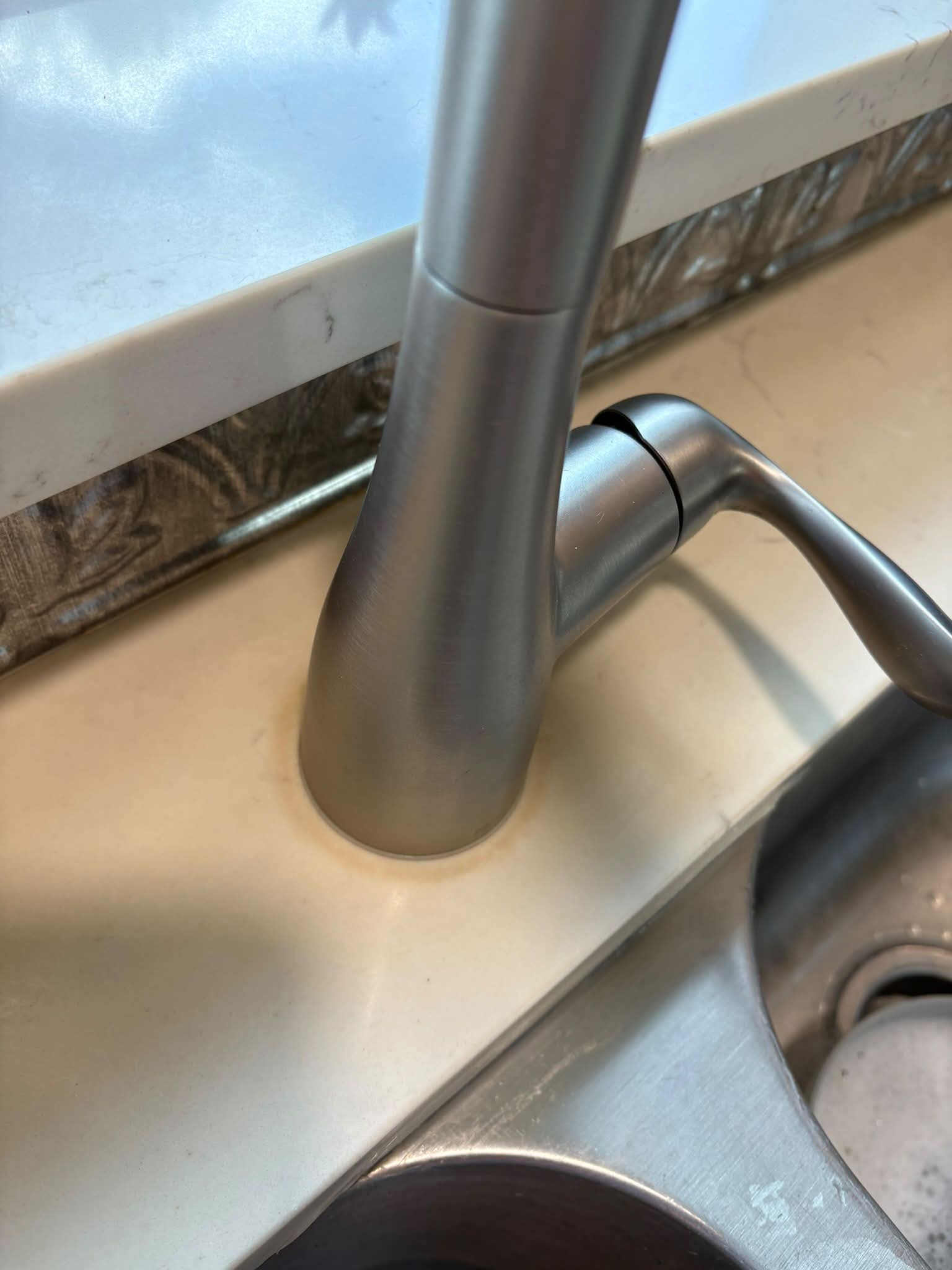
If you’ve ever looked closely at the base of your kitchen faucet and wondered, “How did THAT get so dirty?”—you’re definitely not alone! 😂
That little ring around the faucet can collect a surprisingly stubborn combination of water spots, mineral deposits, soap residue, grease, grime, and everyday kitchen debris. Because the area is often slightly damp, buildup can accumulate underneath the faucet base and create that dark or crusty-looking ring.
The good news? You don’t need an expensive specialty cleaner to tackle it.
🧽 What You’ll Need
For a basic cleaning job, gather:
- Warm water
- A few drops of dish soap
- White vinegar
- An old toothbrush or small soft cleaning brush
- Microfiber cloth
- Cotton swabs
- Baking soda — optional for stubborn grime
Important: Before using vinegar, check the manufacturer’s care instructions for your faucet and countertop. Acidic cleaners can damage certain natural stones, some specialty finishes, and some faucet coatings.
🚰 Method 1: The Warm Vinegar Trick
If the ring is mainly caused by hard-water mineral buildup, vinegar can be very effective.
Step 1: Clean away loose grime
Mix warm water with a few drops of dish soap.
Dip a microfiber cloth into the solution, wring it out well, and wipe around the entire faucet base.
This removes grease and surface dirt before you tackle the mineral deposits.
Step 2: Apply diluted vinegar
Mix equal parts white vinegar and water.
Soak a small cloth or several cotton pads in the mixture and place them around the affected area.
Let them sit for approximately 5–10 minutes.
Don’t let vinegar sit for a long time on surfaces that aren’t compatible with acidic cleaners.
Step 3: Scrub gently
Remove the cloth and use an old toothbrush to gently work around the ring.
Pay special attention to the narrow seam where the faucet meets the countertop.
Step 4: Rinse thoroughly
Wipe everything with clean water to remove the vinegar and loosened residue.
Step 5: Dry completely
Finish with a dry microfiber cloth.
Drying is important! Leaving water around the faucet base simply gives mineral deposits another opportunity to form.
🪥 Method 2: The Toothbrush Trick
Sometimes the problem isn’t hard-water scale at all.
Food particles, grease, soap residue, and grime can get trapped in that tiny gap around the faucet.
That’s when an old toothbrush becomes your best friend.
Apply a little dish soap to a damp toothbrush and gently scrub around the faucet base.
The small bristles can get into places that a normal sponge simply can’t reach.
Wipe away the loosened grime with a damp microfiber cloth and dry the area.
🧂 What About Baking Soda?
Baking soda can help with stubborn non-mineral grime, but use it carefully.
Make a soft paste with a little baking soda and water, then gently work it around the dirty area with a soft cloth or toothbrush.
Don’t aggressively scrub stainless steel or delicate faucet finishes. Abrasive powders can dull or scratch some surfaces.
If your faucet has a special finish—such as matte black, brushed gold, bronze, or another decorative coating—follow the manufacturer’s cleaning instructions instead.
⚠️ One Important Thing to Check
If you’ve cleaned the area repeatedly but the dark ring keeps coming back, take a closer look.
It may not simply be dirt.
The area underneath the faucet can sometimes develop mildew or discoloration around the seal, especially if water is getting underneath the faucet base.
You may also have a deteriorating gasket or seal that is allowing moisture to collect underneath.
If you notice:
- Persistent moisture
- A musty smell
- Water appearing underneath the faucet
- A ring that returns very quickly
- Loose or wobbly faucet hardware
- Damage to the countertop around the faucet
…it may be worth checking the faucet installation rather than simply cleaning it again and again.
✨ The Best Way to Keep the Ring From Coming Back
Once you’ve finally gotten the area clean, prevention is much easier.
🚿 Wipe Around the Faucet Daily
You don’t need to deep-clean it every day.
After washing dishes or cleaning the sink, quickly wipe around the faucet base with a microfiber cloth.
💧 Don’t Let Water Sit There
Hard-water deposits are much more noticeable when water repeatedly dries around the faucet.
A quick wipe can make a surprisingly big difference.
🧼 Clean Under the Faucet Edge
Every week or two, use a small toothbrush or cotton swab to clean the narrow area around the base.
🧽 Don’t Ignore the Little Ring
That tiny ring is easy to overlook because it’s right where the faucet meets the counter.
But once buildup gets established, it becomes much harder to remove.
A few seconds of regular cleaning can save you from having to fight a stubborn ring later.
🚰 A Simple Faucet-Cleaning Routine
Once a day:
Quickly wipe the faucet and base dry.
Once a week:
Clean around the base with warm water and dish soap.
When you notice mineral buildup:
Use a compatible diluted vinegar treatment for a few minutes, then rinse and dry.
For stubborn grime:
Use a soft toothbrush to get into the seam.
🏠 The Little Cleaning Spot Everyone Forgets
The area around a faucet may be tiny, but it can make the entire sink area look dirty when buildup starts forming.
The trick isn’t necessarily a stronger cleaner—it’s getting into that narrow space, loosening the buildup, rinsing it away, and keeping the area dry afterward.
And before reaching for harsh chemicals, start with the simplest approach: dish soap, warm water, a soft toothbrush, and a little patience.
👇 YOUR TURN!
What is your favorite hack for cleaning that stubborn ring around the faucet?
Have you tried vinegar, baking soda, an old toothbrush, a magic eraser, or something completely different?
Share your cleaning trick below—because that little ring seems to be one of those kitchen problems everyone has, but nobody talks about! 😄🚰✨
