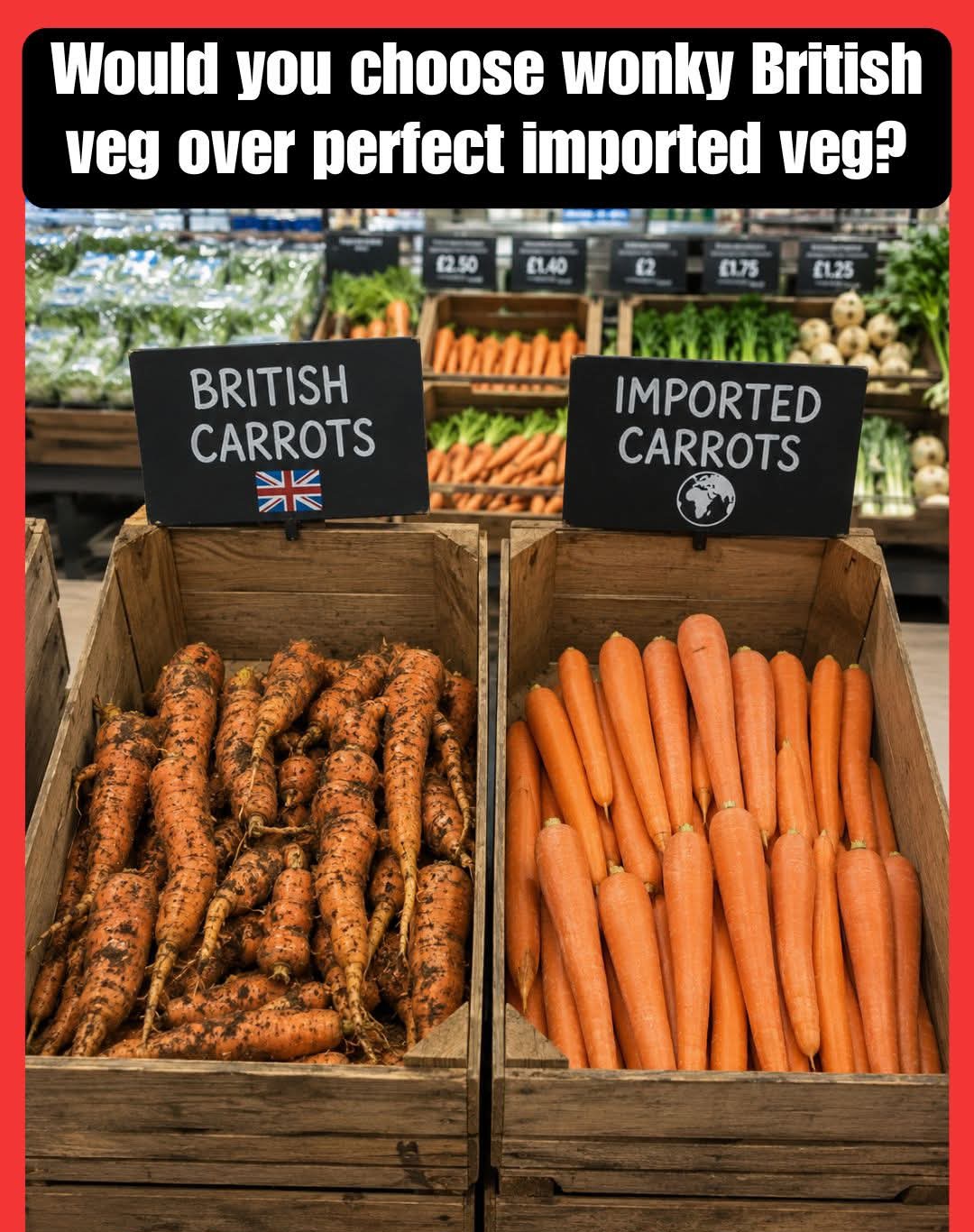
Wonky vs. Waxed: The Great Carrot Culture War
This image is doing a lot of heavy lifting for two bins of root vegetables. It’s not really asking “which carrot tastes better” — it’s tapping into a much bigger, much older debate about food, appearance, and identity.
The Visual Trick
Look closely at what’s actually being compared:
- British carrots: dirt-covered, crooked, freshly pulled, unwashed — basically carrots as they look coming straight out of the ground
- Imported carrots: clean, straight, uniform, waxed to a shine
This isn’t really a fair fight. It’s not comparing British quality to imported quality — it’s comparing an unprocessed product to a processed, sorted, polished one. Most British carrots sold in shops go through the exact same washing and grading process as the imported ones. So the image is engineered to make “British” look rustic and honest, and “imported” look artificial and sterile.
Why “Wonky” Became a Selling Point
Oddly-shaped produce used to get thrown out before it ever reached shelves — supermarkets rejected anything that didn’t meet strict cosmetic standards. Over the last decade or so, “wonky veg” boxes became a whole marketing category, pitched as a way to reduce food waste and sell perfectly good vegetables that just don’t look photogenic. So dirt-and-crookedness has actually been rebranded from “reject” to “authentic.”
The Real Debate Buried in This Meme
Underneath the carrots, this image is poking at a few genuinely contested questions people have real opinions on:
- Local vs. imported produce — supporting domestic farmers versus lower prices and year-round availability that imports provide
- Appearance standards in food retail — whether cosmetic grading (rejecting “ugly” produce) creates unnecessary waste
- Nationalism in food marketing — flag-and-globe branding is a common tactic to make a purchase feel like an identity statement rather than a grocery decision
- Price vs. provenance — British produce is often pricier due to labor and land costs; imported produce can undercut it, which matters a lot to people on tight budgets
There isn’t a universally “correct” answer here — it really comes down to what someone prioritizes: cost, environmental footprint (food miles vs. how the produce was grown), supporting local agriculture, or simply how the carrot’s going to look on the plate.
The Comment Section Prediction
Someone’s going to passionately defend the British carrots as “tastier” based purely on vibes. Someone else is going to point out dirt doesn’t equal flavor. And at least one person is going to say “I just want a carrot that doesn’t cost me my job to look at” — and honestly, fair. 🥕
