There’s a familiar rhythm to a busy kitchen. The oven is baking, a pot is simmering on the stove, and you’re moving from sink to countertop—washing your hands, drying dishes, wiping up spills, and reaching for oven mitts.
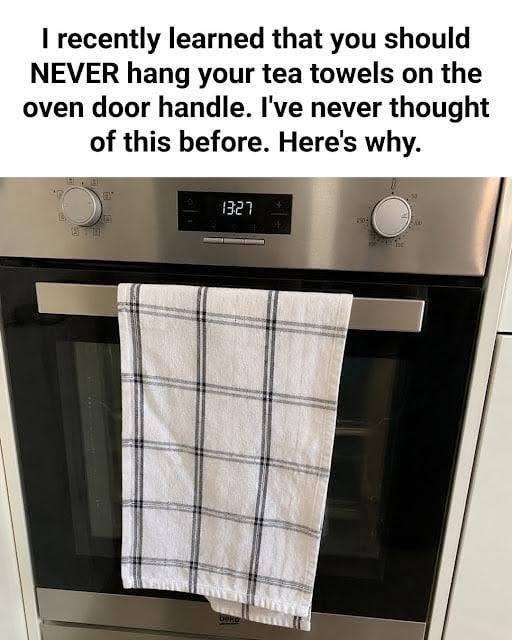
In the middle of it all, it’s tempting to drape a tea towel over the oven door handle. It’s convenient, always within reach, and seems completely harmless.
However, kitchen safety experts recommend avoiding this common habit because it can create unnecessary risks. Fortunately, there are several simple alternatives that help keep your kitchen organized and safe.
Why Can a Tea Towel on the Oven Door Be a Problem?
The risk depends on your kitchen layout and how the towel is used, but there are several reasons to avoid storing towels on the oven handle.
1. Fire Hazard
While many modern oven door handles stay relatively cool during normal baking, temperatures vary by appliance. A hanging towel can become hazardous if it comes into contact with:
A hot cooktop burner
An open gas flame
A heating element
A hot baking tray or roasting pan removed from the oven
Cotton and linen towels are combustible materials and can ignite if exposed to sufficient heat.
2. Burn Risk
A towel hanging from the oven door may catch on clothing or snag when you’re removing heavy cookware.
If you’re carrying a hot casserole or baking sheet, anything that interferes with your movement increases the chance of burns or dropped dishes.
3. Cross-Contamination
Kitchen towels often serve multiple purposes—drying hands, wiping counters, cleaning spills, and handling cookware.
Using the same towel for everything can spread bacteria. It’s safer to keep separate towels for:
Drying hands
Drying dishes
Cleaning surfaces
Handling hot cookware (using proper oven mitts)
Safer Ways to Store Kitchen Towels
Instead of hanging towels on the oven door, consider these alternatives:
Wear the Towel
Tuck a clean towel into your apron or waistband while cooking. It’s always within reach without hanging near heat.
Install a Dedicated Hook
Place a hook on the side of a cabinet, pantry, or refrigerator away from the stove.
Use a Towel Bar
Many kitchens have cabinet-mounted towel bars that keep towels organized while reducing clutter around cooking appliances.
Keep Oven Mitts Separate
Reserve oven mitts and pot holders exclusively for handling hot cookware. Avoid using damp kitchen towels as substitutes, since moisture transfers heat quickly and can cause steam burns.
Easy 3-Ingredient Slow Cooker Cocktail Meatballs
If you’d rather avoid using the oven altogether, this classic slow cooker appetizer is simple, delicious, and perfect for parties.
Ingredients
1 (32-ounce) bag frozen fully cooked meatballs
1 (12-ounce) jar grape jelly
1 (12-ounce) bottle chili sauce
Instructions
Place the frozen meatballs into your slow cooker.
Stir together the grape jelly and chili sauce until smooth.
Pour the sauce over the meatballs.
Cook on Low for 4 hours or High for 2 hours, stirring once or twice if convenient.
Serve warm.
The slow cooker keeps the meatballs hot for serving while freeing up your oven for other dishes.
Serving Ideas
Offer a variety of toppings so guests can customize their appetizers:
Sliced green onions
Toasted sesame seeds
Crushed red pepper flakes
Sriracha
Fresh parsley
Serve with toothpicks for easy entertaining.
Frequently Asked Questions
Is it ever safe to hang a towel on the oven handle?
If the oven is completely cool and not in use, many people temporarily hang towels there for convenience.
However, it’s best to remove them before cooking to reduce the risk of burns or accidental contact with heat sources.
What should I do with a scorched kitchen towel?
If a towel has scorch marks, burn holes, or brittle areas, replace it. Damaged fabric may be weaker and less reliable for kitchen use.
Why do kitchen towels develop a sour smell?
Damp towels can harbor bacteria and mildew.
Wash them in hot water with detergent, and occasionally add white vinegar to the rinse cycle to help remove odors. Allow towels to dry completely before reuse.
Are silicone oven mitts safer?
Silicone oven mitts resist water and provide good heat protection, making them a popular choice. Many cooks prefer mitts that combine silicone with fabric for comfort and grip.
Whatever style you choose, inspect oven mitts regularly and replace them if they’re worn or damaged.
Final Thoughts
Small kitchen habits can make a big difference in safety. Moving your tea towel away from the oven, keeping separate towels for different tasks, and using proper oven mitts are easy changes that help reduce the risk of burns and fires.
With a few simple adjustments, you can keep your kitchen organized, efficient, and safer while enjoying your favorite recipes.
Happy cooking—and stay safe in the kitchen!
