Opening your dishwasher after a cycle only to find a cloudy, white residue coating the interior can be perplexing and frustrating. This unsightly film not only affects the appearance of your dishwasher but can also leave your dishes looking less than pristine. Understanding the root causes behind this cloudy phenomenon is essential to restoring your appliance to its optimal state.Various factors can contribute to the cloudy appearance inside your dishwasher. From the minerals in your water to the type of detergent you use, each element can play a role. In this article, we will explore the potential causes of this issue and offer solutions to eliminate the cloudy film, ensuring your dishwasher and dishes are sparkling clean with every cycle.1. Hard Water 101: Why Minerals Cloud Up Your DishwasherHard water is a common culprit behind cloudy dishwashers. It contains high levels of calcium and magnesium, which can leave a chalky residue when water evaporates. The hardness of water is measured in grains per gallon (GPG), and water is considered hard if it measures more than 7 GPG.As the water heats and evaporates during a dishwasher cycle, these minerals are left behind on the interior surfaces and your dishes. Over time, this buildup can become more pronounced, manifesting as a persistent cloudy film. This issue is particularly prevalent in areas with naturally high mineral content in the local water supply.2. White Film vs. Etching: How To Tell What You’re Really SeeingIt’s important to distinguish between a white film caused by hard water and etching, which is permanent damage to glassware. A quick test to differentiate the two is to soak a cloudy glass in vinegar for five minutes. If the haze disappears, it’s likely mineral deposits. If not, etching may be the problem.Etching occurs when the surface of glassware is worn away, often due to using too much detergent or high water temperatures. Unlike mineral deposits, etching cannot be reversed, so it’s crucial to identify and address the cause promptly.3. Detergent Residue: When Soap Becomes a Chalky CoatingUsing too much detergent or the wrong type can lead to a soapy film building up inside your dishwasher. Modern dishwashers use less water, meaning traditional amounts of detergent can result in excess suds and residue.Ensure you’re using the correct amount as recommended by your dishwasher manufacturer, and consider switching to a detergent formulated for hard water if you suspect minerals are exacerbating the issue. Some detergents also contain additives that can bind minerals, reducing film buildup.4. Rinse Aid Problems: Too Little, Too Much, or the Wrong KindRinse aids are designed to improve drying and prevent spots and film by breaking the bond between water and dishes. However, using too little can allow residues to form, while too much can leave its own film.Adjusting your rinse aid dispenser to the correct setting can help maintain clarity. If you’re unsure, start with the manufacturer’s recommended setting and adjust as needed to find the right balance for your water type and dishwasher.5. Clogged or Weak Spray Arms Leaving Grit and Haze BehindSpray arms are responsible for distributing water evenly throughout the dishwasher. If they become clogged with food particles or mineral deposits, they may not function effectively, leaving residue behind.Regularly inspect and clean your spray arms to ensure they are free of obstructions. Remove them if necessary to clear any blockages and restore full water pressure and coverage during cycles.6. Hidden Filter and Drain Gunk That Makes Water Less EffectiveMany dishwashers have filters that trap food particles and prevent them from recirculating. Over time, these filters can become clogged, reducing water flow and effectiveness.To maintain optimal performance, clean your dishwasher’s filter regularly. Consult your manual for location and instructions, as some filters require periodic maintenance to prevent buildup that can lead to cloudiness.7. Low-Temperature Cycles That Don’t Fully Dissolve DetergentDetergents are formulated to dissolve at specific temperatures. Running your dishwasher on a low-temperature setting may prevent detergent from fully dissolving, leading to residue.Check your dishwasher’s manual for recommended temperature settings, and ensure your water heater is set to at least 120°F (49°C) to aid in proper detergent dissolution and effective cleaning.8. Eco Settings and Short Washes That Trade Clarity for EfficiencyEco-friendly settings and short wash cycles save water and energy, but they may not provide sufficient time or heat to fully clean and rinse dishes, leading to film and residue.If you notice cloudiness after using these settings, try running a longer cycle periodically to ensure thorough cleaning. Balancing efficiency with effectiveness is key to maintaining a clear dishwasher.9. How to Deep-Clean a Cloudy Dishwasher and Remove the FilmTo remove existing film, start by cleaning your dishwasher with a vinegar rinse. Place a cup of white vinegar in a dishwasher-safe container on the top rack and run a hot water cycle. This helps dissolve mineral deposits and soap scum.For stubborn buildup, consider using a commercial dishwasher cleaner. Follow the instructions for best results, and aim to deep-clean your dishwasher monthly to prevent future issues.10. The Best Add-Ins and Cleaners for Hard Water DishwashersSpecialized dishwasher cleaners and additives can help combat hard water effects. Look for products containing citric acid or phosphates, which can break down mineral deposits and prevent film.Using a water softening additive or rinse aid specifically designed for hard water can also help enhance cleaning results and maintain a clear dishwasher interior.11. Long-Term Fixes: Softeners, Settings, and Habits That Keep the Interior ClearInstalling a water softener is a long-term solution that can effectively address hard water issues by reducing mineral content before it enters your dishwasher.Additionally, adjusting dishwasher settings to optimize temperature and cycle length, along with regular maintenance and cleaning routines, will help keep your dishwasher clear. Being mindful of detergent and rinse aid usage can also prevent future cloudiness, ensuring your dishwasher performs at its best.
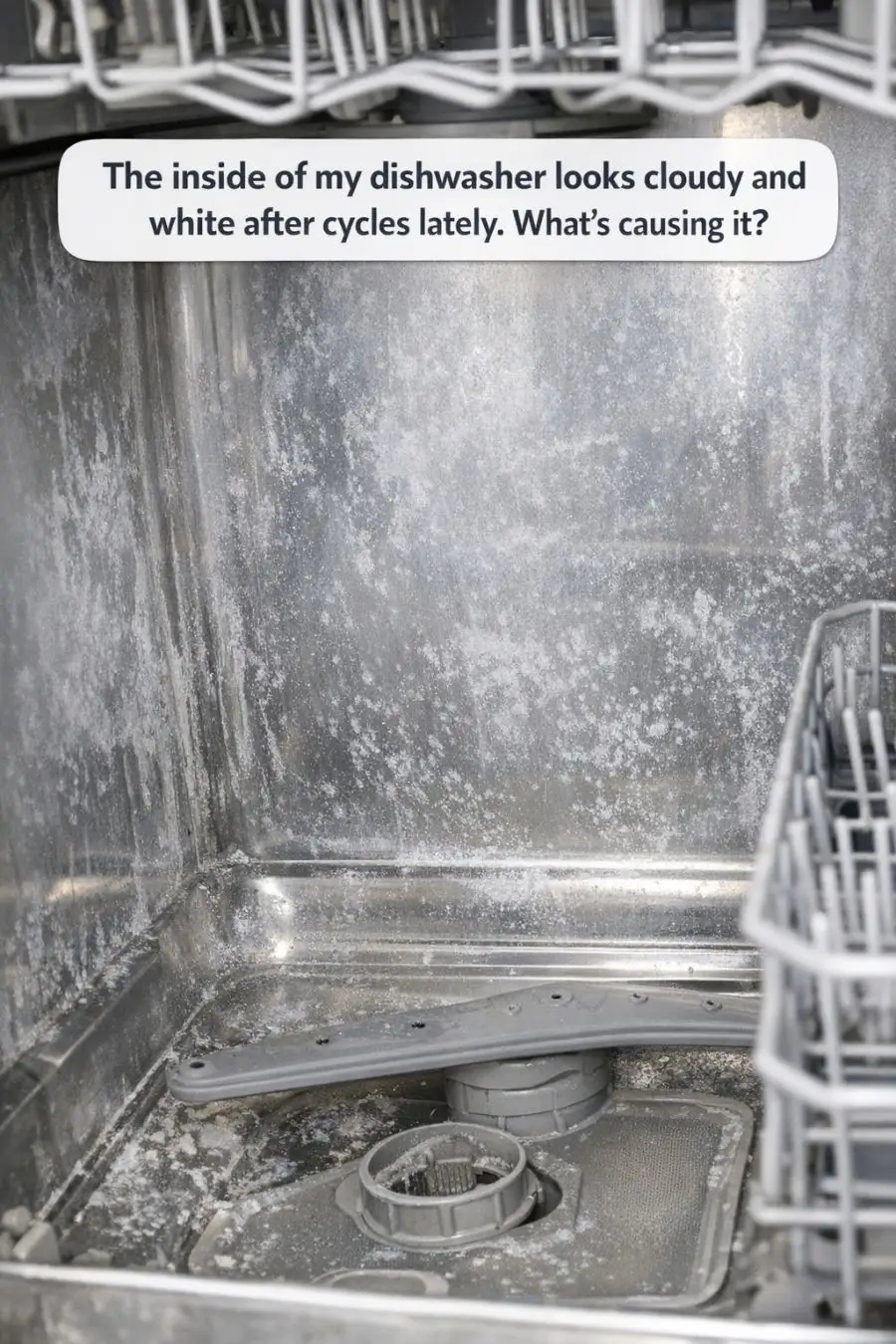
The inside of my dishwasher looks cloudy and white after cycles lately. What’s causing it?
ADVERTISEMENT
