Have you ever wondered why your floors look clean immediately after mopping but seem dirty again just a day later? The secret may not be in how much water you use, but in choosing the right cleaning solution and using the correct mopping technique.
A simple cleaning routine can help remove everyday dirt and leave your floors looking fresh. But what should you really add to your mop water?
1. What Is the White Powder in the Picture?
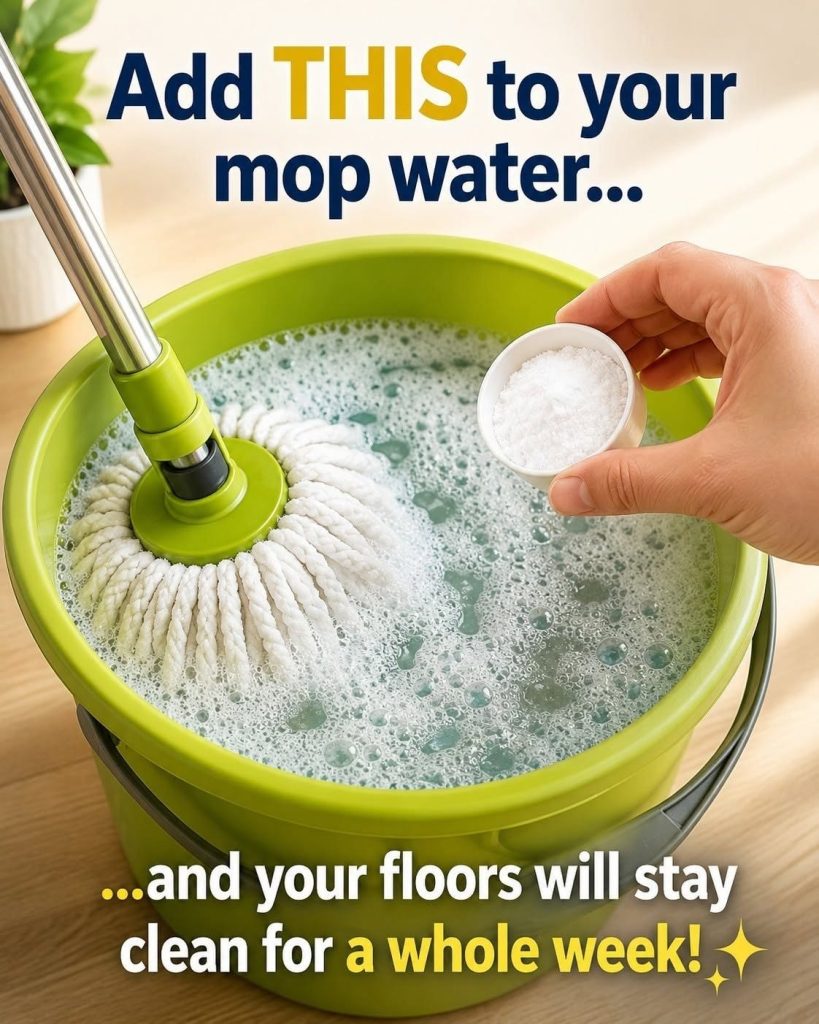
The image shows a white powder being added to mop water, but its identity cannot be confirmed from the picture.
It may be salt or another household powder. However, ordinary table salt is not a proven floor cleaner or disinfectant. It cannot guarantee that floors will stay clean for an entire week.
Salt residue may also leave marks on certain surfaces, so it is not recommended as a universal floor-cleaning ingredient.
2. What Should You Add to Your Mop Water?
For everyday cleaning, a suitable floor-cleaning product is usually the best choice.
You can also use a few drops of mild dishwashing liquid on compatible washable surfaces, but avoid creating too much foam.
A simple cleaning routine:
Fill a bucket with clean, lukewarm water.
Add the recommended amount of floor cleaner.
Mix gently.
Dip your mop into the solution.
Wring it out well before cleaning.
Always check the flooring manufacturer’s instructions before using a new product.
3. How to Keep Floors Cleaner for Longer
The cleaning solution is only one part of the process. These habits can make a noticeable difference:
Remove dust and loose dirt before mopping.
Use a clean microfiber mop.
Change the water when it becomes visibly dirty.
Avoid using too much cleaning product.
Allow the floor to dry completely.
Clean high-traffic areas regularly.
4. Choose the Right Cleaner for Your Floor
Not every floor can tolerate the same cleaning ingredients.
Ceramic and porcelain tiles: Use a suitable pH-neutral floor cleaner.
Laminate flooring: Use a laminate-safe cleaner and avoid excess water.
Hardwood floors: Use a wood-floor cleaner and a barely damp mop.
Natural stone: Choose a stone-safe, pH-neutral product. Avoid vinegar and acidic cleaners.
Using the wrong product can damage the finish, leave stains, or make the surface slippery.
5. Cleaning Mistakes You Should Avoid
Some popular household cleaning combinations can cause more harm than good.
Do not add large amounts of soap, which can leave sticky residue.
Avoid using salt as a general-purpose floor treatment.
Never mix bleach with vinegar, ammonia, or other cleaning products.
Do not flood wooden or laminate floors with water.
Avoid mixing different commercial cleaners.
Always follow product instructions and keep the room ventilated.
6. Can This Trick Keep Floors Clean for a Whole Week?
Unfortunately, no cleaning ingredient can guarantee spotless floors for seven days.
Dust, shoes, pets, cooking, and everyday activity all affect how quickly floors become dirty again.
The best results come from using the correct cleaner, removing dirt regularly, and maintaining a simple cleaning routine.
Final Thoughts
You don’t need complicated homemade mixtures to enjoy clean, fresh-looking floors. A suitable floor cleaner, a clean microfiber mop, and a few simple habits can make your cleaning routine much more effective.
See Continuation On Next Page 👇
