onions
butter or oil
a splash of water
the tiniest pinch of baking soda
And when I say tiny, I mean tiny. Too much baking soda makes the onions taste strange — almost metallic. Learned that the hard way once after getting overconfident.
ADVERTISEMENT
Here’s how she does it:
Slice the onions thinly and toss them into a hot skillet with butter or oil over medium heat. Stir them for a minute or two until they start softening slightly.
Then add:
a splash of water
a very small pinch of baking soda
That’s it.
The water creates steam, which softens the onions quickly. The baking soda changes the pH just enough to help the onions break down faster and release their sugars sooner.
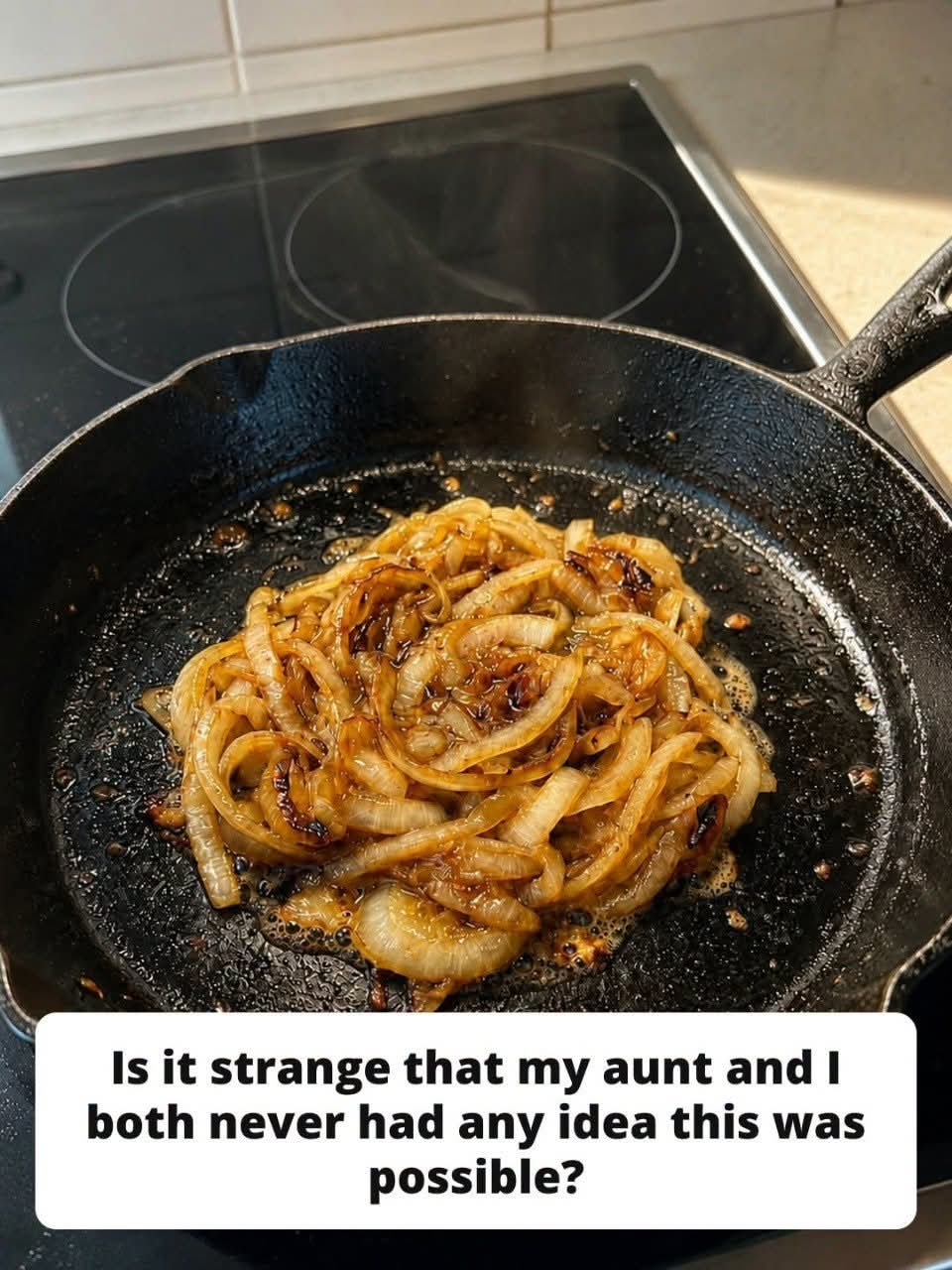
Within maybe 10 or 15 minutes, they start turning deeply golden.
ADVERTISEMENT
Not pale sautéed onions pretending to be caramelized. Real color. Real flavor.
Honestly, the first time I tried it alone, I stood there staring at the pan thinking, “Well… where has this been all my life?”
The Smell Is Usually the First Sign It’s Working
There’s a moment when the onions stop smelling sharp and start smelling rich and sweet instead.
If you cook often, you know the difference immediately.
The kitchen suddenly smells like the base of a really good soup or the onions piled onto a diner burger that somehow tastes better than burgers at home.
Warm, savory, slightly buttery. The kind of smell that makes people wander into the kitchen asking what you’re making.
That usually happens around the point where the onions turn soft and jammy.
And yes, “jammy” is probably the best word for properly caramelized onions.
A Couple Things Can Still Go Wrong
Even with the shortcut, there are a few ways to mess it up.
Too much heat is the biggest one.
People hear “faster onions” and immediately crank the burner all the way up. Bad idea. Medium heat works best because the onions still need time to soften evenly before browning.
Another mistake is forgetting to stir.
Not constantly — you don’t need to babysit them every second — but enough to keep the sugars from sticking too hard to the pan.
And don’t overcrowd the skillet if you can help it. A huge pile of onions tends to steam more than brown.
I mean, they’ll still taste decent. Just not quite as rich.
Are They Exactly Like Slow-Caramelized Onions?
Not exactly.
The traditional slow method still gives slightly deeper flavor if you let onions cook for 45 minutes or more. There’s more complexity there. More depth.
But honestly? This shortcut gets surprisingly close.
Close enough that in soups, sandwiches, pasta, or burgers, most people would never notice the difference.
And considering the time saved, I’ll take that trade almost every time during the week.
Weekend cooking and Tuesday cooking are two different things anyway.
The Best Part Is Having Them Ready Ahead of Time
Caramelized onions keep well in the fridge for several days, so I usually make extra now.
Sometimes I freeze small portions too, especially during colder months when soups and stews start happening every week. Pulling a container of caramelized onions out of the freezer feels weirdly satisfying. Like you planned your life better than you actually did.
They reheat beautifully.
Maybe even taste better the next day, honestly.
Final Thought
I still make traditional caramelized onions sometimes when I have nowhere to be and dinner isn’t rushed. There’s something relaxing about the slower process.
But for normal life? The rushed evenings, the last-minute burgers, the soup you decided to make at 6:30 — this shortcut wins.
And once you see onions turn deeply golden in about 15 minutes instead of nearly an hour, it’s hard not to keep using it.
