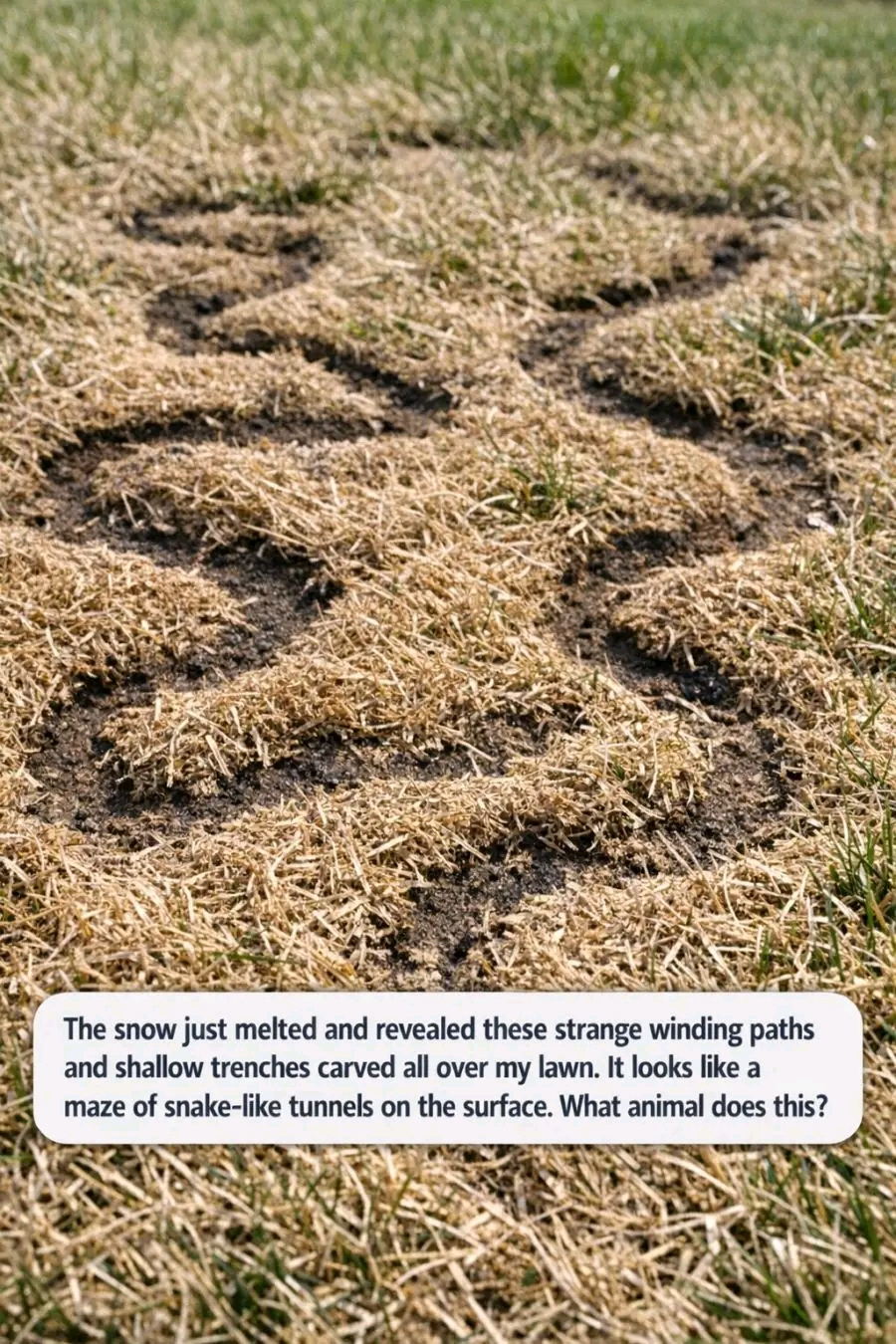
4. Tunnels Vs. Runways: Why These Paths Stay On The SurfaceIt’s important to distinguish between the sub-surface tunnels of moles and the surface runways of voles. Moles are known for creating raised ridges and mounds of soil, as they tunnel deeper underground in search of insects and worms. In contrast, voles create shallow, surface-level runways that are often confused with tunnels.Vole runways are the result of their constant movement and feeding habits. These pathways are worn down by the repeated passage of voles as they scurry back and forth, creating a visible maze on the lawn’s surface once the snow melts away.
5. How To Tell Vole Damage From Moles, Mice, And Other PestsIdentifying the difference between vole damage and other common lawn pests is crucial for implementing the right control measures. While moles create noticeable mounds and raised ridges, voles leave behind flattened paths and small, round burrow holes, often near the base of trees or in garden beds.Unlike house mice, which tend to invade indoor spaces, voles are primarily outdoor creatures and rarely enter homes. Their damage is usually confined to lawns and gardens, where they can cause significant harm to plants and grass roots.
6. Visual Clues: What Fresh Vole Runways And Burrow Holes Look LikeFresh vole runways appear as narrow, shallow grooves in the grass, typically 1 to 2 inches wide. The grass in these paths may be slightly nibbled or completely dead due to the voles’ feeding habits. In addition to these runways, look for small burrow holes, about 1 to 2 inches in diameter, which serve as entry and exit points for voles.These visual clues are often accompanied by droppings and bits of grass or plant debris left behind by the voles. Identifying these signs early can help you take swift action to mitigate damage.
