🥚 ?
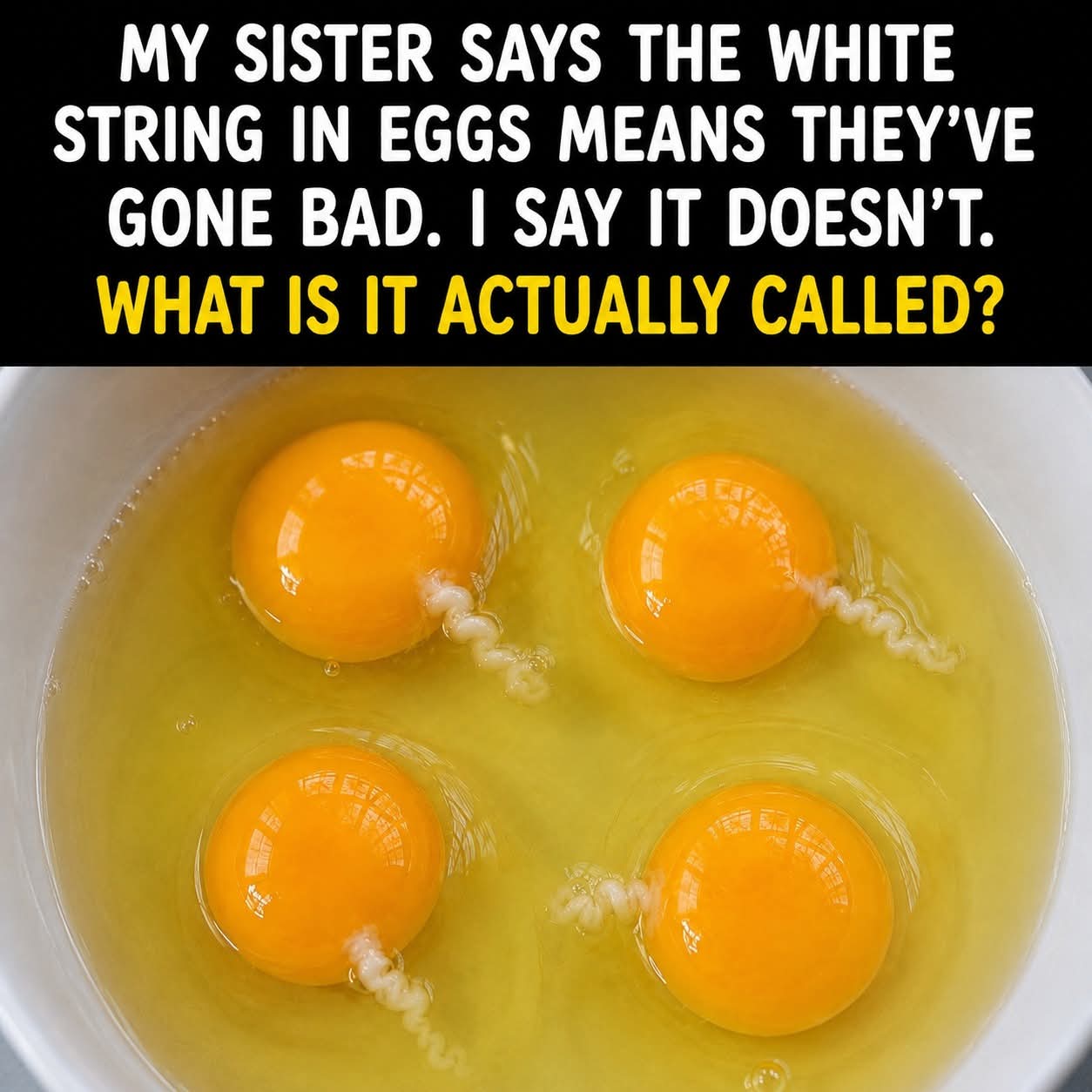
You crack open an egg and notice a little white, stringy piece attached to the yolk.
Your first thought might be:
“Eww… is this egg bad?” 😳
Actually, that little white string is usually completely normal.
It’s called a chalaza (pronounced kuh-LAY-zuh), and seeing one is generally a sign that the egg is fresh—not spoiled.
🥚 So What Is That White String?
The chalaza is a naturally occurring part of the egg.
There are actually two chalazae in a typical egg. They are rope-like strands of egg white that help keep the yolk positioned in the center of the egg.
Think of them as tiny anchors holding the yolk in place.
They extend from opposite sides of the yolk and attach to the thicker layers of egg white.
So when you crack an egg and see a white, twisted strand next to the yolk, you’re not looking at mold, a worm, or something that means the egg has spoiled.
It’s simply part of the egg.
🍳 Does the Chalaza Mean the Egg Is Fresh?
A visible chalaza is often more noticeable in fresh eggs.
As an egg ages, the thick white gradually becomes thinner, and the chalaza may become less prominent.
So that strange-looking white string can actually be a good indication that you’re looking at a relatively fresh egg.
Of course, the chalaza alone isn’t a reliable freshness test. You should still check the egg for other signs of spoilage.
🤔 Why Does the Egg Have It?
The chalaza helps keep the yolk centered inside the egg.
That matters because the yolk is delicate and needs to remain suspended rather than simply floating around inside the egg.
When the egg is rotated, you may notice the yolk and chalaza move slightly.
It’s a clever little piece of natural egg anatomy that most of us never think about.
🥚 Can You Eat the White String?
Yes.
The chalaza is edible and harmless when the egg itself is safe to eat.
You don’t need to remove it before scrambling, frying, baking, or making an omelet.
It may look unusual when you first notice it, but it doesn’t need to be picked out.
In fact, if you’re making a cake or other baked recipe, you can simply mix it right in.
🚫 What Does a Bad Egg Actually Look Like?
The chalaza isn’t the thing you should be watching for.
Instead, when you crack an egg, pay attention to odor and appearance.
👃 A Strong, Unpleasant Smell
A spoiled egg often has a very noticeable sulfur-like or rotten odor.
If an egg smells bad after cracking it, don’t taste it. Discard it.
🎨 Unusual Appearance
Unexpected discoloration, mold, or other abnormal growth is a reason to throw the egg away.
A normal chalaza is different: it’s white or translucent and has a string-like appearance.
🥚 Shell Problems
Cracked, leaking, dirty, or damaged eggs deserve extra care because bacteria can potentially enter through damaged shells.
💧 What About the “Float Test”?
You’ve probably heard that you can put an egg in water to determine whether it’s fresh.
Older eggs develop a larger air cell, which makes them more likely to float.
But the float test primarily tells you about age, not whether an egg is definitely safe to eat.
A floating egg isn’t automatically rotten.
If you’re unsure about an egg, cracking it into a separate bowl and checking for unusual odor or appearance is more useful—but proper storage and handling are still important.
🧊 How to Keep Eggs Fresh
Proper storage makes a big difference.
Keep eggs refrigerated at 40°F (4°C) or below and follow the storage guidance on your carton.
It’s also best to keep eggs in their original carton rather than transferring them to an open egg tray.
The carton helps protect the eggs and makes it easier to keep track of their date.
🍳 Don’t Throw Away the Egg Just Because You See This!
The next time you crack an egg and see that mysterious white string, don’t immediately toss it into the trash.
That little strand is the chalaza.
It’s a normal part of the egg that helps hold the yolk in place.
So:
White string? Usually normal. ✅
Bad smell? Throw it away. ❌
Mold or unusual discoloration? Throw it away. ❌
Properly stored and looks and smells normal? The chalaza itself isn’t a problem. 🥚
🥚 DID YOU KNOW THIS?
Be honest!
Before reading this, what did you think the white string was?
A. I thought the egg was bad! 😳
B. I always wondered what it was.
C. I knew it was part of the egg.
D. I always remove it.
E. I’ve never noticed it before!
The next time you crack an egg and see that little white string, don’t panic—it may simply be the egg doing exactly what it’s supposed to do. 🥚❤️
