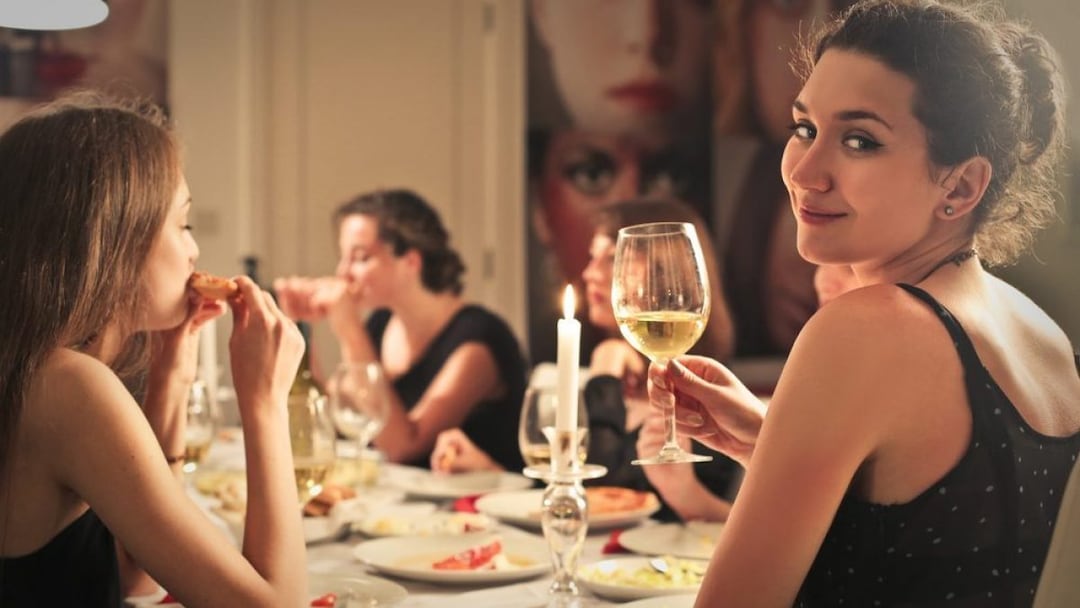
Things You Should and Should Never Do at a Restaurant: The Complete Guide
Eating at a restaurant should be enjoyable, but good restaurant etiquette is about more than knowing which fork to use. It is really about respect—for the people you are dining with, the restaurant staff, and the other guests around you.
Some restaurant rules are obvious, while others are surprisingly easy to overlook. From making a reservation and arriving on time to ordering, using your phone, handling complaints, and paying the bill, a few simple habits can make the entire experience smoother.
Here is the complete guide to what you should—and should never—do at a restaurant.
🍽️ Before You Go: Restaurant Etiquette Starts Early
DO: Make a reservation when appropriate
If a restaurant accepts reservations, make one when you know your plans. Give the restaurant the correct number of guests because tables and staffing are often arranged around reservations.
If your party changes, contact the restaurant rather than simply showing up with additional people. (ChooseMy.Food)
DON’T: Make a reservation you don’t intend to keep
One of the biggest mistakes diners can make is treating reservations as optional.
If your plans change, cancel as soon as possible. A table held for a no-show could have been offered to another customer.
And if you are running late, call the restaurant. Don’t assume the staff will simply hold your table indefinitely. (ChooseMy.Food)
DO: Check the dress code
If you’re going somewhere upscale, check the restaurant’s website or social media before leaving home.
You don’t necessarily need to dress formally, but arriving in clothing that clearly conflicts with the restaurant’s stated dress expectations can make an uncomfortable beginning to the evening. (Business Insider)
DO: Mention important allergies in advance
If you have a serious food allergy, tell the restaurant when making the reservation and remind your server before ordering.
There is an important difference between saying, “I don’t really like nuts,” and saying, “I have a nut allergy.” Be honest and specific so the restaurant understands the seriousness of the situation. (ChooseMy.Food)
DON’T: Invent an allergy because you dislike an ingredient
Don’t tell a restaurant that something is an allergy simply because you don’t enjoy it.
Restaurants may take special precautions for allergies, including communicating with the kitchen and considering cross-contact. Saving the word “allergy” for genuine allergies helps staff respond appropriately.
🪑 When You Arrive
DO: Arrive on time
Being punctual is especially important when you’ve made a reservation.
Arriving a few minutes early is usually perfectly fine. If you’re going to be significantly late, call ahead and let the restaurant know. (ChooseMy.Food)
DON’T: Demand to be seated immediately if you’re early
If you arrive well before your reservation, the restaurant may not have your table ready.
Remember that the previous guests may still be finishing their meal, and the staff may need time to prepare the table.
A little patience goes a long way.
DO: Be polite to the host or hostess
The person greeting you may be handling reservations, seating, phone calls, waiting guests, and dozens of other tasks at once.
A friendly greeting and a little patience cost nothing.
DON’T: Crowd the host stand
If the restaurant is busy, don’t squeeze around the host stand with your entire party and luggage.
Wait where you’re directed and allow other guests and staff to move freely.
📱 Your Phone at the Table
This is one of the biggest modern restaurant-etiquette issues.
DO: Keep your phone quiet
Put your phone on silent or vibrate.
If you absolutely need to take a call, step away from the table whenever possible.
DON’T: Put your phone directly on the table unless necessary
A phone sitting beside your plate can become a constant distraction.
Even worse is spending the entire meal looking at it instead of talking to the people sitting across from you.
DON’T: Play videos or music without headphones
Other diners did not come to your table to hear your social-media videos.
Keep the volume off or use headphones.
DON’T: Photograph everything before anyone can eat
Taking a quick picture of your meal is harmless for most restaurants.
But making everyone wait ten minutes while you rearrange plates, move glasses, adjust lighting, and photograph every angle is another story.
Enjoy the food while it is fresh.
🧑🍳 Treat Restaurant Staff With Respect
DO: Remember that servers are people
Your server may be responsible for several tables at the same time.
They can make mistakes, misunderstand an order, or occasionally be slower than you’d like.
That doesn’t mean you have to accept poor service, but it does mean you can address problems without being rude.
DON’T: Snap your fingers at a server
Snapping, whistling, shouting across the dining room, or waving aggressively is disrespectful.
Make eye contact, give a small gesture, or politely say, “Excuse me.”
If the server is helping another table, wait a moment. (ChooseMy.Food)
DON’T: Touch a server to get their attention
There is almost never a reason to touch someone serving you.
A polite verbal request is enough.
DO: Learn your server’s name when they introduce themselves
Using someone’s name naturally during the meal can make the interaction warmer and more personal.
But don’t overdo it.
DON’T: Treat servers as servants
There is nothing wrong with asking for something you need.
There is something wrong with speaking to another human being as though they are beneath you.
📖 Ordering Your Food
DO: Read the menu
Take a few minutes to look over the menu before your server arrives.
If you know what you want, ordering will be much faster.
DO: Ask questions
Don’t be embarrassed to ask what something means or how a dish is prepared.
Servers can often explain ingredients, portion sizes, preparation methods, and popular dishes.
DON’T: Keep the server waiting while everyone decides
If you need more time, simply say, “Could we have a few more minutes?”
That’s much better than making the server stand at the table while everyone debates the menu.
DO: Be clear about modifications
Reasonable requests such as dressing on the side or leaving off an ingredient are often manageable.
However, remember that restaurants have carefully designed recipes and kitchen systems.
DON’T: Turn one menu item into an entirely different dish
There is a difference between requesting a small modification and essentially asking the kitchen to create something that isn’t on the menu.
If you have many dietary restrictions, ask what options the restaurant can accommodate instead of constructing an entirely new meal.
🍷 Don’t Assume Everything Is Included
Before ordering, ask about additional charges when necessary.
Some restaurants may have service charges, supplements for certain ingredients, corkage fees, or other clearly stated charges.
If something isn’t clear, ask before ordering rather than arguing when the bill arrives.
🍴 Table Manners That Still Matter
DO: Put your napkin on your lap
For a sit-down meal, placing the napkin on your lap after you’re seated is a simple courtesy.
DO: Eat at a comfortable pace
Try to keep reasonably close to the pace of the people you’re dining with.
You don’t have to finish at exactly the same moment, but eating dramatically faster or slower can make a shared meal awkward.
DON’T: Start grabbing food from other people’s plates without asking
Even if you’re close friends or family, ask first.
“Can I try a bite?” is much better than reaching across the table.
DON’T: Reach across someone
If you need something that’s out of reach, ask the person closest to it to pass it.
DON’T: Talk with your mouth full
It’s an old rule—but a useful one.
DON’T: Make unpleasant noises
Loud chewing, slurping, belching, or other disruptive noises can make the experience uncomfortable for everyone nearby.
DON’T: Gesture wildly with your utensils
Knives and forks are eating utensils, not microphones or pointing sticks.
Put them down when you’re talking.
🍽️ Should You Stack Your Plates?
You may think you’re helping by stacking everyone’s plates neatly.
Sometimes you are.
Sometimes you’re actually making more work for the restaurant staff.
Unless the restaurant staff specifically encourages guests to stack dishes, it’s generally better to leave the table as it is and allow them to clear it properly. (ChooseMy.Food)
🧂 Condiments and Shared Items
DO: Pass shared items
If someone asks for the salt, pepper, sauce, or another shared item, pass it rather than reaching across them.
DON’T: Leave condiments in the middle of someone’s personal space
If someone hands you something, place it where the group can easily reach it.
DON’T: Double-dip
If a shared sauce or dip is being used communally, don’t take a bite and then dip the same food back into the container.
It’s a small thing, but everyone notices.
👨👩👧👦 Dining With Children
Children are welcome in restaurants, but parents still have a responsibility to manage them.
DO:
- Bring something appropriate to keep young children occupied.
- Teach children basic table manners.
- Encourage them to use indoor voices.
- Clean up major messes when appropriate.
- Be considerate of nearby diners.
DON’T:
- Allow children to run between tables.
- Let them scream continuously without attempting to intervene.
- Allow them to play under other people’s tables.
- Treat the restaurant like a playground.
Children are learning, and nobody expects perfection. The key is making a reasonable effort.
👥 Dining With a Large Group
Group meals can become complicated quickly.
DO: Decide how you’ll handle the bill early
If you’re dining with a large group, don’t wait until the end to discover that everyone has a different expectation about payment.
You can ask the restaurant whether separate checks are possible.
DON’T: Assume everyone wants to split the bill equally
If one person ordered a $20 meal and another ordered a $100 meal, an equal split may not feel fair.
Discuss it before the bill arrives if possible.
DO: Be patient
Large groups naturally take longer to order and pay.
Don’t blame the server for the extra complexity created by a large party.
💳 Paying the Bill
DO: Check the bill
It’s perfectly reasonable to look over your receipt.
Restaurants can make honest mistakes, just as customers can.
If something looks wrong, politely ask about it.
DON’T: Accuse the restaurant immediately
Instead of saying, “You charged me twice!”
try:
“Could you please help me understand this charge?”
Mistakes are easier to solve when everyone stays calm.
DO: Understand the tipping custom
Tipping varies considerably by country and restaurant.
There is no single worldwide rule.
In Morocco, tipping restaurant staff is customary, with amounts varying by type of establishment and level of service; travelers’ guides commonly suggest leaving a modest tip at casual places and a larger percentage at upscale restaurants. (Rough Guides)
In the United States, expectations are generally different, so travelers should check local customs rather than assuming the same rule applies everywhere.
DON’T: Assume another country’s tipping system is the same as yours
When traveling, learn the local custom.
What is considered generous in one country might be considered excessive—or insufficient—in another.
😡 What If Something Goes Wrong?
Not every restaurant experience will be perfect.
Maybe the food is cold.
Maybe your steak isn’t cooked correctly.
Maybe your order was forgotten.
Maybe your table has been waiting far too long.
You have every right to speak up.
DO: Address problems politely and promptly
Tell your server what went wrong while there is still an opportunity to fix it.
For example:
“I’m sorry, but I ordered this medium and it came out well done. Would it be possible to have it corrected?”
That’s much more effective than staying silent throughout the meal and exploding at the end.
DON’T: Publicly humiliate the server
If the server made a mistake, give them a chance to correct it.
DON’T: Threaten to leave a bad review to get free food
Reviews should reflect genuine experiences—not be used as leverage.
DO: Speak to a manager when necessary
If the problem cannot be resolved through your server, politely ask for a manager.
Stay factual.
Explain what happened, what you expected, and what you’d like done.
⭐ Leaving a Review
TO CONTINUE READING THE ARTICLE PLEASE SEE PAGE 2
