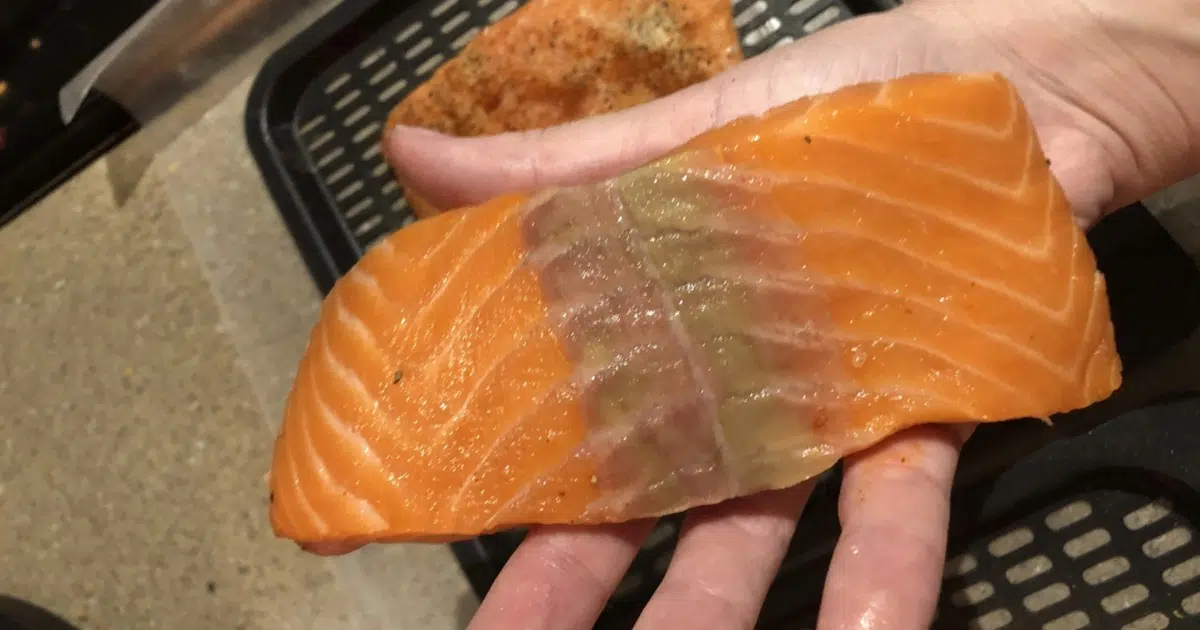
My family loves salmon. Seriously, it’s a staple in our weekly meal rotation. Whether it’s grilled to perfection with a squeeze of lemon or slow-cooked in a tangy teriyaki glaze, it’s always a crowd-pleaser. But the other day, I thawed a beautiful fillet I had in the freezer, and to my horror, I noticed a strange yellowish tint on the flesh. I wondered, “What is this, and can we still eat it?”
Initially, I was worried. Salmon has always had that gorgeous pinkish hue that makes my mouth water every time I see it, so a weird, yellowish spot was definitely not a sight I expected. I started playing detective in my kitchen, retracing my steps to see if I had done something wrong. Could it have been in the freezer for too long? Was it stored improperly? Or maybe it had gone bad without me realizing it?
Checking for Freshness
In my detective mission to ensure that the yellowing salmon was still edible, I employed the old “sniff test” that my grandma taught me. Fresh salmon should have a neutral, briny scent, almost like a fresh ocean breeze. If it smells overly fishy or sour, it’s likely past its prime. I also pressed down on the flesh to see if it bounced back, and sure enough, it did. Finally, I trimmed off the yellow section just to be extra cautious and then cooked it up with a bit of lemon and dill.
Getting the Most Out of Your Salmon
Here are a few tips to prevent that yellowish tint from becoming a recurring problem:
- Seal Properly: Make sure your salmon is sealed airtight before freezing. Vacuum-sealed packaging works wonders, but if you don’t have one, use a plastic wrap and then place it in a freezer bag.
- Label and Date: Always mark when you froze the salmon to keep track of how long it’s been in there. The USDA recommends consuming frozen fish within 3 to 8 months for the best quality.
- Rotate Stock: If you buy salmon in bulk, try to use the older fillets first, keeping a “first in, first out” mentality.

In the end, my yellow-tinted salmon turned out just fine. I grilled it to perfection and served it with a side of garlic asparagus. The family couldn’t even tell the difference. It was still juicy, delicious, and vanished in minutes.
So, if you notice your defrosted salmon sporting a yellowish tint next time, don’t freak out! Do a quick smell check, trim the discolored section if needed, and then proceed with your favorite salmon recipe. Chances are, it’s still the tasty, nutrient-packed fish you know and love, just with a little extra character.
If you’ve ever wondered about that other mystery—what the white stuff on salmon is—you’re not alone. Here’s what it really is and how to cook around it.
