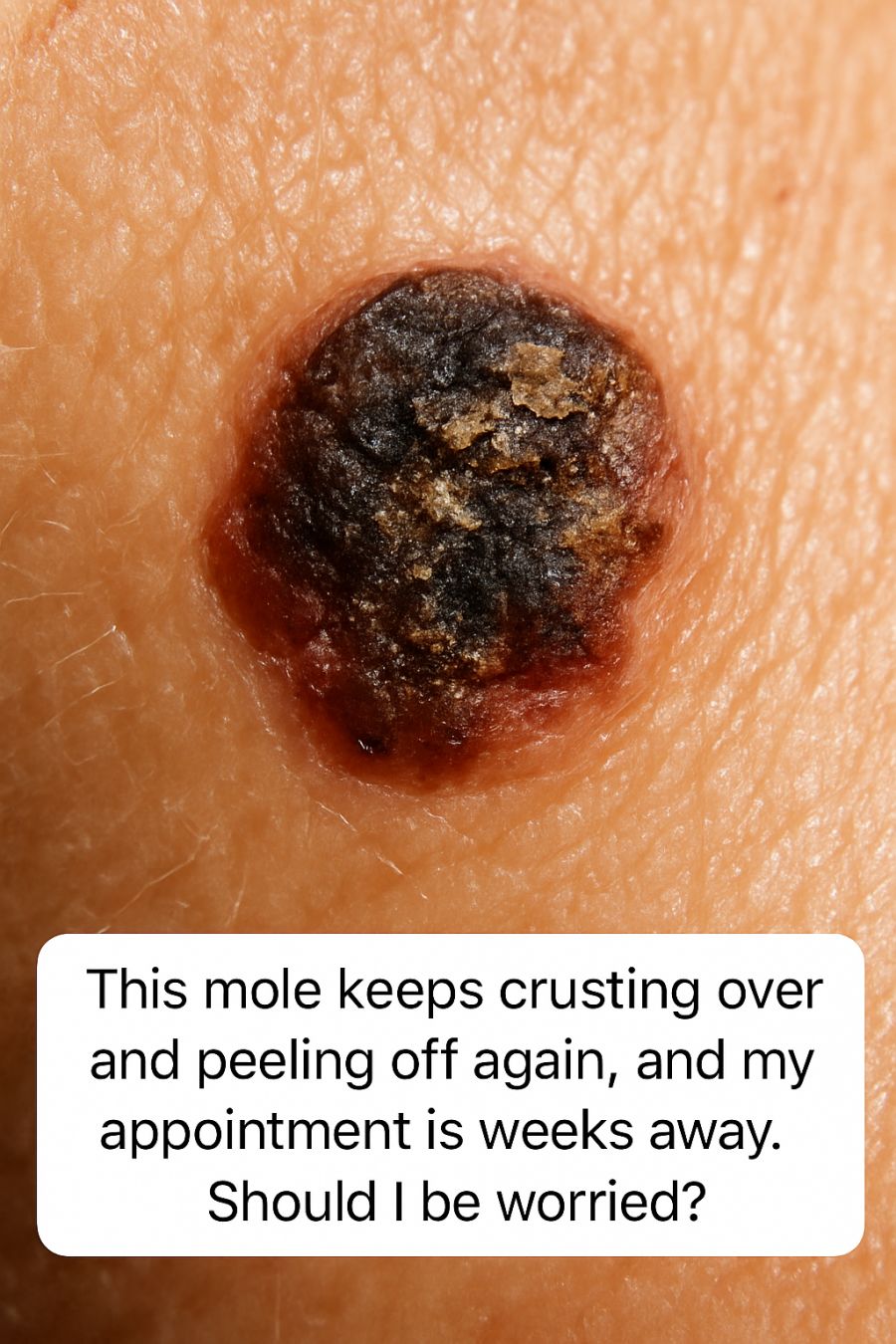
Discovering a mole on your skin that repeatedly crusts over and peels off can be a cause for concern. While it might seem like a simple case of dry skin, the cyclical pattern of crusting and peeling can sometimes indicate a more serious underlying issue. This can be particularly worrisome if your appointment with a dermatologist is still weeks away, leaving you in a state of uncertainty and anxiety.
Understanding the potential implications of a crusty mole is crucial for your peace of mind and health. This article delves into the possible reasons behind such symptoms, the risks involved, and the steps you can take while waiting for a professional evaluation. By being informed, you can take proactive measures to protect your skin and overall well-being.
1. When a Crusty, Peeling Spot Is More Than Just Dry Skin
A crusty, peeling spot on your skin might initially seem like a benign issue, such as dry skin or a minor injury. However, when this spot is recurrently crusting and peeling, it could be indicative of a more serious condition, such as a precancerous lesion. These lesions often appear as rough, scaly patches that do not heal over time.
It’s essential to monitor the size, color, and texture of these spots. A mole that continuously changes or fails to heal properly should be evaluated by a healthcare professional, as it might be a sign of an underlying skin condition that requires medical attention.
2. What Actinic Keratosis Is and Why Doctors Take It Seriously
Actinic Keratosis (AK) is a common skin condition resulting from prolonged exposure to ultraviolet (UV) rays, typically from the sun. It manifests as rough, scaly patches on the skin, often found on areas frequently exposed to the sun, such as the face, ears, neck, scalp, chest, backs of hands, forearms, or lips.
Doctors take Actinic Keratosis seriously because it can sometimes progress to squamous cell carcinoma, a type of skin cancer. Although not all AKs turn cancerous, they are considered precancerous and warrant careful monitoring and, in many cases, proactive treatment to prevent malignant transformation.
3. How to Tell a Harmless Scab From a Precancerous Lesion
Distinguishing between a harmless scab and a precancerous lesion involves observing certain characteristics. Harmless scabs, which result from minor injuries, typically heal within a couple of weeks without recurring. They are usually uniform in color and texture.
In contrast, precancerous lesions like Actinic Keratosis may have a rough, sandpaper-like texture and can vary in color from flesh-toned to pink, red, or brown. They often persist despite attempts to heal and may bleed, itch, or burn, necessitating professional evaluation to rule out malignancy.
4. Key Warning Signs: Color Changes, Crusting, and Non-Healing Spots
Warning signs that should prompt immediate attention include changes in the color of the mole, persistent crusting, and spots that do not heal. A mole that changes in size, shape, or color, or one that begins to itch, bleed, or ooze, should be evaluated by a dermatologist.
Non-healing spots, especially those that crust and peel, may indicate an underlying condition that requires professional assessment. Documenting these changes with photographs and notes can be helpful when discussing your symptoms with a healthcare provider.
5. Who Is Most at Risk: Sun Exposure, Skin Type, and Age
Individuals with prolonged sun exposure, fair skin, light-colored eyes, and a history of sunburns are at higher risk of developing Actinic Keratosis. Those over the age of 40 are also more susceptible, as the cumulative effects of UV exposure over time can lead to skin damage.
People with weakened immune systems or a genetic predisposition to skin cancer should be particularly vigilant about monitoring their skin for any unusual changes, as these factors can increase the risk of developing precancerous lesions.
6. Why Actinic Keratosis Can’t Wait Forever, Even If Your Appointment Can
While it may be understandable to wait for a scheduled appointment, delaying the evaluation of a potential Actinic Keratosis can increase the risk of progression to skin cancer. Early detection and treatment are crucial in preventing the development of squamous cell carcinoma.
If you notice a suspicious spot that matches the characteristics of Actinic Keratosis, consider contacting your healthcare provider to discuss your symptoms and explore options for an expedited evaluation. Early intervention can significantly improve outcomes and reduce the risk of complications.
7. What to Do While You Wait Weeks to See a Dermatologist
While waiting for your dermatologist appointment, take measures to protect your skin from further damage. Avoid sun exposure during peak hours, use broad-spectrum sunscreen with an SPF of at least 30, and wear protective clothing, such as hats and long sleeves.
Keep the affected area clean and moisturized to prevent irritation, and avoid picking at the crusty spot. Document any changes in the appearance of the mole, noting the size, color, texture, and any symptoms, such as itching or bleeding.
8. Viral Skin-Care Hacks to Avoid on a Suspicious Mole or Spot
In the age of social media, it can be tempting to try viral skin-care hacks on a suspicious mole or spot. However, many of these DIY remedies lack scientific backing and can cause harm. Avoid using harsh ingredients like apple cider vinegar, lemon juice, or baking soda, which can irritate the skin.
It’s crucial to remember that a healthcare professional should evaluate any suspicious skin changes, as improper treatment can delay diagnosis and lead to complications. Trust only proven medical advice and avoid making changes based on unverified online tips.
9. Safe At-Home Care: What You Can Gently Do (and What You Must Not)
At home, focus on gentle skin care for the affected area. Use mild, fragrance-free cleansers and moisturizers to maintain skin hydration. Avoid scrubbing or applying pressure to the crusty spot, as this can exacerbate the condition.
Refrain from using over-the-counter topical treatments designed for other skin issues, as these may not be appropriate for a potentially precancerous lesion. Keep the area protected from the sun and monitor for any changes, preparing for your upcoming dermatology appointment.
10. When a Crusty Mole Means You Should Go to Urgent Care or the ER
While most skin changes can wait for a dermatology appointment, certain signs warrant urgent care or emergency evaluation. If the mole or spot begins to bleed profusely, becomes significantly painful, or shows signs of infection, such as redness, warmth, and pus, seek immediate medical attention.
These symptoms may indicate a more serious condition that requires prompt intervention to prevent further complications. Do not hesitate to seek care if you are concerned about rapid changes or severe symptoms.
11. How Doctors Diagnose Actinic Keratosis and Rule Out Skin Cancer
To diagnose Actinic Keratosis, dermatologists typically conduct a thorough skin examination, focusing on the texture, color, and pattern of the lesion. In some cases, a biopsy may be performed to obtain a sample for microscopic evaluation, ensuring accurate diagnosis and ruling out skin cancer.
Biopsies are usually quick procedures performed under local anesthesia, and they provide valuable information about the nature of the skin change. Early and accurate diagnosis is crucial for effective treatment and management of the condition.
12. Modern Treatment Options: Freezing, Creams, and Light-Based Therapies
Treatment for Actinic Keratosis varies depending on the number, size, and location of the lesions. Common methods include cryotherapy (freezing the lesion with liquid nitrogen), topical creams that promote cell turnover or enhance immune response, and photodynamic therapy, which uses light to activate a photosensitizing agent applied to the skin.
Each treatment option has its advantages and potential side effects, and the choice depends on individual patient factors and the dermatologist’s assessment. Timely treatment can prevent progression to squamous cell carcinoma, highlighting the importance of professional evaluation and care.
13. Protecting Your Skin From Further Damage While You Wait
While waiting for your dermatology appointment, it’s important to minimize further UV exposure to protect your skin. Wear a broad-spectrum sunscreen daily, even on cloudy days, and reapply it every two hours when outdoors. Utilize physical barriers like wide-brimmed hats, sunglasses, and UV-protective clothing.
Consider seeking shade during peak sun hours, typically between 10 a.m. and 4 p.m. By taking these precautions, you can reduce the risk of additional damage to the affected area and overall skin health.
14. How to Track Changes So You Don’t Forget Key Details at Your Visit
Keeping a detailed record of any changes in your mole or skin spot is vital for your dermatology visit. Take clear, well-lit photographs of the area at regular intervals to document any alterations in size, shape, color, or texture.
Note any symptoms you experience, such as itching, pain, or bleeding, along with the dates they occur. This information will provide your dermatologist with a comprehensive overview of your condition, aiding in accurate diagnosis and appropriate treatment planning.
