🌿 Ticks Hate This? Using Essential Oils Around Your Yard and Outdoor Spaces
Ticks can be more than just a nuisance. These tiny parasites are commonly found in tall grass, wooded areas, leaf litter, and overgrown vegetation, making many homeowners look for ways to reduce tick activity around their property.
One popular approach involves using essential oils in homemade sprays. While essential oils should not be considered a guaranteed replacement for proven tick-control methods, some people enjoy using them as part of a broader outdoor management strategy.
Here’s how a simple essential oil spray can be made and used around outdoor spaces.
🕷️ Why People Look for Natural Tick Solutions
Many homeowners prefer to start with simple, plant-based approaches when managing outdoor pests.
Essential oils are often chosen because they:
🌿 Have strong natural aromas
🌿 Are easy to prepare
🌿 Can be used around outdoor seating areas
🌿 Are popular in many DIY garden projects
However, it’s important to remember that effectiveness can vary, and no homemade spray can guarantee complete tick protection.
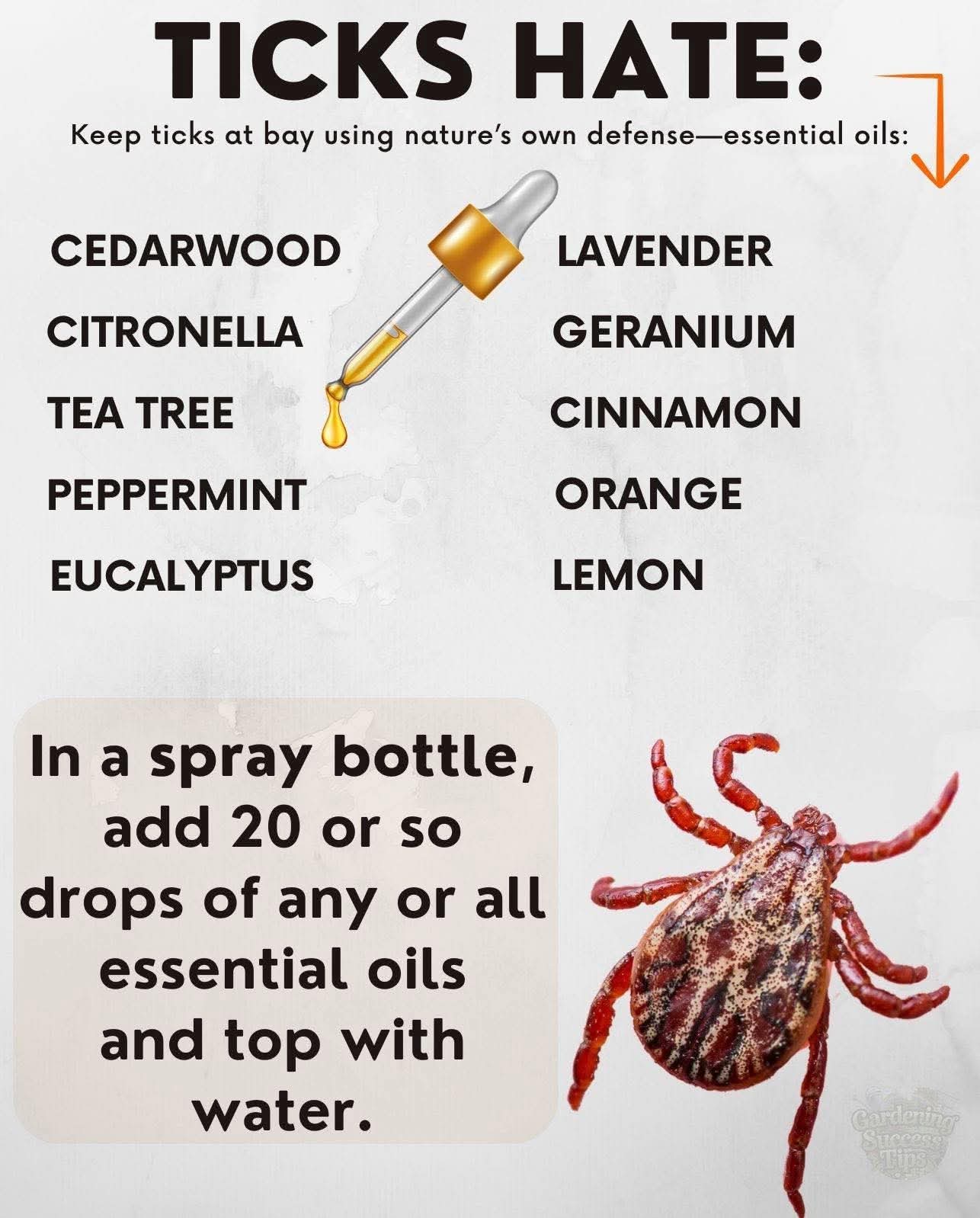
🌱 Common Essential Oils Used
People often include one or more of the following oils in homemade outdoor sprays:
🌿 Cedarwood oil
🌿 Peppermint oil
🌿 Eucalyptus oil
🌿 Lemongrass oil
🌿 Lavender oil
🌿 Geranium oil
These oils are valued for their strong scents and are commonly used in homemade outdoor sprays.
🧴 Simple Essential Oil Spray Recipe
Ingredients
- 2 cups (500 ml) water
- About 20 drops total of your chosen essential oils
- 1 teaspoon mild liquid soap (optional, helps disperse the oils)
Instructions
- Pour the water into a clean spray bottle.
- Add approximately 20 drops of essential oils.
- Add the liquid soap if using.
- Close the bottle tightly.
- Shake well before each use.
Because oil and water naturally separate, it’s important to shake the bottle every time before spraying.
🌳 Where to Spray
Many people apply the spray to:
🌱 Garden borders
🌿 Outdoor seating areas
🍂 Around pathways
🏡 Patio surroundings
🌳 Vegetation near gathering spaces
Avoid spraying directly onto edible crops unless the product is specifically intended for that purpose.
✂️ The Most Effective Tick Prevention Starts with Yard Maintenance
While homemade sprays can be part of a routine, one of the best ways to discourage ticks is simply making your yard less inviting to them.
Helpful practices include:
✅ Keeping grass mowed
✅ Removing leaf litter
✅ Trimming overgrown vegetation
✅ Creating clear walking paths
✅ Reducing brush piles
Ticks thrive in cool, moist, shaded environments, so reducing these conditions can help lower their numbers.
🐕 Protect Pets Too
Pets can bring ticks into the home after spending time outdoors.
Check dogs and outdoor cats regularly, especially around:
🐾 Ears
🐾 Neck
🐾 Under legs
🐾 Between toes
Consult a veterinarian about appropriate tick-prevention products for your pets.
⚠️ Safety Tips
Essential oils are highly concentrated and should be handled carefully.
Always:
✔ Follow product instructions
✔ Avoid contact with eyes
✔ Store away from children
✔ Test surfaces before widespread use
✔ Be aware that some essential oils can be harmful to pets
If applying to skin, use appropriate dilution guidelines and follow safety recommendations.
🌎 A Layered Approach Works Best
Most experts recommend combining multiple strategies rather than relying on a single solution.
A good tick-management plan may include:
🌿 Yard maintenance
🧴 Outdoor sprays
👖 Protective clothing
🔍 Tick checks after outdoor activities
🐕 Pet protection
Each layer helps reduce exposure.
The Bottom Line
Homemade essential oil sprays are a popular addition to many backyard tick-management routines. While they may help create a more pleasant outdoor environment, they work best when combined with regular lawn care, vegetation management, and routine tick checks.
A clean, well-maintained yard remains one of the most effective ways to discourage ticks and make outdoor spaces more enjoyable throughout the season.
🌿🕷️ What is your favorite natural trick for keeping pests away from your garden and outdoor spaces?
