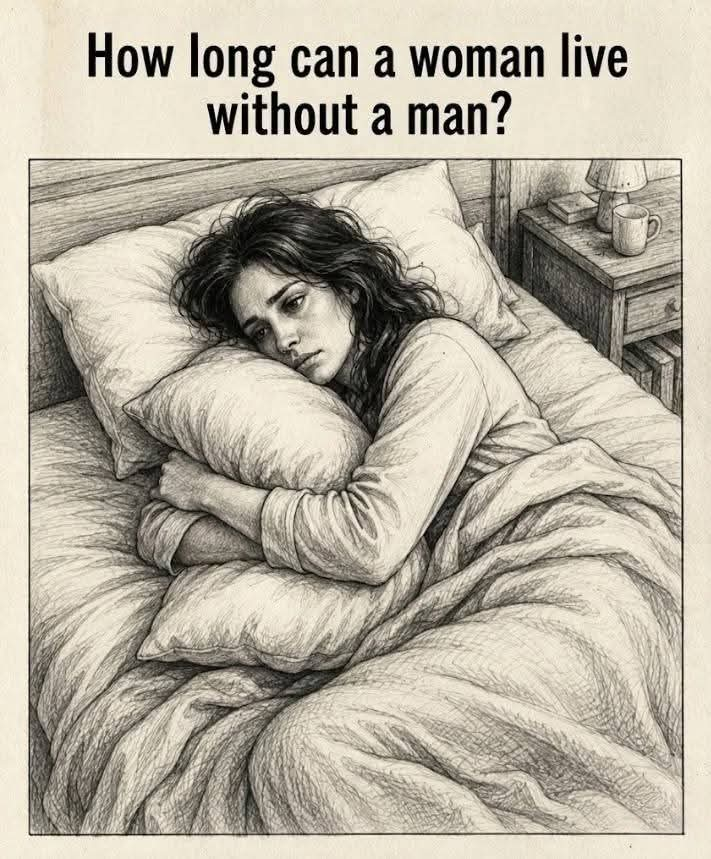
outside a romantic relationship.
And many discover something surprising: living without a man does not necessarily mean living without love.
It can mean learning to love themselves, building meaningful friendships, finding purpose in their work, enjoying their independence, and creating a life that feels complete on its own.
Of course, the experience is not always easy. There can be lonely evenings, difficult decisions, social pressure, and moments when companionship feels deeply desirable. Independence does not eliminate every emotional need, just as being in a relationship does not guarantee happiness.
The real story is more complicated, more personal, and ultimately more interesting than the simple question of how long a woman can live without a man.
1. She Begins to Discover Who She Really Is
One of the most significant changes that can happen when a woman spends years without a romantic partner is that she may begin to understand herself
more clearly.
In a relationship, even a healthy one, daily life often involves compromise. Two people make decisions together, adjust their routines, consider each other’s preferences, and sometimes put shared responsibilities ahead of individual interests.
These compromises are not necessarily negative. In a loving partnership, they can create trust and closeness. However, a woman who has spent much of her life organizing her decisions around a partner may find that being single gives her an unfamiliar opportunity: the freedom to ask what she wants without first considering what someone else expects.
She might discover that she enjoys traveling alone, pursuing a career, learning a new skill, or spending quiet evenings at home.
She may realize that she never truly enjoyed certain social activities but participated in them because a former partner preferred them. She may develop interests that were previously neglected or recognize ambitions she postponed for years.
Sometimes, the
discoveries are smaller.
She learns that she likes waking up early, decorating her home according to her own taste, cooking whatever she wants, or spending an entire Saturday doing absolutely nothing.
These everyday choices can gradually create a stronger sense of personal identity.
Instead of asking, “What kind of woman should I be to make someone love me?” she may begin asking, “What kind of life do I want to build for myself?”
That shift can be deeply meaningful.
However, personal discovery is not automatic. Some women feel uncertain or isolated after a breakup, while others feel relief almost immediately. The outcome depends on their experiences, circumstances, personality, and support systems.
Living without a partner does not magically reveal a person’s identity. It simply creates space in which self-discovery may become easier.
2. Her Independence May Grow Stronger
Living alone or remaining single for an extended period can encourage a
woman to develop practical independence.
She may learn to manage her finances, handle household repairs, make major decisions, navigate unfamiliar situations, and solve problems without relying on a romantic partner.
At first, some of these responsibilities may feel overwhelming.
A broken appliance, an unexpected bill, a difficult administrative task, or a stressful decision can seem more intimidating when there is no partner immediately available to help.
Over time, however, successfully handling these challenges can build confidence.
She begins to realize that she is capable of managing more than she once believed.
Perhaps she repairs something herself after watching a tutorial. Perhaps she negotiates a better salary, saves enough money to move into a new home, or makes an important decision without seeking approval from someone else.
Each experience becomes evidence that she can rely on her own judgment.
This does not mean she must do everything alone. Healthy independence includes
knowing when to ask for help, when to hire a professional, and when to lean on friends or relatives.
A woman can be independent while accepting support. She can be strong without pretending that every difficulty is easy.
The deeper lesson is that her ability to manage life does not depend entirely on whether a man is present.
A loving partner can contribute enormously to a woman’s life, but a partner should not be the only foundation upon which her confidence rests.
3. She May Become More Selective About Relationships
After spending years single, some women become more careful about whom they allow into their lives.
This does not necessarily mean that they become cold, demanding, or unwilling to compromise. Instead, they may develop a clearer understanding of what makes a relationship healthy.
Time spent alone can reveal the difference between wanting a partner and needing a particular person to
feel worthy.
A woman may begin to recognize that attraction alone is not enough. Chemistry matters, but so do kindness, emotional maturity, reliability, mutual respect, and compatible values.
She may no longer feel compelled to pursue someone simply because that person shows interest.
She may ask herself more thoughtful questions:
- Does this person respect my boundaries?
- Can we communicate honestly when we disagree?
- Do I feel emotionally safe around them?
- Are our expectations for the future compatible?
- Does this relationship bring mutual care, or am I doing most of the emotional work?
- Can I remain myself while being with this person?
These questions can help her make decisions based on compatibility rather than fear of being alone.
For some women, this leads to healthier relationships later in life. They may recognize warning signs earlier, communicate their needs more clearly, and feel more comfortable walking away from a relationship that consistently
undermines their well-being.
For others, the experience may bring uncertainty or a stronger desire to protect themselves after painful experiences.
There is no single outcome.
Being single for years does not automatically make a woman wiser about love. Reflection, emotional growth, and learning from past experiences matter more than the passage of time alone.
She may stop interpreting a quiet evening as evidence that something is missing from her life.
She might enjoy reading, listening to music, taking a walk, preparing a favorite meal, or simply sitting in silence without feeling obligated to fill every moment.
Solitude can create space for reflection and rest.
But it is equally important not to romanticize isolation.
Humans generally need meaningful social connection. A woman who feels persistently lonely, disconnected, or
emotionally distressed deserves support just as much as someone struggling within a relationship.
Friendships, family ties, support groups, community involvement, and professional counseling can all help create connection.
The goal is not to become so independent that no one is needed. It is to build a life in which companionship is welcomed rather than treated as the only cure for emptiness.
5. Her Standards for Love May Change
When a woman first enters adulthood, she may imagine love in a particular way.
Perhaps she dreams of grand romantic gestures, constant communication, or a partner who makes every difficulty disappear.
As she gains life experience, her understanding of love may evolve.
After spending years on her own, she may begin to value qualities that are less dramatic but more dependable.
She may appreciate a person who keeps promises, listens carefully, shares responsibilities, respects her time, and remains kind during disagreements.
She
may realize that emotional security can be more valuable than constant excitement.
She may also become less interested in relationships built primarily on appearances or social expectations.
Instead of asking whether a potential partner impresses other people, she may ask whether their relationship feels healthy and sustainable.
This change can be particularly important for women who previously felt pressure to marry by a certain age.
Social expectations can make people feel that they are falling behind if they remain single while friends marry or start families. That pressure can encourage someone to choose a relationship for the sake of reaching a milestone rather than because the relationship is genuinely right for them.
Time alone may help a woman reconsider those expectations.
She may recognize that marriage is one possible life choice, not a universal requirement for adulthood or happiness.
At the same time, women who strongly desire marriage and partnership
should not feel that their aspirations are somehow less independent.
Wanting love is not weakness. Choosing to remain single is not failure.
The meaningful question is whether the choice reflects a woman’s genuine values rather than fear, pressure, or the need to satisfy someone else’s expectations.
6. She May Discover New Sources of Happiness
When a romantic relationship occupies a large part of someone’s attention, it can be easy for other sources of satisfaction to receive less time and energy.
After years without a partner, some women discover that happiness can emerge from many different areas of life.
A fulfilling career may give them a sense of purpose. A creative hobby may provide joy. Travel may introduce them to new perspectives. Friendships may offer laughter, encouragement, and a feeling of belonging.
For some women, happiness comes from raising children, caring for relatives, volunteering, participating in a faith or community group,
or contributing to a cause they believe in.
For others, it comes from simple routines: morning coffee, gardening, walking outdoors, learning to cook, or spending time with a beloved pet.
These experiences may seem ordinary, but they can form the foundation of a meaningful life.
The important realization is that happiness does not have to come from a single source.
When a woman’s entire sense of fulfillment depends on whether she has a partner, the end of a relationship can feel as though her whole world has collapsed.
When she has several meaningful sources of connection, identity, and purpose, romantic disappointment may still hurt, but it does not necessarily destroy everything else.
This is not an argument against love.
Romantic relationships can add enormous joy to life. They can provide intimacy, shared memories, mutual encouragement, and a sense of partnership.
But they are not the only way to experience those
things.
A woman can build a life rich in meaning before meeting a partner, while being in a relationship, or without ever choosing a romantic relationship at all.
7. Her Friendships May Become More Important
When people discuss life without a romantic partner, they sometimes overlook the importance of friendships.
Yet friendships can provide emotional support, companionship, practical assistance, humor, and a sense of belonging.
A woman who has been single for years may invest more intentionally in her friendships.
She might organize regular dinners, plan trips with friends, reconnect with people she has not seen in years, or become more involved in her local community.
She may also learn to appreciate different kinds of relationships for what they offer rather than expecting one person to meet every emotional need.
One friend may be the person she calls when she needs advice. Another may share her interests in books, exercise,
or travel. A relative may provide practical support, while a trusted colleague may offer encouragement during a difficult career transition.
These relationships can create a strong social network.
However, friendships require effort. They cannot always replace the specific intimacy or romantic connection that some people desire, and friends may have their own families, responsibilities, and limitations.
Building a satisfying social life therefore involves reciprocity, communication, and realistic expectations.
A woman should not have to choose between independence and connection.
She can maintain her own household, make her own decisions, and still allow other people to become important parts of her life.
In many cases, that combination is more sustainable than expecting one romantic partner to provide every form of companionship and support.
8. She May Feel Social Pressure, Even When She Is Happy
Not every challenge of living without a man comes from within.
Some women face pressure from family
members, coworkers, friends, or broader cultural expectations.
They may be asked why they are still single, whether they have found someone yet, or whether they worry about growing older alone.
Even casual questions can become exhausting when repeated over many years.
At family gatherings, a woman may feel that her relationship status attracts more attention than her accomplishments, interests, or personal happiness.
She may be treated as though she is waiting for her life to begin.
This can be especially difficult when she is genuinely content with her circumstances but repeatedly encounters the assumption that a woman without a partner must be unhappy.
Other women may want a relationship but feel embarrassed to admit that they have not found the right person.
Both experiences deserve understanding.
There is no need to pretend that social pressure never hurts. People naturally want to feel accepted, and persistent judgment can affect confidence and
self-esteem.
Learning to set boundaries may help.
