? A Parent’s Guide to Glass Pipes Found at Home
Finding an unfamiliar glass item in your child’s room can be unsettling, especially when you’re not sure what you’re looking at. Here’s a clear breakdown of what this object likely is, and some grounded guidance on what to do next.
What You’re Looking At
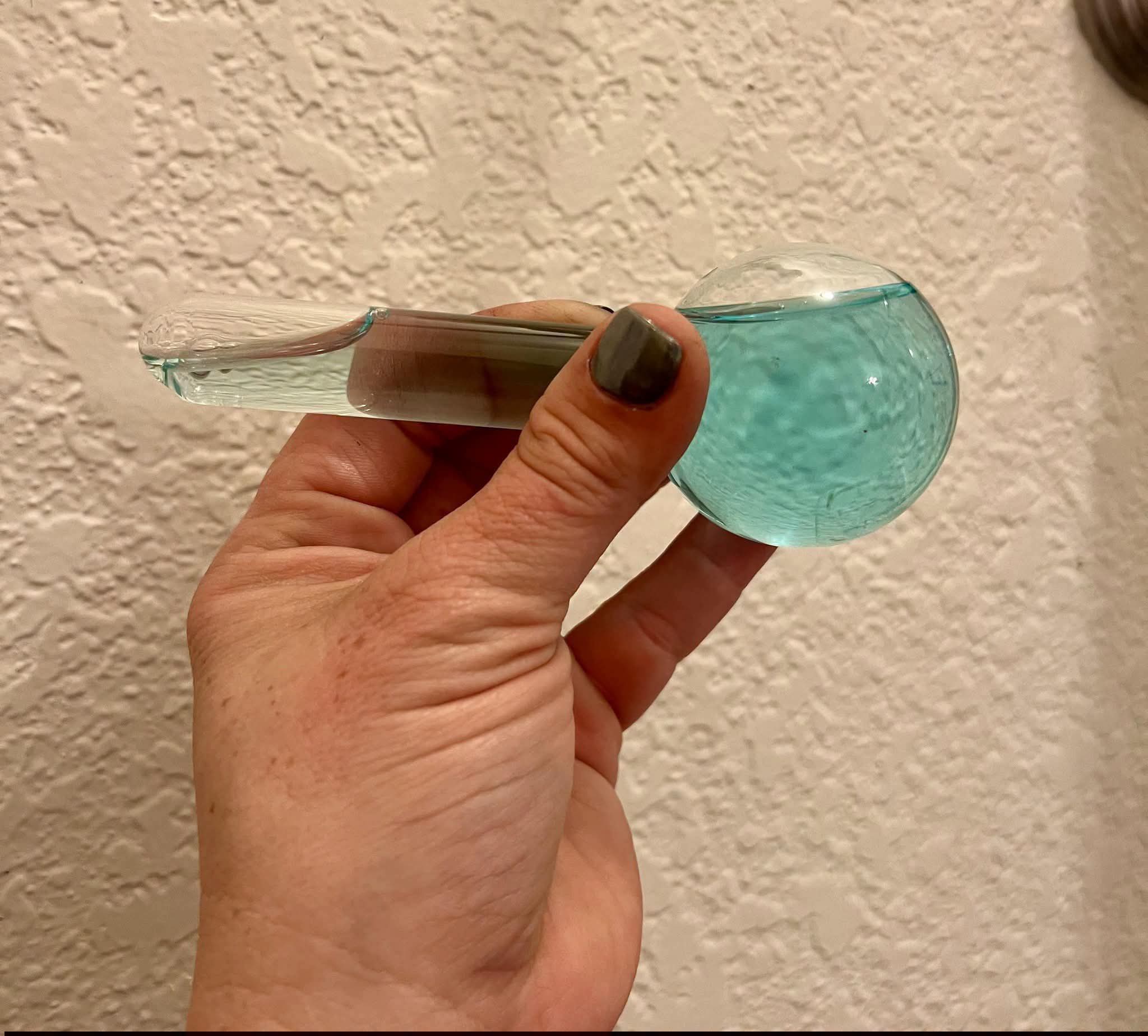
This is a type of glass hand pipe, sometimes called a bubbler or oil burner pipe. These are widely sold at smoke shops, gas stations, and online, and they come in countless shapes and colors. The design in your photo has two key parts:
- The bulb/globe — filled with liquid (often just water, sometimes with a bit of color added or residue mixed in). This chamber cools and filters smoke as it’s drawn through.
- The stem/mouthpiece — the long tube you’d inhale from.
Typically, there’s also a small bowl or heating point somewhere on the piece — often on the underside or at an angle not visible in a photo — where dried plant material is packed and lit. Some pipes also have a small hole (called a “carb”) that’s covered and released to control airflow.
What It’s Usually Used For
These pipes are most commonly associated with smoking cannabis, though they can technically be used with tobacco as well. The blue-tinted liquid you noticed is a common addition — sometimes it’s just food coloring for aesthetics, though residue buildup can also tint water over time with repeated use.
Signs That Indicate Use vs. Just Ownership
Since you mentioned no lid and asked what it is, here are things that can help you understand more:
- Residue or discoloration inside the bulb or stem often indicates the piece has been used, not just purchased and stored
- A burnt smell coming from the pipe itself is a strong indicator of use
- Scorch marks near where the bowl/heating area would be
- A brand-new, clean piece with no smell could mean it hasn’t been used yet, or was recently cleaned
What This Doesn’t Tell You
Finding a pipe doesn’t automatically tell you how often it’s been used, what exactly was smoked in it, or the full context. It’s a strong signal worth addressing directly, but it’s one data point, not the whole picture.
A Grounded Next Step
Rather than jumping to worst-case conclusions or ignoring it, most guidance from parenting and addiction specialists points toward:
- Approaching the conversation calmly, not with anger as the opening move — kids are far more likely to be honest if they don’t feel instantly cornered
- Asking open questions rather than accusations: “I found this in your room, can you tell me about it?”
- Listening for context — experimentation, peer pressure, coping with stress, or something else going on
- Being clear about your expectations and any consequences, while keeping the door open for honest conversation going forward
- Knowing when to loop in outside support — a school counselor, pediatrician, or a family therapist can help if this feels like it’s part of a bigger pattern
If you want, I can help you draft what you might actually say to your son, or point you toward some solid resources on talking to teens about substance use.
