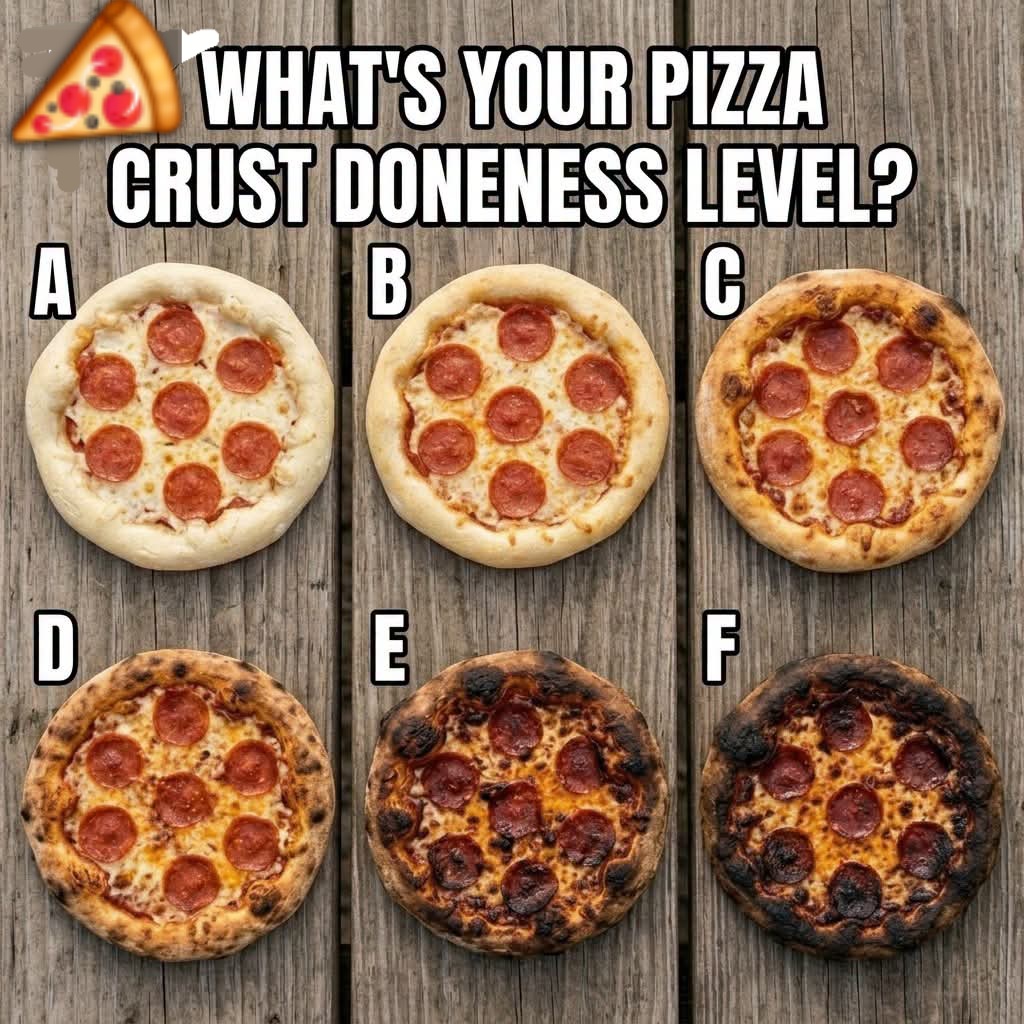
🍕 What’s Your Pizza Crust Doneness Level?
Everyone has a favorite pizza topping, but true pizza lovers know that the real magic starts with the crust.
The perfect pizza crust can make or break an entire slice. Some people love a soft, chewy base with just a hint of color, while others won’t settle for anything less than a deeply caramelized, ultra-crispy edge.
So where do you fall on the pizza crust doneness scale?
Let’s find out!
🍞 Level A: Barely Golden
This crust spends the least amount of time in the oven.
The result is:
✨ Soft texture
✨ Chewy bite
✨ Mild flavor
✨ Tender edges
Fans of this style enjoy doughy, pillowy crusts that highlight the bread-like qualities of pizza.
For them, the toppings are the star, and the crust provides a gentle foundation.
🌟 Level B: Lightly Baked
A little more time in the oven creates a delicate golden color.
Supporters love:
🍕 Slight crispness
🍕 Soft interior
🍕 Balanced texture
🍕 Light toasted flavor
This level appeals to people who want a little crunch without sacrificing chewiness.
🏆 Level C: The Classic Pizza Crust
For many pizza lovers, this is the sweet spot.
The crust is golden brown with a crisp exterior and a soft center.
Why it’s so popular:
😋 Excellent texture balance
😋 Pleasant crunch
😋 Rich flavor
😋 Works with any topping
Many pizzerias aim for this level because it satisfies the widest range of tastes.
🔥 Level D: Deep Golden Perfection
Now we’re entering serious pizza territory.
The crust develops darker spots and stronger caramelization.
Fans enjoy:
🔥 More flavor
🔥 Crispier bite
🔥 Toasted notes
🔥 Rustic appearance
This level is especially popular among artisan pizza enthusiasts.
🍕 Level E: Charred and Flavorful
Wood-fired pizza lovers often seek this style.
The crust develops dark blistered spots while maintaining a soft interior.
Supporters say:
🖤 The char adds complexity
🖤 Smoky flavor enhances the pizza
🖤 Traditional Neapolitan-style appearance
🖤 Beautiful contrast of textures
To many pizza experts, a little char is a sign of authentic high-heat baking.
⚫ Level F: Extra Well Done
This crust spends significantly longer in the oven.
The result:
🍕 Maximum crispness
🍕 Deep caramelization
🍕 Crunchy edges
🍕 Intense flavor
People who choose this level often prefer texture over softness.
☄️ Level G: Almost Burnt
Now the debate gets heated.
Some people look at this crust and say:
“Perfect.”
Others say:
“That’s overcooked.”
Fans love:
🔥 Powerful roasted flavor
🔥 Serious crunch
🔥 Bold character
For them, pizza should have personality.
🖤 Level H: The Dark Side
The darkest crust of all.
This level divides pizza lovers more than any other.
Supporters insist:
⚫ Smoky flavor is unmatched
⚫ Crisp texture is addictive
⚫ The darker the better
Critics call it burnt.
Fans call it perfection.
🍕 Why Crust Preferences Differ
Pizza crust preferences are influenced by:
- Childhood memories
- Regional styles
- Favorite pizza restaurants
- Personal taste
Some people crave softness.
Others chase crunch.
Neither side is wrong.
🔥 The Science Behind Great Crust
As dough bakes, sugars and proteins react through a process called the Maillard reaction.
This creates:
✨ Golden color
✨ Rich aromas
✨ Complex flavors
✨ Crispy textures
The longer the crust cooks, the more pronounced these characteristics become.
🌍 Different Pizza Styles, Different Crusts
Around the world, pizza styles vary dramatically.
Some are known for:
🍕 Soft, chewy crusts
🍕 Thin and crispy bases
🍕 Puffy wood-fired edges
🍕 Deep caramelized bottoms
Each style has devoted fans.
The Bottom Line
There is no universal perfect pizza crust.
Some people love a lightly baked, chewy slice. Others want a deeply browned crust packed with crunch and smoky flavor.
The best pizza crust is simply the one that makes you reach for another slice.
🍕👇 So be honest…
What’s your pizza crust doneness level: A, B, C, D, E, F, G, or H?
