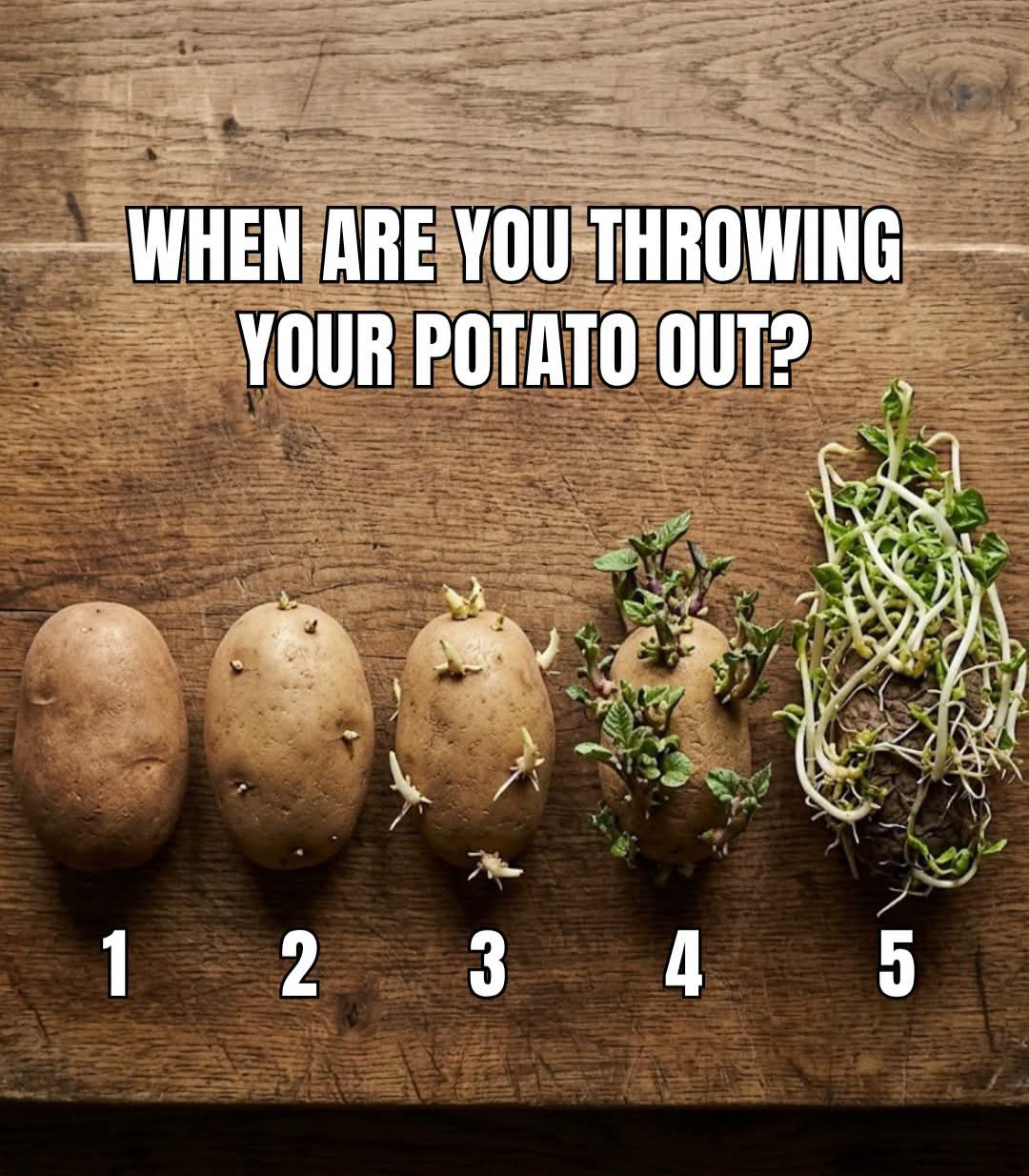
🥔 When Are You Throwing Your Potato Out?
Potatoes are one of the most versatile foods you can keep in your kitchen. They’re perfect for mashed potatoes, fries, baked potatoes, soups, stews, and countless family recipes. But as they sit in the pantry, they naturally begin to change.
Some develop tiny sprouts. Others become soft or wrinkled. A few may even turn green or show signs of mold.
That brings us to today’s fun kitchen debate…
🥔 At Which Level Would You Throw It Away?
Imagine your potato progresses through these stages:
🥔 Level 1 – Fresh
Firm, smooth skin with no sprouts or blemishes. Perfect for any recipe.
🥔 Level 2 – A Few Tiny Sprouts
The potato is still firm, but a few small “eyes” have started to sprout.
🥔 Level 3 – Wrinkled and Several Sprouts
The potato has become slightly soft with longer sprouts. It has lost some moisture but isn’t rotten.
🥔 Level 4 – Green Areas and Large Sprouts
The potato has noticeable green patches and long sprouts.
🥔 Level 5 – Soft, Moldy, or Rotten
The potato is very soft, has mold, a foul odor, or is leaking liquid.
Which level would you toss it?
🌱 Why Do Potatoes Sprout?
Potatoes are living tubers. Over time, especially when stored in warm or bright conditions, they naturally begin to sprout as they prepare to grow into new plants.
Sprouting doesn’t always mean a potato is unsafe, but it’s a sign that it’s aging.
💚 What About Green Potatoes?
When potatoes are exposed to light, they can develop green areas.
The green color itself is chlorophyll, but it can occur alongside increased levels of naturally occurring compounds called glycoalkaloids, which can make potatoes taste bitter and may cause illness if consumed in large amounts.
If a potato has small green spots, many people trim away the green portions and any sprouts before using the rest. However, if it’s heavily green, very bitter, or covered with large green areas, it’s generally best to discard it.
👃 Signs It’s Time to Throw It Away
A potato should be discarded if it has:
- Mold
- A sour or unpleasant smell
- Soft, mushy, or leaking spots
- Extensive green coloring
- Very long sprouts combined with severe shriveling
- Signs of rot
When in doubt, it’s safer not to eat it.
🥔 How to Keep Potatoes Fresh Longer
Store potatoes in:
- A cool, dark place
- A well-ventilated basket or paper bag
- A dry location away from direct sunlight
Avoid storing them in sealed plastic bags, where moisture can build up.
Also, keep potatoes away from onions. Both release gases that can cause the other to spoil more quickly.
🍟 Don’t Waste Good Potatoes
If your potatoes are still firm with only tiny sprouts, they may still be suitable for cooking after removing the sprouts and any small green spots.
Using potatoes before they become overgrown with sprouts helps reduce food waste and ensures the best flavor and texture.
🥔 Time to Vote!
Everyone has a different comfort level.
Which number are you?
🥔 1 – I only eat perfectly fresh potatoes.
🥔 2 – Tiny sprouts don’t bother me.
🥔 3 – I’ll trim the sprouts and still use it.
🥔 4 – That’s my limit—it’s going in the trash.
🥔 5 – Definitely throwing it away!
Tell us your number in the comments! Have you ever discovered a forgotten potato hiding in the back of the pantry with sprouts that seemed to have a life of their own? 😄🥔
