Which Old Mall Store Would You Visit First If It Reopened for One Day?
Imagine walking into a shopping mall and suddenly finding yourself surrounded by the sights and atmosphere of another era.
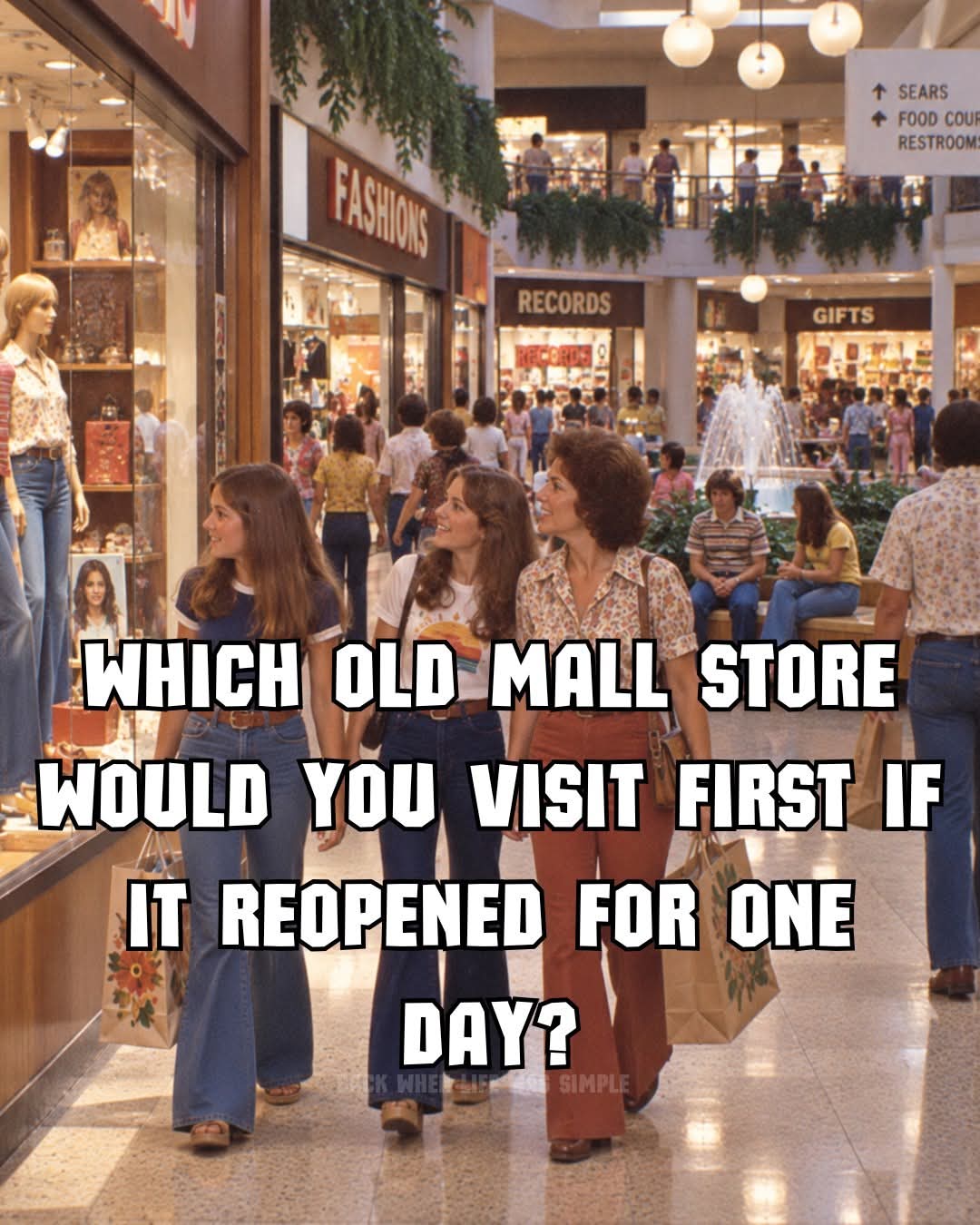
The stores are busy. Shoppers walk through the polished corridors carrying paper bags. A fountain sparkles in the center of the mall. Store signs advertise Fashions, Records, Gifts, and a familiar Sears sign points visitors toward another part of the building.
There are no endless online shopping tabs, no delivery notifications, and no smartphones in everyone’s hands.
Instead, there is something increasingly rare: the experience of going shopping simply for the fun of it.
The nostalgic image above captures that feeling beautifully—and raises a fun question:
If an old-fashioned shopping mall reopened for just one day, which store would you visit first?
A Different Kind of Shopping Experience
For many people, shopping malls were more than places to buy things.
They were destinations.
A trip to the mall could mean spending several hours walking around with family or friends, browsing store windows, listening to music, eating at the food court, and meeting people along the way.
The mall itself was part of the entertainment.
Today, shopping can often happen with just a few taps on a phone. You search for an item, compare prices, place an order, and wait for it to arrive.
Convenient? Absolutely.
But there was something special about physically walking into a store and discovering something you weren’t even looking for.
The Magic of the Record Store
One of the most intriguing stores shown in the image is the records shop.
For music lovers, a record store could feel like a treasure hunt.
You could spend ages looking through albums, checking the covers, reading the names of artists, and discovering music by accident.
There was also a social element to it. People could talk about their favorite bands, recommend albums to each other, and debate which records were worth buying.
Unlike today’s streaming services, where millions of songs are instantly available, choosing an album required a little more commitment.
You bought the record.
You took it home.
You played it.
And you probably listened to the entire album rather than skipping through dozens of songs.
That physical connection is one reason vintage music culture continues to fascinate younger generations.
The Fashion Store
The fashion store would probably be another popular destination.
The image depicts a period-inspired shopping environment filled with shoppers wearing clothing associated with the late 20th century. Denim, patterned shirts, wide-leg trousers, casual tops, and other retro styles create an unmistakably nostalgic atmosphere.
Fashion has a funny way of coming back around.
Styles that once seemed old-fashioned can eventually become fashionable again. Denim silhouettes, vintage prints, sneakers, jackets, and accessories regularly return to modern wardrobes with a new interpretation.
Walking into an old mall fashion store for one day would therefore be more than shopping.
It would be a chance to experience the original atmosphere behind styles that are now considered “retro.”
And Then There’s Sears
The Sears sign in the image is another major nostalgia trigger for many American shoppers.
For generations, Sears was a major retail name, selling everything from clothing and household products to appliances and tools.
Seeing the familiar name in an old-style mall environment immediately creates a sense of another time.
For someone who remembers visiting Sears with their parents or grandparents, walking through those doors again—even for one day—could be surprisingly emotional.
It wouldn’t necessarily be about buying anything.
It would be about remembering what it felt like to be there.
The Mall Food Court
Of course, no nostalgic mall experience would be complete without the food court.
The sign in the image points toward the food court and restrooms, reminding us that the mall was designed as a complete destination.
You could shop for clothes, browse records, buy gifts, grab something to eat, and then continue exploring without ever leaving the building.
Food courts also became social gathering places.
Friends could sit together for hours. Families could take a break between stores. Teenagers could meet after school.
For many people, some of their strongest mall memories may have nothing to do with shopping at all.
They may remember who they were with, what they ate, what music was playing, or how long they spent wandering around.
The Gift Store
The “Gifts” store shown in the picture is another place that would be hard to resist.
Gift shops have always been full of things you don’t necessarily need—but suddenly want after seeing them.
Novelty items, decorations, souvenirs, greeting cards, small toys, accessories, collectibles, and unusual household objects could turn a quick visit into an unexpected purchase.
And that’s part of the fun.
You didn’t necessarily walk into a gift shop with a shopping list.
You walked in to see what you could find.
Why Old Malls Feel So Nostalgic
There’s an important distinction between nostalgia for shopping malls and nostalgia for the products sold inside them.
People aren’t always longing for an old shirt, record, or department store.
Often, they’re remembering an entire experience.
The architecture.
The lighting.
The music.
The smell of food from the food court.
The sound of people talking.
The excitement of seeing a crowded store.
The feeling of having nowhere else to be.
A mall could feel like its own little world.
Before Online Shopping Changed Everything
Online shopping dramatically changed the way people discover and purchase products.
Today, you can search for almost anything from almost anywhere.
You don’t need to drive to a mall to find a particular pair of shoes. You don’t need to visit several stores to compare products. You don’t even need to leave the sofa.
But convenience comes with a trade-off.
Online shopping is efficient, while physical shopping can be experiential.
You can touch a product.
Try something on.
Flip through a record.
Look at an item from different angles.
Ask a salesperson a question.
And perhaps most importantly, you can discover something completely unexpected.
The Lost Art of Browsing
One of the best things about old-fashioned shopping was simply browsing.
You didn’t always need a specific goal.
Sometimes you could walk into a store and spend half an hour looking around without buying anything.
You might see something interesting in a window.
Then you would enter.
That might lead you to another department.
Then another store.
Before you knew it, several hours had passed.
Today, browsing still exists, but it often happens digitally. Algorithms recommend products based on what you’ve already searched for.
The old mall experience was different.
You didn’t always know what you were going to discover.
A Day Without Smartphones
There’s another fascinating detail about the image: the atmosphere feels completely disconnected from modern smartphone culture.
Imagine spending an entire day at the mall without constantly checking notifications.
You wouldn’t be photographing every meal.
You wouldn’t be scrolling through social media while walking between stores.
You wouldn’t be comparing every product with dozens of online listings.
Instead, you’d simply be there.
Looking.
Listening.
Talking.
Exploring.
For younger generations, that might sound strange.
For others, it might sound wonderfully familiar.
What Store Would You Visit First?
If you could step into this nostalgic mall for exactly one day, your first destination might reveal a lot about you.
Would you head straight to the record store?
Maybe you’d spend an hour digging through albums and looking for something you remember from your childhood.
Would you visit Sears?
Perhaps you’d want to experience the legendary department store atmosphere again.
Would you go to the fashion store?
You could see what people were wearing, try on some vintage-inspired clothing, and maybe leave with an outfit that looks like it came from another decade.
Or perhaps you’d skip the stores completely and head directly to the food court.
Because sometimes nostalgia is really about the food.
What Would You Buy?
This is where the hypothetical gets even more interesting.
If you had only one day, would you actually purchase something?
Maybe you’d buy a record.
Maybe you’d pick up a piece of clothing.
Maybe you’d purchase a small gift or souvenir.
Or perhaps you’d decide not to buy anything at all.
You’d simply walk around and enjoy the experience.
After all, you can’t really purchase nostalgia.
You can only experience it.
Why These Images Connect With People
Images like this work because they combine several powerful nostalgic elements into one scene.
There is the architecture of the mall.
There are familiar retail categories.
There are shoppers carrying bags.
There is a central fountain.
There are plants and hanging lights.
There are large signs guiding visitors around the building.
Together, these details create a visual story of everyday life in a shopping mall from an earlier era.
Even people who didn’t personally experience that exact period can find the scene fascinating because it represents a style of life that feels very different from today.
The Mall May Have Changed, But the Memories Remain
Shopping malls have evolved considerably over the decades. Some have been renovated, some have changed their tenant mix, and others have struggled as shopping habits have moved online.
Yet the cultural memory of the mall remains surprisingly strong.
For many people, malls represent childhood trips, teenage hangouts, family weekends, first purchases, favorite stores, and hours spent simply wandering around.
That’s why the idea of reopening an old mall for just one day is so appealing.
It isn’t really about restoring the past.
It’s about giving people the opportunity to experience a feeling they thought was gone.
If You Could Bring One Store Back…
Now comes the big question.
Which store would you bring back for one day?
🎵 The record store — for music and nostalgia.
👗 The fashion store — for vintage styles.
🛍️ Sears — for the classic department-store experience.
🎁 The gift shop — for random treasures and souvenirs.
🍔 The food court — because nostalgia tastes better with food.
Or maybe there was another store from your childhood that isn’t shown in the picture at all.
That’s what makes this question so much fun.
Everyone has a different answer.
Final Thoughts
The old mall in this image represents more than shopping.
It represents a time when going to the mall could be an event.
You could spend an entire afternoon exploring stores, listening to music, meeting friends, eating at the food court, and discovering things you didn’t know you wanted.
Modern shopping may be faster and more convenient, but there’s something undeniably charming about the old experience.
So if this mall could reopen its doors for one single day, where would you go first?
The record store? Sears? The fashion shop? The gift store? Or straight to the food court?
Maybe the most interesting part isn’t what you would buy.
It’s who you would want to walk through those doors with one more time.
SEO Title
Which Old Mall Store Would You Visit First If It Reopened for One Day?
Meta Description
Take a nostalgic trip back to the classic shopping mall era. If old stores like Sears, record shops, fashion stores and gift shops reopened for one day, which would you visit first?
Suggested Tags
Nostalgia, Old Shopping Malls, Vintage Stores, Sears, Retro Culture, Record Stores, Vintage Fashion, 1980s Nostalgia, 1990s Nostalgia, Shopping Mall Memories
