🧅 Which Onion Are You Choosing? A Complete Guide to Choosing the Right Onion for Every Recipe
Onions may look simple, but choosing the right one can completely change the flavor of a dish.
Some onions are mild and sweet, some have a sharper bite, and others become wonderfully sweet and caramelized when cooked. Red, white, yellow and sweet onions all have their own strengths—and knowing which one to grab at the grocery store can make cooking a lot easier.
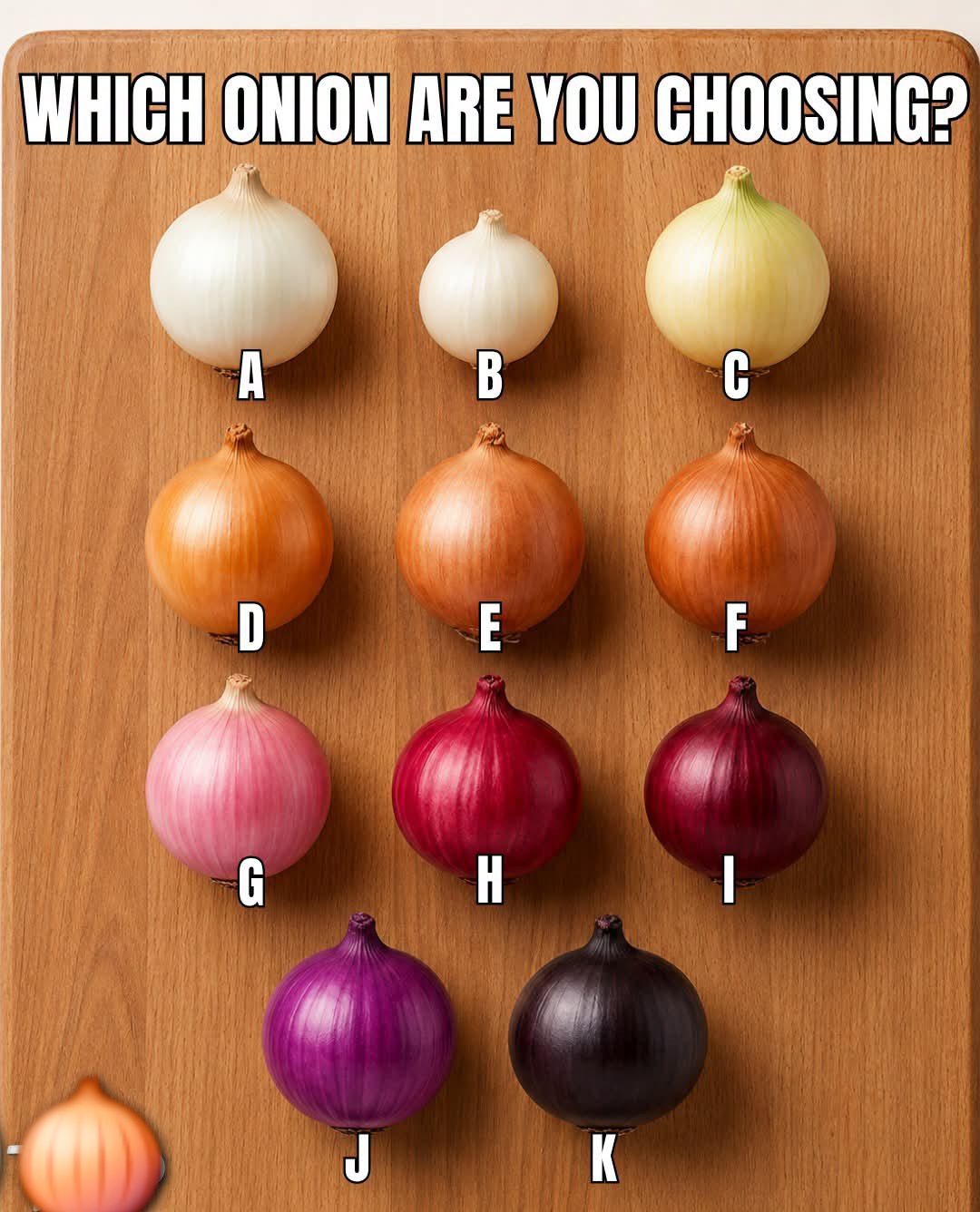
So, looking at the onions in the picture…
🧅 Which one are you choosing: A, B, C, D, E, F, G, H, I, J or K?
Before you pick your favorite, let’s talk about what makes each type of onion useful in the kitchen.
🧅 White Onions
The pale onions shown near the top of the image are examples of the type commonly sold as white onions.
White onions tend to have a crisp texture and a noticeable onion flavor. They’re especially useful when you want onion flavor without the deeper sweetness associated with many yellow onions.
Best uses for white onions:
- Fresh salsa
- Guacamole
- Tacos
- Mexican-inspired dishes
- Salads
- Sandwiches
- Soups
- Stir-fries
They can be eaten raw, although their flavor can be fairly assertive depending on the onion.
Best choice when you want: crisp texture and fresh onion flavor.
🧅 Yellow Onions
The golden-brown onions in the middle portion of the picture represent the classic yellow onion family.
If you only wanted to keep one onion in your kitchen, yellow onions would be a very practical choice.
They’re incredibly versatile and can be used in everything from soups and stews to burgers and casseroles.
When cooked, their flavor becomes sweeter and more rounded.
Use yellow onions for:
- Soups
- Stews
- Gravy
- Meatloaf
- Burgers
- Roasted vegetables
- Pasta sauces
- Casseroles
- Caramelized onions
- Slow-cooked dishes
They’re one of those ingredients that quietly makes countless recipes taste better.
⭐ Best choice for an everyday kitchen
Yellow onion is probably the most versatile option.
🧅 Sweet Onions
Some of the larger, lighter-colored onions in the image may resemble sweet onion varieties, but you can’t reliably determine a specific sweet variety from appearance alone.
Sweet onions are bred to have a milder flavor than typical storage onions.
Depending on the variety, examples include onions marketed as Vidalia, Walla Walla or Maui.
Their mild flavor makes them especially appealing when onions are eaten raw.
Try sweet onions in:
- Burgers
- Sandwiches
- Salads
- Onion rings
- Salsas
- Grilled vegetable dishes
- Roasted vegetables
- Caramelized onions
They’re also delicious when slowly cooked because their natural sweetness becomes even more noticeable.
🧅 Red Onions
The red and purple onions toward the bottom of the picture are red onions.
Despite being called “red onions,” their skins and flesh can range from reddish-purple to deep purple.
They’re especially popular in dishes where their beautiful color can stand out.
Best uses for red onions:
- Salads
- Tacos
- Burgers
- Sandwiches
- Greek salads
- Grain bowls
- Salsa
- Pickled onions
- Garnishes
One of my favorite uses is quick-pickled red onions.
Thinly slice the onion, cover it with a simple vinegar-based pickling liquid and let it sit until the slices become bright, tangy and tender.
They’re fantastic on tacos, sandwiches and grilled meats.
🧅 Which Onion Is Best for Eating Raw?
If you’re making a salad, sandwich or fresh salsa, you may want an onion with a flavor you enjoy raw.
Great choices include:
Sweet onion: Mild and naturally sweet.
Red onion: Crisp, colorful and pleasantly sharp.
White onion: Crisp with a stronger, fresh onion flavor.
The best choice ultimately comes down to personal preference.
If raw onion tastes too strong to you, try slicing it thinly and soaking it briefly in cold water. This can mellow some of the sharpness.
🍳 Which Onion Is Best for Cooking?
For everyday cooking, yellow onions are hard to beat.
They work beautifully in recipes where the onion is sautéed, roasted, simmered or caramelized.
Start with diced yellow onion in a little oil or butter and cook it until softened. As it cooks, the raw sharpness fades and the flavor becomes sweeter and more savory.
That’s why yellow onions appear in so many classic recipes.
🥘 Which Onion Is Best for Soup?
Yellow onions are an excellent all-purpose choice.
They’re particularly good in:
- Chicken soup
- Beef stew
- French onion soup
- Vegetable soup
- Potato soup
- Chili
- Lentil soup
White onions can also work very well, particularly when you want a brighter onion flavor.
🍔 Which Onion Is Best for Burgers?
This one is completely up to you!
Want sweetness?
Choose a sweet onion.
Want color and freshness?
Choose red onion.
Want a classic cooked onion?
Choose yellow onion.
Want stronger onion flavor?
Try white onion.
And don’t forget grilled onions.
Thinly sliced onions cooked slowly in a skillet until soft and golden can turn an ordinary burger into something special.
🌮 Which Onion Is Best for Tacos?
There isn’t just one answer.
Red onions
Excellent raw or pickled.
White onions
A classic choice for many taco and Mexican-inspired dishes.
Yellow onions
Great when cooked with meat, peppers and spices.
For a taco night, you could even put several varieties on the table and let everyone choose.
🥗 Which Onion Is Best for Salads?
For salads, many people prefer red or sweet onions because they add flavor without overpowering the other ingredients.
Thinly slice them instead of cutting them into large chunks.
A little onion can go a long way.
🔥 Which Onion Is Best for Grilling?
Sweet and yellow onions are both excellent candidates for grilling.
Cut the onion into thick slices or wedges, brush lightly with oil and grill until tender with browned edges.
You can also put onion wedges directly on skewers with:
- Peppers
- Mushrooms
- Zucchini
- Tomatoes
- Chicken
- Beef
The heat softens the onion and brings out its natural sweetness.
🧅 What About Green Onions?
Green onions are a little different from bulb onions.
They have long green stalks and a small or nonexistent bulb depending on the type. They’re commonly chopped and used as a fresh garnish for soups, salads, stir-fries and many other dishes. (Extension de l’Université du Minnesota)
They’re particularly useful when you want fresh onion flavor without a large amount of onion.
Try them on:
- Baked potatoes
- Eggs
- Fried rice
- Noodles
- Soups
- Salads
- Tacos
- Dips
And don’t throw away those green tops!
They can be sliced and used just like chives in many dishes.
🧅 Does Onion Color Really Matter?
Yes—but not as much as people sometimes think.
Color can give you a useful starting point, but variety matters too.
Two onions that look similar may have different flavor characteristics, and the way you cook them can dramatically change their taste.
A yellow onion that’s slowly caramelized can taste completely different from a raw yellow onion.
The same is true for red and white onions.
So rather than thinking:
“This color is only good for this recipe.”
Think:
“What flavor and texture do I want in this dish?”
That’s a much better way to choose.
🛒 How to Pick a Good Onion at the Store
Regardless of the variety, look for onions that feel firm and heavy for their size.
Avoid onions that have:
- Soft spots
- Wet or mushy areas
- Visible mold
- Strong signs of decay
- Excessive sprouting
- Damaged or collapsing areas
The outer skin should generally be dry and intact.
If an onion feels soft when you squeeze it, that’s a warning sign that it may have started deteriorating.
🧺 How to Store Onions
Whole, dry onions generally do best in a cool, dry, well-ventilated place rather than sealed in an airtight container.
Good airflow helps prevent moisture from accumulating.
Keep them away from areas where they can become damp.
Once an onion has been cut, refrigerate the unused portion in a suitable covered container and use it within a reasonable period while checking for signs of spoilage.
🧅 What Happens When You Cook Onions?
One of the most fascinating things about onions is how dramatically their flavor changes during cooking.
Raw
Sharp, crisp and pungent.
Lightly sautéed
Softer and sweeter.
Golden brown
Rich, savory and sweet.
Caramelized
Deeply sweet and intensely flavorful.
That’s why the same onion can work in completely different recipes.
A raw red onion can add crunch to a salad, while a slowly caramelized yellow onion can become the star of a sandwich or burger.
🏆 Quick Onion Guide
| Onion | Flavor | Best Uses |
|---|---|---|
| 🧅 Yellow | Balanced, savory | Soups, stews, sauces, cooking |
| 🧅 White | Crisp, sharper | Salsa, tacos, salads |
| 🧅 Sweet | Mild, sweet | Burgers, salads, grilling |
| 🧅 Red | Crisp, slightly sharp | Salads, tacos, pickling |
| 🌱 Green | Fresh, mild | Garnishes, eggs, stir-fries |
🧅 So… Which One Would I Choose?
If I had to pick only one onion for my kitchen, I’d choose yellow because it’s so versatile.
But if I’m making tacos?
Red or white. 🌮
Making a salad?
Red or sweet. 🥗
Making soup?
Yellow. 🍲
Making a burger?
Sweet or yellow. 🍔
Making something that needs a colorful topping?
Red. ❤️
And for a quick garnish?
Green onions. 🌱
There really isn’t a “bad” onion—there’s just an onion that’s better suited to the recipe you’re making.
🧅 Now it’s your turn!
Which onion are you choosing: A, B, C, D, E, F, G, H, I, J or K?
And more importantly…
What’s the one onion you always have in your kitchen? 👇🧅
