? A Guide to Perfect Pancakes
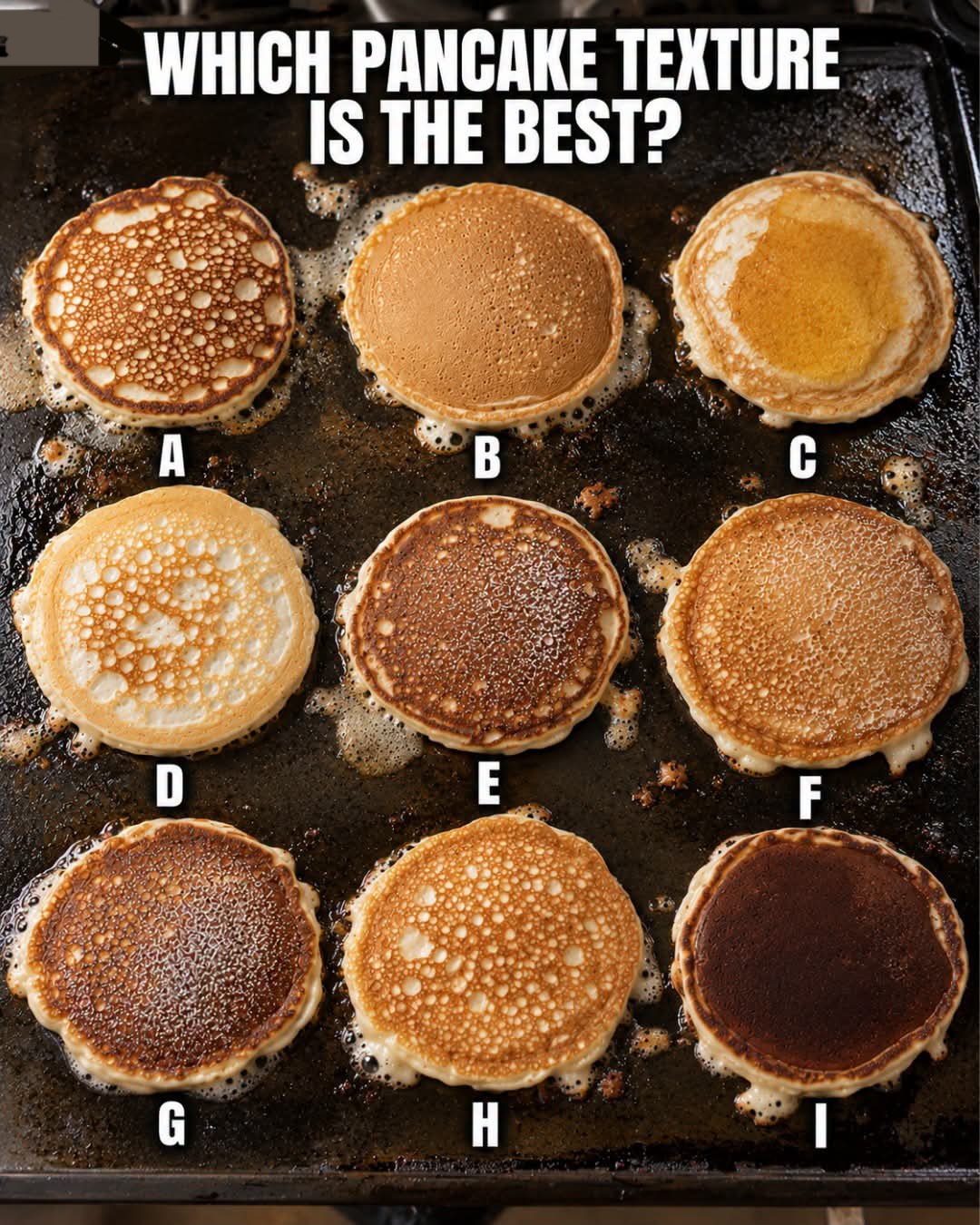
Pancakes may look simple, but their texture can vary dramatically depending on the ingredients, batter consistency, griddle temperature, and cooking technique. Some pancakes develop large bubbles and a lacy appearance, while others have a smooth surface, a golden crust, or a deeply browned finish.
So, which pancake texture is the best? The answer depends on whether you prefer pancakes that are fluffy and tender, crisp around the edges, or evenly browned with a soft interior.
Understanding the nine pancake textures
- A — Large, irregular bubbles: This pattern can develop when bubbles in the batter expand and burst during cooking. It may result from the batter’s consistency, leavening, or cooking conditions.
- B — Fine, uniform pores: A relatively even surface with tiny pores can indicate that small gas bubbles have formed throughout the batter. This can be desirable in a soft, tender pancake.
- C — Golden center with pale edges: Uneven browning may result from differences in griddle contact, heat distribution, or the amount of fat on the cooking surface.
- D — Pale surface with large bubbles: This appearance suggests that bubbles have formed while the pancake’s surface remains relatively light. The griddle may be cooler, or the pancake may have been flipped before substantial browning developed.
- E — Dark brown with a dense pattern: This pancake has extensive browning and many small surface pores. Whether it tastes good depends on whether the inside remains moist and tender.
- F — Evenly browned with a fine texture: The surface has relatively consistent coloring and numerous small pores. This can be an appealing result when the pancake is cooked through without becoming dry.
- G — Deeply browned with fine pores: This pancake has a dark, textured surface. It may have a stronger toasted flavor, although excessive browning can produce bitterness.
- H — Golden brown with prominent bubbles: The surface features a mixture of large and small pores. This can be attractive, but the appearance alone cannot establish whether the pancake is fluffy or tender inside.
- I — Very dark, smooth surface: The deep color could indicate substantial browning or overheating. If the pancake tastes burnt or has a dry interior, the cooking temperature is probably too high.
These descriptions are based on the visible appearances in the image. Without the original recipe and cooking conditions, it isn’t possible to determine exactly how each pancake was made.
What does the ideal pancake look like?
For a traditional American-style pancake, a desirable result generally has the following characteristics:
1. A fluffy interior
The pancake should be light and tender rather than dense or rubbery. Baking powder or another appropriate leavening system helps produce the gas bubbles responsible for its rise.
2. An evenly golden-brown exterior
A golden surface provides appealing color and toasted flavor. A pancake doesn’t need to be dark brown to be fully cooked.
3. Small, evenly distributed pores
A fine, reasonably uniform pattern of pores can indicate that bubbles have formed throughout the batter. However, large bubbles aren’t necessarily a problem, and the best pattern depends on the style of pancake.
4. A moist, tender crumb
When cut open, the pancake should be cooked through without being gummy, dry, or tough.
5. Lightly crisp edges
Some people prefer soft edges, while others enjoy a delicate crispness created by cooking the batter on a lightly greased, sufficiently hot griddle.
How to achieve the best pancake texture
Follow these steps for consistently fluffy, golden pancakes.
- Measure the ingredients accurately. Too much flour can make pancakes dense, while too much liquid can produce thin pancakes that spread excessively.
- Avoid overmixing. Stir the wet and dry ingredients until they are just combined. A few small lumps are fine. Excessive mixing can develop gluten and make wheat-based pancakes tougher.
- Let the batter rest. Allowing it to rest for about 5–10 minutes can help the flour hydrate and improve consistency.
- Preheat the griddle. Use medium heat and allow the cooking surface to heat evenly. Excessive heat can burn the exterior before the center cooks.
- Use a thin layer of fat. Lightly grease the cooking surface rather than allowing butter or oil to pool. Too much fat can cause uneven browning.
- Wait before flipping. Flip when bubbles appear across the surface, some begin to burst, and the edges look set.
- Avoid pressing the pancake. Pressing it with a spatula forces out some of the air and can make it flatter and denser.
- Adjust the heat between batches. If the pancakes become progressively darker, reduce the heat slightly.
The verdict: Which pancake texture is the best?
There is no universally correct answer, because pancake texture is partly a matter of personal preference.
For a classic breakfast pancake, a fluffy interior, an evenly golden-brown surface, and a moist, tender crumb are excellent goals. A fine, relatively uniform pore structure can accompany this result, but the appearance of the surface alone cannot tell you everything about the texture inside.
If you prefer a more rustic pancake, larger bubbles and irregular patterns can be perfectly acceptable. If you enjoy a stronger toasted flavor, a deeper golden-brown surface may be more appealing.
Ultimately, the best pancake is one that is cooked through, tender inside, pleasantly browned outside, and suited to your taste.
Note: This is a newly written article based on the image and general pancake-making principles, not the original article reproduced verbatim. If you share the website link or the social media account where you found the image, I can help identify the original source.
