😍🤤
A Simple Guide to Picking the Best Salmon at the Store
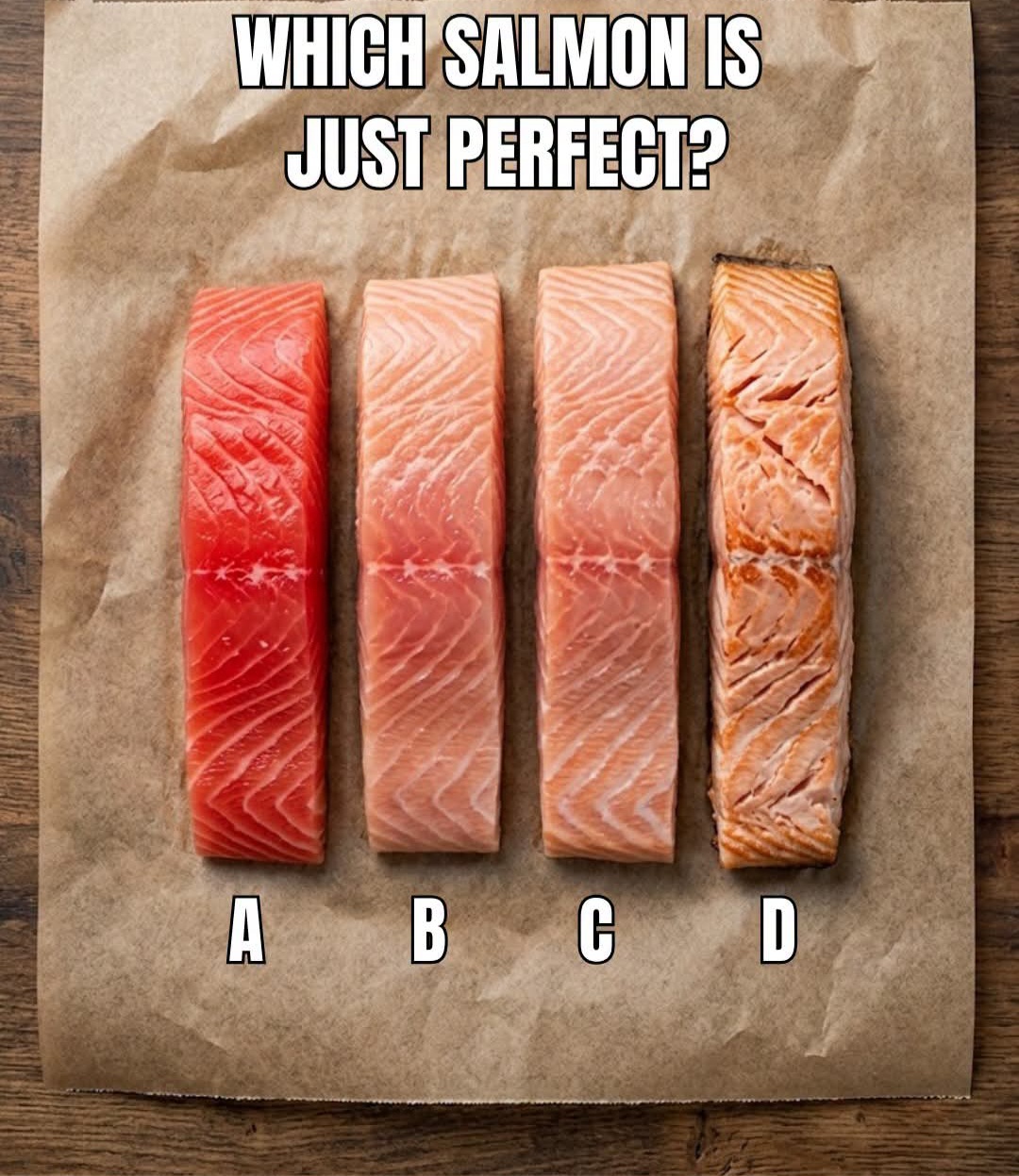
Look at these four salmon fillets. They may all look like perfectly good pieces of fish, but if you’re standing at the seafood counter trying to decide which one to take home, what should you actually look for?
The answer isn’t simply:
“Pick the brightest orange one.”
There is much more to choosing a good salmon fillet than color.
And when I look at the picture, C is probably the one I’d reach for first—but there’s an important catch: you cannot determine freshness from a photograph alone.
Here’s how to choose a truly beautiful salmon fillet. 🐟❤️
🐟 First: Don’t Judge Salmon by Color Alone
This is one of the biggest misconceptions about buying salmon.
You might assume that the reddest or deepest orange piece is automatically the freshest or best.
Not necessarily.
Salmon can naturally vary in color depending on the species, diet, and other factors. The FDA specifically warns that color alone isn’t a reliable indicator of freshness. (U.S. Food and Drug Administration)
That’s important when comparing the four pieces in the photograph.
So what about A, B, C and D?
A is the deepest red.
B is a lighter pink.
C has a beautiful pink-orange color and looks nicely uniform.
D is cooked and therefore isn’t a fair comparison with the raw fillets.
If we’re judging only the appearance of the raw salmon, C looks particularly appealing, but you still need to check the fish itself before buying it.
🥇 What Does the Perfect Salmon Fillet Look Like?
When you’re standing at the seafood counter, look for salmon that has:
✔️ Firm, moist flesh
Fresh fillets should have firm flesh that springs back when pressed rather than feeling mushy or soft. (U.S. Food and Drug Administration)
✔️ A fresh, healthy appearance
The flesh should look moist and fresh rather than dried out.
Avoid fillets with obvious discoloration, excessive darkening or dry edges. (U.S. Food and Drug Administration)
✔️ Well-defined flesh
You want the muscle structure to look intact rather than looking excessively separated or broken apart.
Some natural separation can occur, especially depending on handling and whether the fish has previously been frozen, so don’t reject a fillet based on one visual characteristic alone.
✔️ A pleasant, mild smell
This may actually be more important than the color.
Fresh fish should have a mild, clean smell—not a strong fishy, sour, rancid or ammonia-like odor. (U.S. Food and Drug Administration)
If you smell something that makes you immediately think, “Whoa, that’s fishy,” move on to another piece.
👃 The Smell Test Is Your Friend
This is one of the easiest ways to judge seafood.
Fresh salmon shouldn’t smell like a strong fish market.
It should have a mild, fresh odor.
A strong fishy smell, sour smell or ammonia-like odor is a warning sign. (U.S. Food and Drug Administration)
And don’t let beautiful color fool you.
A gorgeous orange fillet that smells wrong is still one you should leave behind.
👆 The Texture Test
If you’re buying salmon from a seafood counter where touching isn’t permitted, don’t handle it yourself—ask the fishmonger about its firmness.
When appropriately handled, fresh fillet flesh should be firm and spring back when pressed. (U.S. Food and Drug Administration)
You don’t want salmon that feels:
- Mushy
- Slimy
- Soft
- Sticky
- Excessively watery
Freshness is about more than what the fish looks like.
🍊 Does Bright Orange Mean Better Salmon?
Not necessarily.
This is where things get interesting.
Salmon gets its characteristic pink-orange color from pigments in its diet. Different salmon species and production methods can result in different shades.
So one perfectly good salmon might be relatively pale pink while another is much deeper orange.
That doesn’t automatically mean one is fresher.
The FDA specifically notes that seafood color can be affected by factors including diet and environment, which is why you shouldn’t use color by itself to determine freshness. (U.S. Food and Drug Administration)
So don’t automatically grab the reddest piece in the case.
Look at the whole package—or whole fillet.
🐟 What About the White Lines?
Those beautiful white lines running through salmon are fat.
And that fat contributes to salmon’s characteristic richness and flavor.
Generally, salmon with visible marbling can be especially appealing if you’re looking for a rich, buttery piece.
But again, more visible fat doesn’t automatically mean fresher or higher quality.
Species, farming or wild origin, and the individual fish all make a difference.
🌊 Wild-Caught vs. Farm-Raised Salmon
This is another question shoppers often have.
Is wild salmon automatically better?
Not necessarily.
Wild and farmed salmon can both be excellent choices, and they can differ in flavor, texture, fat content, price and sustainability characteristics.
Instead of assuming one is always superior, consider:
- What flavor you prefer
- How you plan to cook it
- Price
- Where it came from
- Whether it was fresh or previously frozen
- Your own dietary preferences
And don’t be afraid to ask the person behind the seafood counter.
A good fishmonger can tell you where the salmon came from and whether it was previously frozen.
❄️ Don’t Be Afraid of Frozen Salmon
Here’s something many shoppers don’t realize:
Frozen salmon can be an excellent choice.
NOAA notes that seafood is often processed and frozen soon after being caught, and previously frozen fillets may not have exactly the same visual characteristics as never-frozen fish while still being perfectly good to eat. (NOAA Fisheries)
When buying frozen salmon, look for packaging that’s intact and fish that’s solidly frozen.
Avoid packages with excessive frost or ice crystals, signs of drying/freezer burn, discoloration, or damaged packaging. (NOAA Fisheries)
🍽️ Choose the Right Shape for How You’re Cooking It
Not every salmon fillet is shaped the same.
If you’re baking a family dinner, a thicker, more evenly sized piece can be convenient because it cooks more uniformly.
Thinner portions can cook much faster.
That’s why two pieces that weigh the same don’t necessarily cook at exactly the same speed.
If you’re buying several pieces for one meal, choosing portions with similar thickness can make dinner much easier.
🔥 And Then There’s D…
D is already cooked.
You can see the flesh has changed from that translucent raw appearance to an opaque cooked appearance, and the surface has developed browning from cooking.
But here’s the important part:
Don’t use the appearance of cooked salmon to judge whether raw salmon was fresh.
For food safety, the FDA recommends cooking most seafood to an internal temperature of 145°F (63°C). (U.S. Food and Drug Administration)
A food thermometer is the most reliable way to check.
❤️ Salmon Is Also a Nutrient-Rich Choice
Salmon is more than just delicious.
Fish provides high-quality protein and other important nutrients, and the FDA lists salmon among its “Best Choice” fish options concerning mercury exposure. (U.S. Food and Drug Administration)
That makes salmon a popular choice for people looking to include seafood in a balanced diet.
🛒 My Quick Salmon Shopping Checklist
Next time you’re at the store, remember this:
LOOK
🐟 Fresh-looking flesh
🐟 No obvious discoloration
🐟 No excessive darkening
🐟 No dried-out edges
SMELL
👃 Mild and fresh
❌ Not sour
❌ Not rancid
❌ Not strongly fishy
❌ Not ammonia-like
FEEL
👉 Firm flesh
👉 Should spring back when pressed
❌ Not mushy
❌ Not slimy
CHECK
❄️ Proper refrigeration
📅 Packaging/date information
🏷️ Wild-caught or farm-raised
❄️ Fresh or previously frozen
The FDA and NOAA both emphasize that seafood should be properly refrigerated or kept on appropriate ice when you’re buying it. (U.S. Food and Drug Administration)
🏆 So Which Salmon Is Perfect?
If we’re playing the picture game, I’m picking:
C! 😍🐟
It has an attractive, even pink-orange color and beautiful visible marbling.
But if we’re talking about actually buying salmon, there isn’t a magic shade that guarantees perfection.
The real winner is the fillet that is:
fresh-smelling + firm + moist-looking + properly refrigerated + free from obvious discoloration or drying.
That’s the salmon I’d put in my cart.
Because the prettiest fillet isn’t necessarily the best one.
The nose, texture and overall condition tell you much more than color alone.
So next time you’re standing at the seafood counter, don’t just ask:
“Which one looks the prettiest?”
Ask:
“Which one looks fresh, feels firm, smells clean, and has been handled properly?”
Now that’s how you pick a beautiful salmon fillet. 😍🤤🐟
