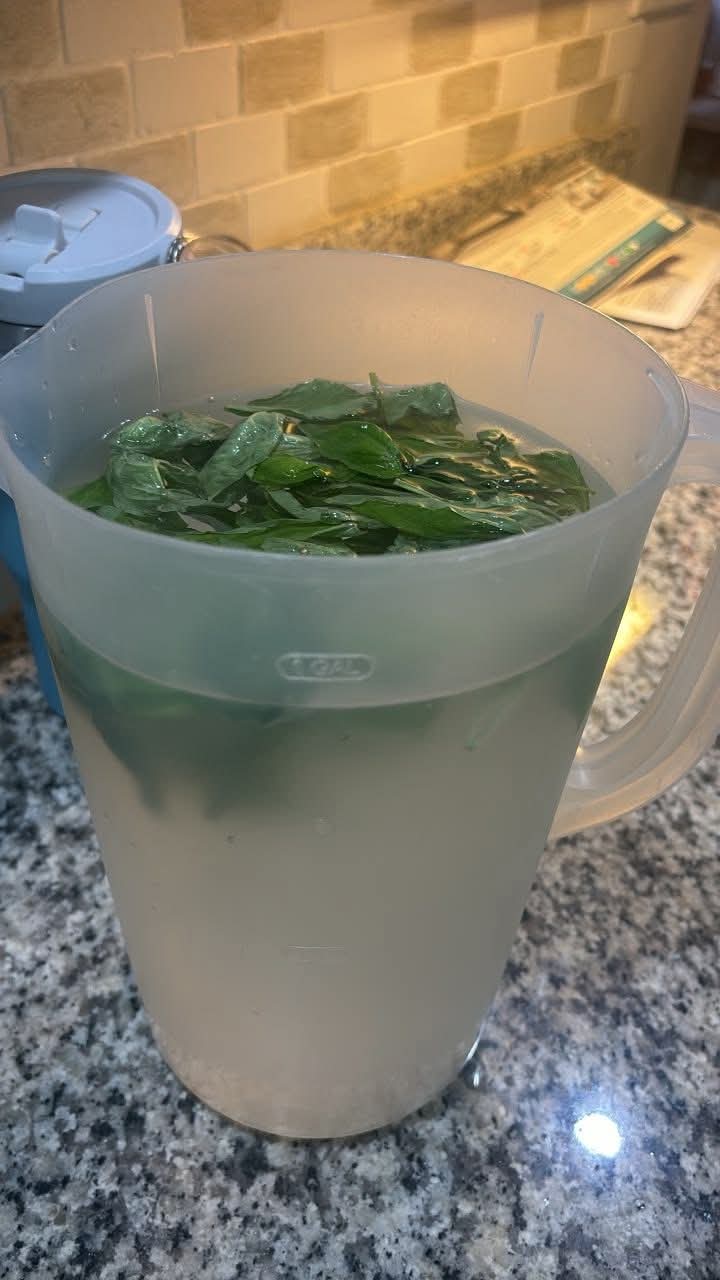
🌿 ? A Simple Herbal Drink With a Lot of Talk Around It
Have you ever dropped a handful of fresh basil leaves into a glass or pitcher of water and wondered whether you were doing more than simply making a refreshing drink?
Basil water has become popular among people who enjoy simple herbal drinks and traditional wellness practices. Some people drink it for digestion, others enjoy it as a calming beverage, and basil is also being studied for possible effects on blood sugar, inflammation, and oxidative stress.
But there is an important distinction between what basil has traditionally been used for and what scientific research has actually established.
Basil contains numerous plant compounds, including polyphenols and flavonoids, and research suggests that these compounds may have antioxidant and other biological activities. However, studies have used different basil species, extracts, doses, and preparations, so we can’t assume that a glass of homemade basil water will produce the same effects seen in laboratory or clinical studies. (PubMed)
So let’s take a closer look at this simple drink.
🌿 What Is Basil Water?
Basil water is simply water infused with fresh basil leaves.
Some people make it by:
- Adding fresh basil to cold water
- Steeping basil in hot water like tea
- Combining basil with lemon
- Adding basil, cucumber, or other fresh ingredients to a pitcher
- Allowing the leaves to infuse in the refrigerator for several hours
It’s a very simple way to enjoy basil without turning it into pesto, sauce, or another cooked dish.
And if you grow basil in your garden, it’s an easy way to use a generous harvest.
💚 Why Are People Drinking Basil Water?
Basil has a long history of culinary and traditional use.
Modern research has also investigated basil’s antioxidant, anti-inflammatory, antimicrobial, and potential blood-sugar-related properties. A review of Ocimum basilicum describes its polyphenols and flavonoids as potentially important contributors to its biological effects. (PubMed)
A more recent systematic review of Ocimum species also found promising preclinical evidence involving antioxidant, anti-inflammatory, and glucose-related effects, while emphasizing the need for larger, well-controlled human studies. (PubMed)
That sounds promising—but basil water itself has not been proven to treat medical conditions.
🩸 Can Basil Water Help Stabilize Blood Sugar?
This is one of the claims you’ll frequently see online.
Research involving basil and related Ocimum species has found potential effects on blood glucose. Some small human studies have reported improvements in measures of blood sugar, while laboratory and animal studies have produced additional promising findings. (Cleveland Clinic)
However, there’s an important catch.
Most of this research does not involve ordinary basil water.
Studies may use fresh leaves, powders, extracts, capsules, or other concentrated preparations. The amount of active compounds reaching the body can therefore be very different from what you’d get by putting a few leaves in a glass of water.
So it’s more accurate to say:
Basil is being studied for potential blood-sugar effects, but basil water should not be considered a proven blood-sugar treatment.
Anyone taking diabetes medication should be particularly careful with concentrated herbal preparations because combining something that may lower glucose with medication could potentially contribute to blood sugar becoming too low. (health.osu.edu)
🧬 What About “Cell Repair”?
This claim needs a little clarification.
Basil contains antioxidant compounds. Antioxidants can help protect cells from oxidative stress by interacting with free radicals.
That doesn’t mean drinking basil water literally repairs damaged cells.
It’s more accurate to say that basil contains compounds with antioxidant activity that researchers are investigating for their potential role in protecting cells from oxidative stress. (PubMed)
That’s a much more scientifically responsible way to describe the potential benefit.
Your body already has sophisticated systems for repairing damaged cells. A glass of basil water isn’t a replacement for those processes.
🌿 Basil Water and Digestion
Basil has traditionally been used for digestive complaints, and researchers are increasingly interested in its potential relationship with gut health.
A 2025 systematic review examining Ocimum basilicum and gut health found evidence suggesting that basil may influence the gut microbiota and production of certain beneficial metabolites. However, much of the research involves basil preparations or extracts rather than simply drinking infused water. (ScienceDirect)
So if you enjoy basil water after a meal, there’s certainly nothing unusual about that tradition.
But claims that it cures bloating, indigestion, acid reflux, or other digestive disorders go beyond the evidence.
😌 Can Basil Water Be Calming?
Another reason people enjoy basil drinks is simply the experience.
The aroma of fresh basil can be wonderfully relaxing, and sitting down with a cool glass of infused water can become a calming little ritual.
Research into holy basil (tulsi) has found some promising results relating to stress and sleep, but holy basil is a different species from the common sweet basil usually used in cooking. Holy basil is Ocimum tenuiflorum, while common sweet basil is Ocimum basilicum. (Merck Manuals)
That distinction is important.
You shouldn’t automatically assume research on holy basil applies to ordinary sweet basil water.
🍋 How to Make Simple Basil Water
If you’d like to try basil water simply because you enjoy the flavor, here’s an easy version.
Ingredients
- 1 small handful fresh basil leaves
- 4 cups cold drinking water
- 2–3 lemon slices, optional
- Ice, optional
Directions
- Rinse the basil leaves thoroughly under running water.
- Gently bruise or tear a few of the leaves to help release their aroma.
- Place the basil in a pitcher.
- Add the water and lemon slices if using.
- Refrigerate for 1–4 hours.
- Pour over ice and enjoy.
You can remove the basil after several hours if the flavor becomes too strong.
Want warm basil tea instead?
Place fresh basil leaves in a mug and pour over freshly boiled water.
Allow it to steep for approximately 5–10 minutes, then strain if desired.
Add a little lemon or honey if you like.
🍓 Try These Basil Water Combinations
Once you make the basic version, it’s easy to experiment.
Basil + Lemon
Fresh, bright, and simple.
Basil + Cucumber
A wonderfully refreshing combination for hot days.
Basil + Strawberry
Add sliced strawberries for a naturally fruity flavor.
Basil + Orange
Orange slices pair beautifully with basil.
Basil + Mint
For a particularly refreshing herbal infusion, combine a few basil leaves with fresh mint.
The great thing about infused water is that you don’t need a complicated recipe.
💧 One Benefit We Shouldn’t Overlook
There’s another potential advantage to basil water that has nothing to do with a miracle health claim:
It can make drinking water more enjoyable.
If adding fresh basil, lemon, cucumber, or fruit makes someone more interested in drinking plain water instead of reaching for a sugary beverage, that’s a useful habit.
And basil itself is a flavorful herb with very few calories when used in ordinary culinary amounts.
⚠️ Is Basil Water Safe?
For most healthy adults, culinary amounts of basil used as food or in a simple beverage are generally considered different from concentrated basil supplements or essential oils.
Research on Ocimum basilicum has generally found food use to have a favorable safety profile, although researchers have raised particular concerns about concentrated essential oils and certain compounds present at higher concentrations. (PubMed)
Don’t confuse basil-infused water with basil essential oil.
Never add essential oil to drinking water simply because you want a stronger basil drink.
Concentrated essential oils are very different from a few fresh leaves steeped in water.
🩺 What About Medications?
This is especially important if you’re considering drinking concentrated herbal preparations regularly.
Holy basil, in particular, may affect blood glucose and may potentially interact with medications that lower blood sugar. There are also concerns about possible effects on bleeding with some concentrated preparations. (health.osu.edu)
If you take medication for diabetes, use blood thinners, have a medical condition, are pregnant or breastfeeding, or are considering concentrated basil supplements, talk with a healthcare professional before making it a regular wellness practice.
And don’t replace prescribed medication with basil water.
🌱 Sweet Basil vs. Holy Basil
This is one of the most important things to understand when reading online claims.
Sweet Basil
Scientific name: Ocimum basilicum
This is the familiar culinary basil commonly used in pesto, pasta, salads, sauces, and cooking.
Holy Basil / Tulsi
Scientific name: Ocimum tenuiflorum
This is a different basil species traditionally used in Ayurvedic practices and commonly consumed as tea or in supplements. Research on holy basil has explored stress, sleep, blood sugar, and other areas. (Merck Manuals)
So when you read that “basil lowers blood sugar”, always check which basil the study actually examined.
🌿 Why Basil Water Is Still Worth Trying
You don’t have to believe that basil water is a miracle drink to enjoy it.
Fresh basil adds flavor and aroma to ordinary water.
It’s inexpensive.
It’s easy to make.
And if you grow basil yourself, you can turn an abundant garden herb into something refreshing instead of letting those extra leaves go to waste.
The research into basil is interesting, particularly regarding its antioxidant properties and possible effects on blood sugar and other areas of health. But researchers are still working out exactly which preparations, doses, and basil species may have meaningful effects in humans. (PubMed)
🌿 The Bottom Line
Basil water can be a refreshing, flavorful drink—but it shouldn’t be presented as a cure or detox.
Basil contains beneficial plant compounds, and research suggests potential antioxidant and other health-related effects. Some studies have also found promising blood-sugar and digestive-related findings, but much of that evidence comes from extracts, supplements, animal studies, or specific basil preparations rather than ordinary homemade basil water. (PubMed)
So if you have fresh basil sitting in your garden, grab a handful, add it to cold water, perhaps toss in a few slices of lemon, and enjoy it simply because it tastes good and makes water a little more interesting. 🌿🍋💧
Have you ever tried basil water? Would you drink it plain, or add lemon, cucumber, or fruit?
