🦷🖤🍋
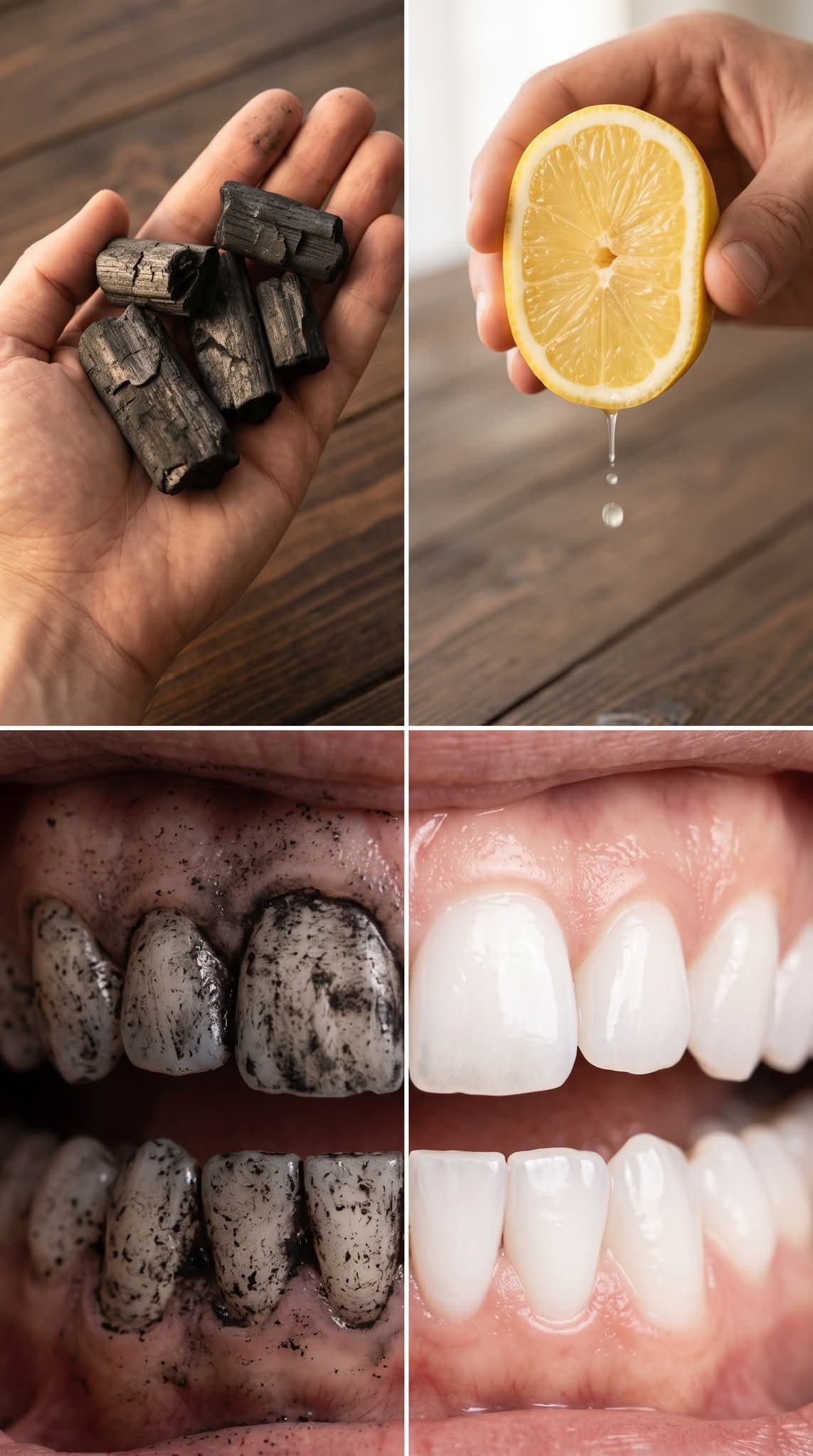
You’ve probably seen it on social media: a little activated charcoal mixed with lemon juice, brushed onto the teeth, followed by dramatic before-and-after photos showing a supposedly brighter smile.
It looks simple, inexpensive, and “natural.”
But here’s the important question:
Does charcoal and lemon actually whiten your teeth—or could this DIY trick be doing more harm than good?
The short answer is: there isn’t good evidence that the combination safely whitens teeth, and there are legitimate reasons to be cautious.
Activated charcoal may help remove some surface staining because it is abrasive, but research does not show that charcoal provides reliable bleaching of the natural color inside teeth. The American Dental Association also says there isn’t sufficient evidence that charcoal-based whitening methods provide a measurable whitening benefit with adequate safety and effectiveness. (Ada)
And adding lemon doesn’t make the method safer.
🖤 Why Did Charcoal Become So Popular?
Activated charcoal has developed a reputation as a powerful “detox” and cleaning ingredient.
It’s a very fine, porous material that can adsorb certain substances. That led to the idea that charcoal could somehow “pull” stains and discoloration away from teeth.
Social media made the idea even more appealing.
The dramatic contrast of black charcoal against white teeth makes for a very convincing video. People brush with a dark paste, rinse, and then show a brighter-looking smile.
But an impressive social-media transformation isn’t the same thing as evidence that enamel has actually been whitened.
🍋 And Then Came the Lemon
Lemon juice seems like an obvious addition because lemons contain citric acid.
The theory behind the DIY combination is usually something like this:
Charcoal removes the stains + lemon’s acidity helps break them down = whiter teeth.
Unfortunately, that’s not how safe teeth whitening works.
The acidity of lemon juice can contribute to dental erosion, which is the loss of tooth structure caused by acids. The American Dental Association specifically warns against DIY whitening trends involving acidic fruits and has advised people to avoid lemon-juice whitening. (Ada)
So while the combination may sound powerful, “more aggressive” doesn’t mean “better whitening.”
🦷 Can Charcoal Remove Surface Stains?
This is where there is a little truth behind the viral trend.
Charcoal-containing products can be abrasive, and that abrasiveness may help physically remove some extrinsic stains—the discoloration sitting on the outside of the tooth.
For example, surface stains can develop from things such as coffee, tea, tobacco, or certain foods.
But removing some surface discoloration is not the same as actually bleaching the tooth.
Research has found that charcoal products don’t consistently outperform conventional toothpaste for whitening, and some studies have raised concerns about increased surface roughness and enamel wear. (PubMed)
⚠️ The Problem With Abrasion
Your enamel is the hard outer layer protecting your teeth.
Once enamel is lost, your body can’t simply grow a new layer of it.
That’s why repeatedly scrubbing teeth with highly abrasive materials isn’t a harmless way to chase a whiter smile.
Some research has found increased enamel surface roughness with charcoal-containing products, while other studies have found that certain charcoal products can have considerable abrasive effects. (PubMed)
And here’s an unfortunate twist:
Wearing away enamel can eventually make teeth look more yellow, not less.
Underneath enamel is dentin, which naturally has a more yellowish color. Excessive enamel wear can make that underlying color more noticeable. The ADA has specifically discussed this concern with overly abrasive DIY whitening methods. (Ada)
🍋 Why Lemon Makes the Combination More Concerning
Lemon juice is acidic.
Repeated exposure to acidic foods and drinks can soften and erode tooth surfaces. Brushing immediately after an acidic exposure can potentially increase mechanical wear on a softened surface.
So combining an acidic ingredient with an abrasive substance and then vigorously brushing your teeth isn’t a particularly gentle approach to your enamel.
That’s why “natural” doesn’t automatically mean “safe.”
Lemon is natural.
Charcoal is natural.
But that doesn’t mean the combination is appropriate for repeatedly applying to your teeth.
😬 What About Tooth Sensitivity?
Another possible problem is sensitivity.
If enamel becomes thinner or the underlying dentin becomes more exposed, teeth can become more sensitive to cold, heat, sweets, or acidic foods.
Someone might initially think:
“My teeth look whiter!”
But if the improvement came partly from aggressive removal of the tooth surface, that’s not a result worth chasing.
Dental professionals generally focus on whitening methods that improve tooth color while minimizing unnecessary damage to enamel.
🖤 Does Charcoal Actually “Bleach” Teeth?
No—not in the same sense as peroxide-based whitening treatments.
Bleaching agents such as hydrogen peroxide or carbamide peroxide work through chemical processes that can lighten certain intrinsic tooth discoloration.
Charcoal doesn’t work that way.
Instead, charcoal products are primarily associated with physical removal of surface stains through their abrasive action. Evidence does not show that charcoal powder provides effective dental bleaching. (PubMed)
That’s a very important distinction.
Surface stain removal ≠ true whitening
A tooth can appear cleaner because surface discoloration has been removed without its underlying natural color actually changing.
🦷 What Does the Research Say?
The evidence isn’t particularly encouraging for DIY charcoal whitening.
A study examining charcoal-based whitening toothpastes found that after 12 weeks, the charcoal products did not demonstrate clinically acceptable whitening compared with a regular fluoridated toothpaste, while surface roughness increased in several groups. (PubMed)
Another study comparing charcoal and sea-salt/lemon-based whitening toothpastes found that none of the tested products produced effective whitening back to the original tooth color, and all increased surface roughness. (PubMed)
More recent research has likewise found that charcoal products did not provide superior stain-minimizing results compared with conventional toothpaste and that charcoal powder could increase superficial enamel alterations. (ScienceDirect)
So the science doesn’t support the idea that charcoal + lemon is a miracle whitening treatment.
🚫 What About Doing It “Only Once in a While”?
This is where it’s important not to exaggerate.
Using a viral DIY mixture once doesn’t automatically mean someone has permanently damaged their teeth.
The bigger concern is repeated exposure, especially vigorous brushing with abrasive powders and repeated contact with acids.
The problem is that there is no simple home rule such as “once every two weeks is definitely safe.”
The risk depends on the product, amount, brushing technique, duration, existing enamel condition, acid exposure, and individual dental health.
That’s why a dentist is in a much better position to determine what whitening method is appropriate.
🪥 What Should You Use Instead?
If your goal is a brighter smile, there are much better-supported approaches.
1. Start With Regular Fluoride Toothpaste
Good everyday oral hygiene is the foundation.
Brush twice a day with a fluoride toothpaste and clean between your teeth regularly. The ADA recommends evidence-based oral-care habits rather than replacing them with viral DIY treatments. (ADA News)
2. Consider an Evidence-Based Whitening Product
Some over-the-counter whitening products use peroxide-based ingredients and have substantially more evidence behind their whitening effects than charcoal and lemon.
Look for products from reputable manufacturers and follow the directions carefully.
3. Ask Your Dentist
If you have significant discoloration, sensitivity, crowns, veneers, fillings, or other dental work, professional advice is especially useful.
Not every type of discoloration responds to whitening in the same way.
A dentist can also determine whether the color change is simply staining or something that needs attention.
☕ Don’t Forget About Stains in the First Place
If you regularly drink coffee, tea, cola, or red wine—or use tobacco—surface staining can accumulate over time.
You don’t necessarily have to give up everything you enjoy.
Good brushing, cleaning between your teeth, regular dental visits, and rinsing with water after staining or acidic beverages can all help support your oral health.
🖤🍋 The Viral Before-and-After Can Be Misleading
This is one of the biggest lessons from social-media beauty hacks.
A before-and-after photograph doesn’t tell you why the teeth look different.
Lighting can change.
Camera exposure can change.
The teeth may be wet in one picture and dry in another.
Surface stains may have been removed.
And the image doesn’t tell you whether the method caused microscopic changes to the enamel.
A whiter-looking photograph isn’t proof that a DIY treatment is safe.
⭐ So, Does Charcoal + Lemon Work?
Not as a proven, safe teeth-whitening treatment.
Charcoal’s abrasiveness may remove some surface stains, but scientific evidence does not show that charcoal powder is an effective dental bleaching agent. (Ada)
Lemon adds acidity rather than providing a proven whitening benefit, and dental organizations warn against lemon-juice whitening because of the potential for acid-related tooth damage. (ADA News)
The combination therefore isn’t something I’d recommend as a routine DIY whitening treatment.
🦷 The Bottom Line
Charcoal + lemon may look impressive on social media, but your teeth aren’t a science experiment.
The temporary appearance of cleaner or brighter teeth isn’t worth repeatedly exposing enamel to unnecessary abrasion and acid.
If you want a whiter smile, choose a whitening method with evidence behind it—or talk with your dentist about what is appropriate for your teeth.
Because when it comes to your smile, whiter isn’t better if you’re sacrificing the enamel underneath. 🦷✨
Save this article and share it with someone who has been tempted to try the viral charcoal-and-lemon trick!
